

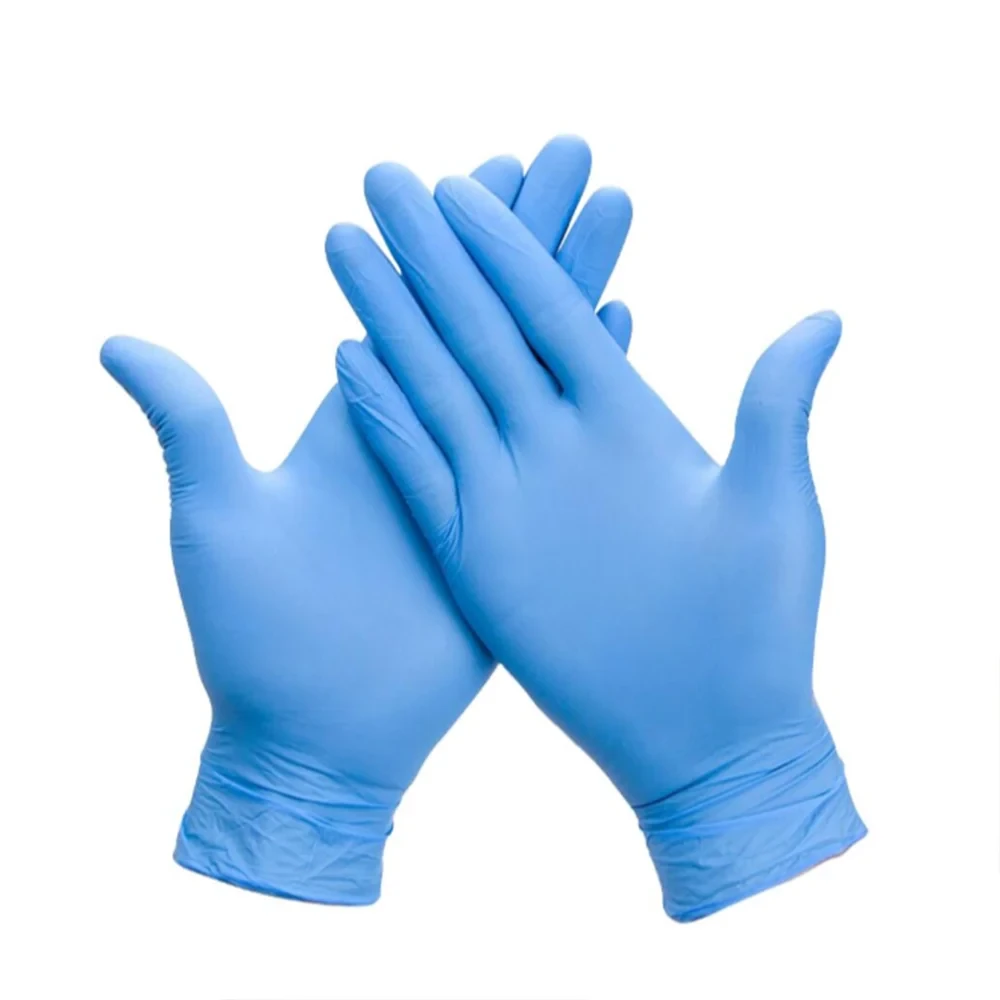
Protective Gloves
Chemical-Resistant Nitrile Laboratory Gloves
Chemical-resistant nitrile gloves: latex-free, providing protection against chemicals and microorganisms under EN ISO 374, and suitable for precision work in the laboratory.
Request a quote| Material | Nitrile (latex-free) |
|---|---|
| Use | Laboratory, chemical contact |
| Protection standard | EN ISO 374-1, EN ISO 374-5 |
| Type | Disposable |
| Options | Size, thickness and length depending on model |
Product description
Nitrile gloves are made from acrylonitrile butadiene rubber, a synthetic rubber. Since they contain no latex proteins, they carry no risk of latex allergy and are the most widely used type of disposable glove in the laboratory. They are also more puncture-resistant than latex and vinyl gloves, which is important for risky tasks involving pipette tips, glass edges or needles.
Chemical-resistant nitrile gloves are products tested according to EN ISO 374-1. However, no glove provides unlimited protection against every chemical. Selecting the right glove requires knowing how long it takes for the chemical in use to permeate the glove.
Reading the EN ISO 374 label
On chemical protective gloves, the markings on the box show which tests the glove has passed:
- EN ISO 374-1 Type A: Permeation resistance of at least 30 minutes (level 2) against at least 6 chemicals from the standard list
- EN ISO 374-1 Type B: Resistance of at least 30 minutes against at least 3 chemicals
- EN ISO 374-1 Type C: Resistance of at least 10 minutes (level 1) against at least 1 chemical
- EN ISO 374-5: Protection against bacteria and fungi; if marked "VIRUS", it has also been tested against viruses
- Letter codes: Indicate the chemicals the glove was tested against (for example J n-heptane, K sodium hydroxide 40%, P hydrogen peroxide 30%)
Permeation levels range from 1 to 6; level 1 means a resistance of at least 10 minutes and level 6 at least 480 minutes. These times are measured under laboratory conditions; temperature, stretching of the glove and abrasion shorten the time in actual use.
Selection criteria for chemical-resistant nitrile gloves
- Chemical compatibility: Check whether the chemical in use appears in the manufacturer's permeation table
- Thickness: Thicker gloves provide longer protection, thinner gloves increase finger sensitivity; a thin model is preferred for pipetting and weighing, a thicker one for solvent transfer
- Cuff length: For tasks with a splash risk, a long-cuff model covering the wrist and forearm is selected
- Powder: Powder-free gloves are used in analytical work and clean areas; powder may contaminate the sample
- Size: Loose gloves slip during fine work, tight gloves stretch and tear more quickly
After chemical contact, the glove is changed immediately and the same glove is not reused. On production lines without chemical contact, production-grade disposable gloves are a more economical option. All protective glove options are listed in the protective gloves category.
Frequently asked questions
Which chemicals are nitrile gloves not resistant to?
Nitrile generally withstands ketones such as acetone, chlorinated solvents such as dichloromethane and some aromatic solvents for only a short time. For prolonged work with these chemicals, a thicker nitrile glove or a glove made of a different material (such as butyl or Viton) should be selected based on the manufacturer's permeation data.
Do nitrile gloves cause latex allergy?
No. Nitrile is a synthetic rubber and contains no latex proteins. However, contact sensitivity to some accelerator chemicals used in production may rarely occur; accelerator-free options are available for sensitive users.
Which size should be selected?
Hand width is measured excluding the thumb and compared with the manufacturer's size chart. The size chart of the model is provided with the quotation.
Request a quote for this model
A suitable configuration and pricing are prepared based on sample type and workload.
Request a quote