

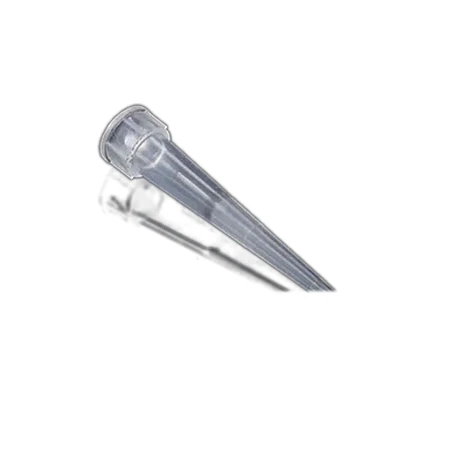
Pipette Tips
Bulk Pipette Tips
Bulk pipette tips are an economical tip format supplied in bags and used by filling existing racks. They are offered in a volume range from 0.1 µL to 10 mL, made of medical-grade polypropylene and produced DNase/RNase-free; sterile filter versions are also available in bulk packs.
Request a quote| Volume range | 0.1 µL – 10 mL |
|---|---|
| Pack | Bulk (bag) |
| Material | Medical-grade polypropylene |
| Purity | DNase/RNase-free, non-pyrogenic |
| Production | Class 100,000 cleanroom |
Product description
The bulk pack is the most economical form of pipette tip. The tips come in a bag and are used by filling empty racks in the laboratory, so a new rack does not have to be purchased with every box and plastic waste is reduced. For this reason, bulk pipette tips are the first choice for routine transfer, dilution and reagent dispensing tasks that do not require sterility.
The tips are precision-molded from medical-grade polypropylene. No mold release agents or additives are used in production; this reduces leaching from the plastic into the sample. In addition, the polypropylene body works without issue with common buffer solutions and aqueous reagents.
Filter and sterile versions are also available in bulk packs. For laboratories that want protection against aerosol contamination but do not want to bear the cost of racks, this option is a reasonable middle ground.
Applications
- Preparation of buffer, reagent and standard solutions
- Dilution series and routine sample transfer
- Repetitive pipetting tasks in quality control laboratories
- Teaching and student laboratories
What these tasks have in common is high tip consumption and no need for sterility. At workstations where unit cost is decisive, the bulk pack therefore offers significant savings compared with the racked pack.
Selecting and correctly using bulk pipette tips
Placing bulk tips into racks by hand takes time. If monthly consumption is high, refill packs should be considered; this option eliminates both the cost of racks and the manual racking work.
Standard bulk tips carry no sterility claim. For this reason, filter pipette tips or sterile racked tips should be used in cell culture and molecular biology applications.
- Volume match: The tip volume is selected equal to or slightly larger than the maximum volume of the pipette; for example, a 200 µL tip is used on a 200 µL pipette.
- Attachment force: The tip should seat on the pipette with light pressure. A tip attached with excessive force is hard to eject and wears the pipette body over time.
- Filling hygiene: Racks are filled on a clean surface while wearing gloves; the open ends of the tips must not be touched by hand.
- Storage: An opened bag is closed again to protect it from dust, so the last tip used stays as clean as the first.
The only difference between bulk tips and racked tips is the packaging; the tip geometry and material are the same. The choice is therefore based on consumption rate, sterility requirements and workflow. Other pack and tip types are listed in the pipette tips category.
Frequently asked questions
Is there a quality difference between bulk pipette tips and racked tips?
No. The material, geometry and manufacturing quality are the same; the difference lies in the packaging. The bulk pack is more economical, while the racked pack allows tips to be attached to the pipette directly and without contact.
Can bulk tips be autoclaved?
Polypropylene tips are generally autoclavable. However, autoclave conditions are confirmed with the manufacturer for each model; if sterility is required, presterilized packs are a safer option.
Which pipette brands are they compatible with?
The tips are produced with a universal fit and are used with most common single-channel and multichannel pipettes. Once the pipette brand and model are specified, compatibility is confirmed; a trial with sample tips is recommended with the first order.
From the same category
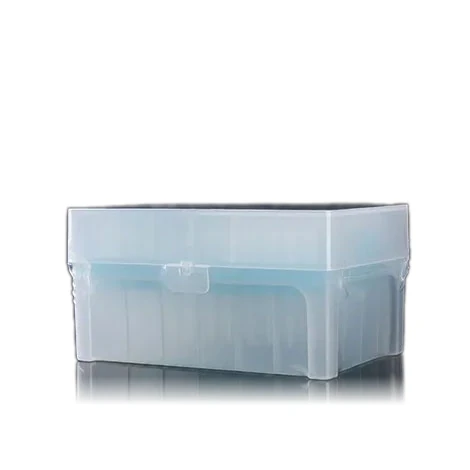
Racked Pipette Tips
Sterile racked pipette tips and refill packs from 0.5 µL to 5 mL, in a box with a one-hand opening lid.
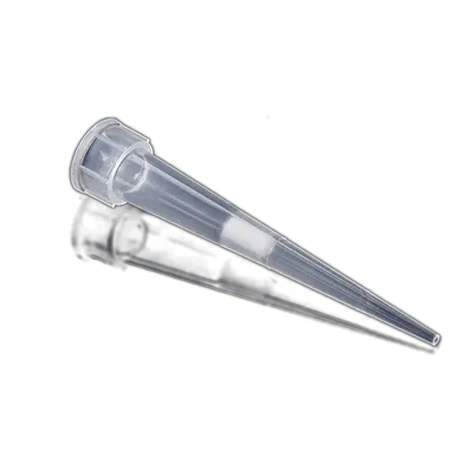
Racked Filter Pipette Tips
Aerosol barrier filter pipette tips; sterile, racked, from 0.1 µL to 5 mL.
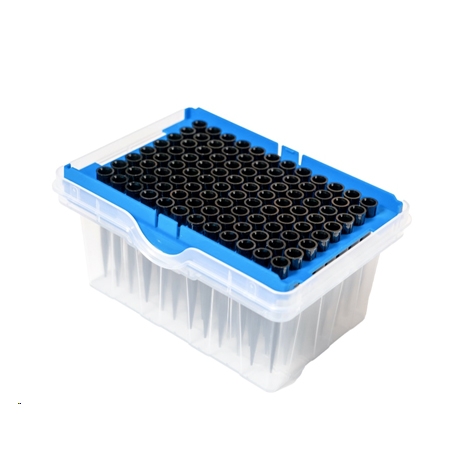
Robotic System Tips
Conductive robotic pipette tips for automation systems with liquid level detection.
Request a quote for this model
A suitable configuration and pricing are prepared based on sample type and workload.
Request a quote