

Pipette Tips
Racked Filter Pipette Tips
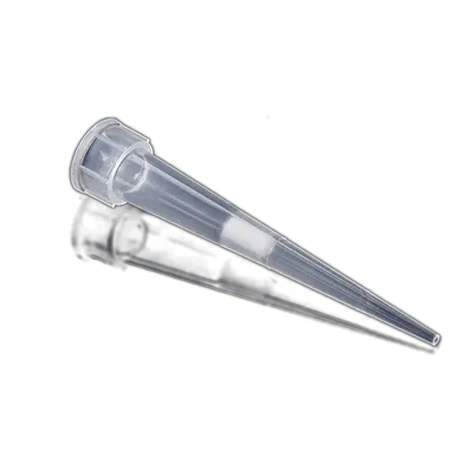
A filter pipette tip is a sterile, racked tip whose high-density polyethylene filter prevents aerosols from reaching the pipette body. DNase/RNase-free production and a filter design free of PCR inhibitors and adhesives make it suitable for molecular biology and cell culture work.
Request a quote| Volume range | 0.1 µL – 5 mL |
|---|---|
| Filter | High-density polyethylene, hydrophobic |
| Sterility | Sterile, racked |
| Purity | DNase/RNase-free, PCR inhibitor-free |
| Fit | Universal |
Product description
A filter tip places a physical barrier between the inner body of the pipette and the sample. In the event of aerosols or liquid overflow, the pipette is not contaminated and there is no carry-over to the next sample. For this reason, in work where cross-contamination directly compromises the result, such as PCR setup, a filter pipette tip is not an option but a requirement.
The filter is made of hydrophobic polyethylene. It is stated to be adhesive-free and free of PCR inhibitors; these two properties prevent problems that are common with low-quality filter tips and that suppress the reaction.
When working with pathogenic microorganisms, viruses and radioactive samples, the filter also protects the user. In addition, because the sample is prevented from reaching the pipette body, the cleaning and decontamination workload is reduced.
Volume options from 0.1 µL to 5 mL cover different workflows, from micro-volume PCR mixes to cell culture medium transfer. The tip volume is selected according to the maximum volume of the pipette; leaving enough air gap between the filter and the liquid surface during low-volume aspiration also reduces the risk of wetting the filter.
Applications of filter pipette tips
- PCR and qPCR setup
- Cell culture and sterile work
- Bacteriology and virology
- Radiolabeled samples
- Forensic and genetic analysis laboratories
Filter tips are significantly more expensive than tips without filters. Rather than switching the entire laboratory to filter tips, it is therefore more sensible to use them at workstations where contamination compromises the result. The workstations that require filter tips can be determined together at the quotation stage.
The workflows in clinical laboratories in which filter tips are used are summarized together with centrifuge tubes and centrifuges on the applications page.
Correct use and common mistakes
- Keep liquid away from the filter: Pressing or releasing the plunger quickly causes liquid to splash onto the filter. If the filter becomes wet, the tip is replaced.
- Appropriate volume: The tip is not used to aspirate more than its nominal volume; otherwise liquid reaches the filter.
- New tip for every sample: The filter reduces carry-over, but it does not make using the same tip for different samples safe.
- Sterile packaging: The box is opened only during use and closed when work is finished.
These steps are particularly important in the PCR preparation area. A filter tip does not replace good laboratory practice; when used together with separate pre- and post-PCR areas, dedicated pipettes and regular surface cleaning, it minimizes the risk of contamination.
For routine transfer tasks that do not require sterility, bulk pack tips are a more economical option; other formats are listed in the pipette tips category.
Frequently asked questions
For which tasks are filter tips mandatory?
Filter tips should be used for PCR and qPCR setup, where cross-contamination directly compromises the result, and when working with pathogenic and radioactive samples. They are generally not needed for routine buffer or reagent transfer.
What should be done if the filter becomes wet?
A wet filter does not pass liquid into the pipette body, but the air flow is disrupted and volume accuracy decreases. In this case, the tip is replaced immediately.
Why is being free of PCR inhibitors important?
Some filter and adhesive materials can interact with the reaction and reduce PCR efficiency. An inhibitor-free filter reduces the risk of false negative results from this source.
From the same category
Bulk Pipette Tips
Bulk pipette tips in bags from 0.1 µL to 10 mL; options with and without filters.
Racked Pipette Tips
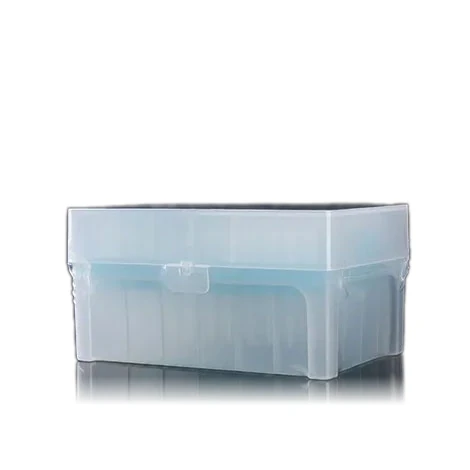
Sterile racked pipette tips and refill packs from 0.5 µL to 5 mL, in a box with a one-hand opening lid.
Robotic System Tips
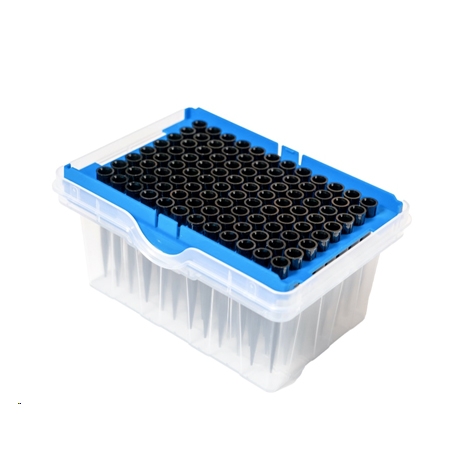
Conductive robotic pipette tips for automation systems with liquid level detection.
Request a quote for this model
A suitable configuration and pricing are prepared based on sample type and workload.
Request a quote