

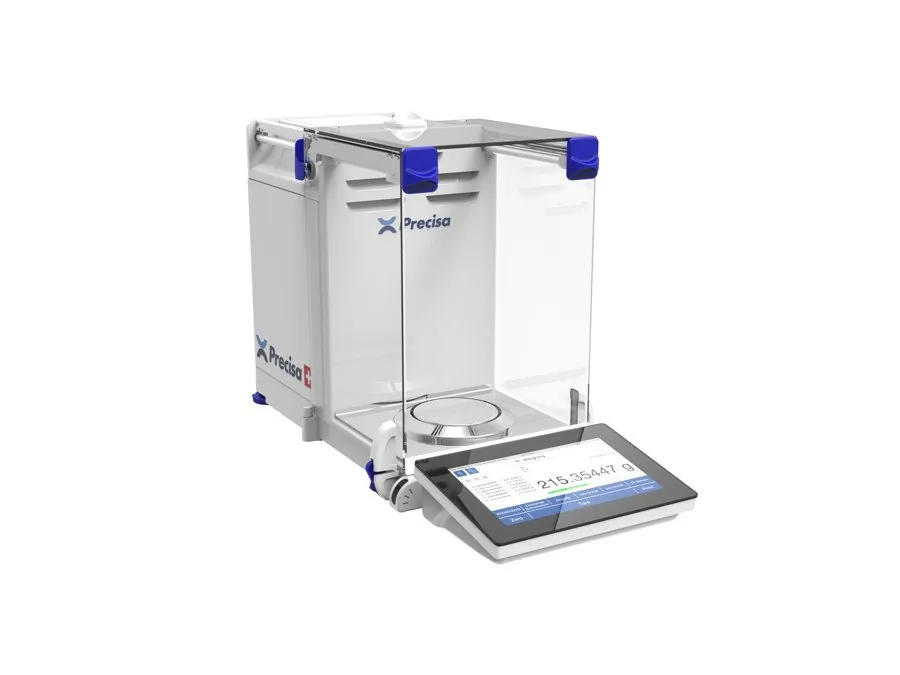
Balances and Moisture Analysis
Analytical and Semi-Micro Balances
Analytical balance and semi-micro balance options offer 0.1 mg readability for analytical weighing and 0.01 mg for semi-micro weighing. They provide capacities between 102 g and 520 g, internal automatic calibration, motorized or manual draft shield options and performance values that meet USP minimum weight criteria.
Request a quote| Readability | 0.1 mg (analytical) · 0.01 mg (semi-micro) |
|---|---|
| Capacity | 102–520 g |
| Calibration | Internal automatic or external |
| Weighing pan | 80–90 mm diameter |
| Stabilization time | 2–8 seconds (depending on model) |
Product description
The analytical balance is the foundation of standard solution preparation, weighing of calibration substances and mass-based analytical calculations. With a readability of 0.1 mg, this class is the most frequently used precision weighing instrument in the laboratory.
Semi-micro balances operate with 0.01 mg readability and are built for applications in which very small quantities are weighed: reference standard preparation, impurity studies and weighing of synthesis products obtained in small amounts fall into this class.
A glass draft shield is essential in both classes. Air movement is the largest source of error in sub-milligram measurements; on models with a motorized draft shield, the doors open and close without being touched, which increases both speed and repeatability.
Model options
Semi-micro class (0.01 mg)
- High-end touchscreen series: 125 g capacity, 0.01 mg readability, 0.010 mg repeatability, result in 8 seconds, fully automatic calibration, frameless automatic draft shield.
- Dual-range model: 0.01 mg resolution at 125 g and 0.1 mg at 225 g; two weighing classes in a single instrument.
- Standard semi-micro series: 102–225 g capacity, 0.01/0.1 mg dual range, 80 mm weighing pan, automatic calibration.
Analytical class (0.1 mg)
- High-end touchscreen series: 220 g capacity, 0.1 mg readability, 0.2 mg linearity, 20 mg minimum weight, fully automatic internal calibration, 6.4-inch color touchscreen and Turkish-language menu.
- Routine use series: 220 g capacity, 0.1 mg readability, internal automatic calibration, 90 mm weighing pan, 3-door sliding draft shield.
- Mid-range series: Capacity options from 120 to 520 g, automatic calibration, 90 mm weighing pan.
- Entry level: Models with external calibration and basic functions.
Capacity and readability are selected together. Once the smallest weighing quantity and the largest sample weight are provided, the appropriate model is determined.
Analytical balance selection criteria
- Minimum weight: Pharmacopoeia rules require the weighed quantity to be above the balance's minimum weight value. For a 0.1 mg balance, this value is typically in the 20–200 mg range.
- Calibration type: Internal automatic calibration is triggered automatically when the temperature changes. External calibration is more economical but requires certified weights and discipline.
- Draft shield type: A motorized draft shield provides fast and repeatable operation; a sliding glass draft shield is more economical.
- Data output: In regulated laboratories, weighing records must be transferred to a printer or computer.
- Installation environment: A vibration-free bench, a location away from air currents and a stable temperature are as decisive as the instrument itself.
Technical evaluation
In analytical weighing, most errors originate from the environment rather than the instrument. A balance installed under an air conditioning outlet or next to a door gives unstable readings even with the best model. The installation location should be determined before the instrument is selected.
Calibration weights must be certified and traceable. The annual verification plan and the weight set are evaluated as separate items at the quotation stage.
Static electricity disrupts weighing, particularly with powders and plastic containers. The need for an ionizer is evaluated according to the sample type.
For daily weighing in the gram and kilogram range, precision balance options can be considered; for determining moisture content together with weighing, a halogen moisture analyzer can be considered. All models are listed in the balances and moisture determination category.
Technical specifications
| Readability | 0.01 mg (semi-micro) · 0.1 mg (analytical) |
|---|---|
| Capacity range | 102–520 g |
| Repeatability | From 0.010 mg (semi-micro) · 0.1 mg (analytical) |
| Linearity | 0.06 mg (semi-micro) · 0.2 mg (analytical) |
| Minimum weight | From 2.0 mg (1%, k=2) |
| Weighing pan diameter | 80 mm · 90 mm |
| Calibration | Fully automatic internal or external |
| Stabilization time | 2–8 seconds |
| Display | LCD or color touchscreen |
| Power supply | 100–240 V, 50/60 Hz |
Values are taken from the manufacturer's published technical documentation. They may vary by configuration and are confirmed against the current datasheet before quotation.
Frequently asked questions
What is the difference between an analytical balance and a semi-micro balance?
The difference is in readability. An analytical balance reads to 0.1 mg and a semi-micro balance to 0.01 mg. The semi-micro class allows smaller quantities to be weighed; in return, it is much more sensitive to environmental conditions.
Why is the minimum weight value important?
On a balance, measurement uncertainty grows proportionally as the weighed quantity gets smaller. Pharmacopoeia rules require that the weighed quantity not fall below the balance's minimum weight value. This value is more decisive than capacity when selecting an instrument.
Is internal calibration necessary?
In environments where the temperature changes during the day and with frequent use, internal automatic calibration provides a significant advantage; the balance adjusts itself regularly. Under stable environmental conditions and with low frequency of use, external calibration may be sufficient.
Where should the balance be installed?
It should be installed on a sturdy, vibration-free bench, away from air currents and direct sunlight. Locations near air conditioning outlets, doors and windows are not suitable. A weighing table is recommended for heavy use.
How are calibration and verification planned?
The interval is determined according to usage intensity and the requirements of the quality system. Daily checks with certified weights combined with an accredited calibration once a year is common practice. This service is listed as a separate item in the quotation.
Can weighing results be transferred to a computer?
Depending on the model, transfer is possible via RS232, USB or network connection. In regulated laboratories, the recording requirement should be defined from the outset and a model with the appropriate interface selected.
From the same category
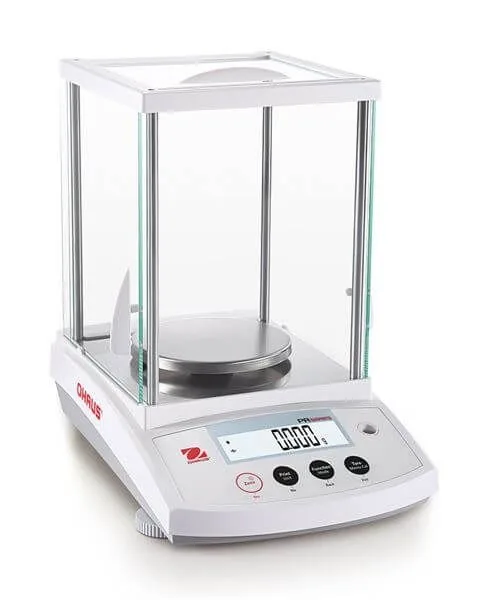
Precision and Top-Loading Balances
Precision balances with 1 mg–0.1 g readability; capacity options from 120 g to 35 kg.
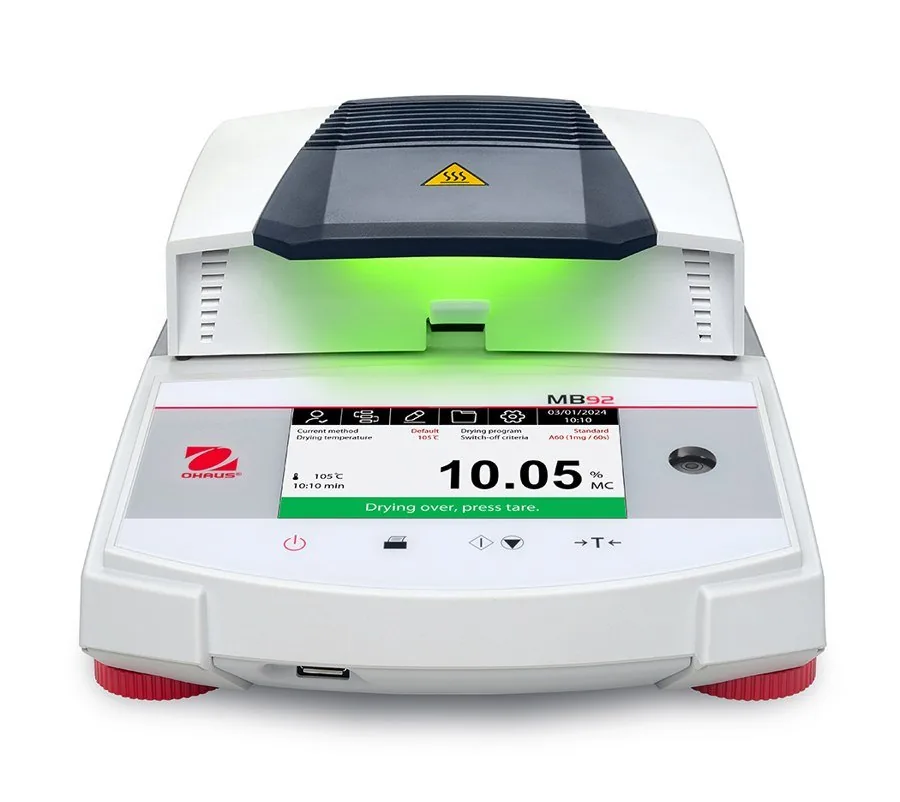
Carbon Fiber Heated Moisture Analyzer
Carbon fiber heated moisture analyzers; 90 g capacity, 1 mg readability, up to 200 °C. Suitable for liquid and solid samples.
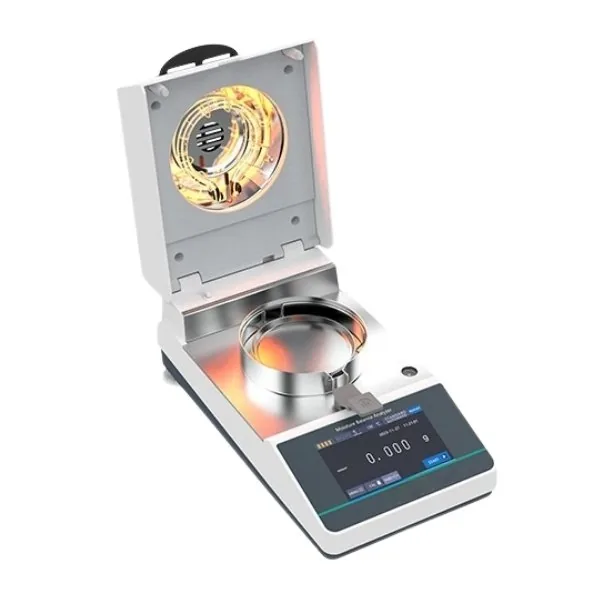
Halogen Moisture Analyzer
Fast moisture analysis with halogen heating; for food, chemical and plastic samples.
Request a quote for this model
A suitable configuration and pricing are prepared based on sample type and workload.
Request a quote