

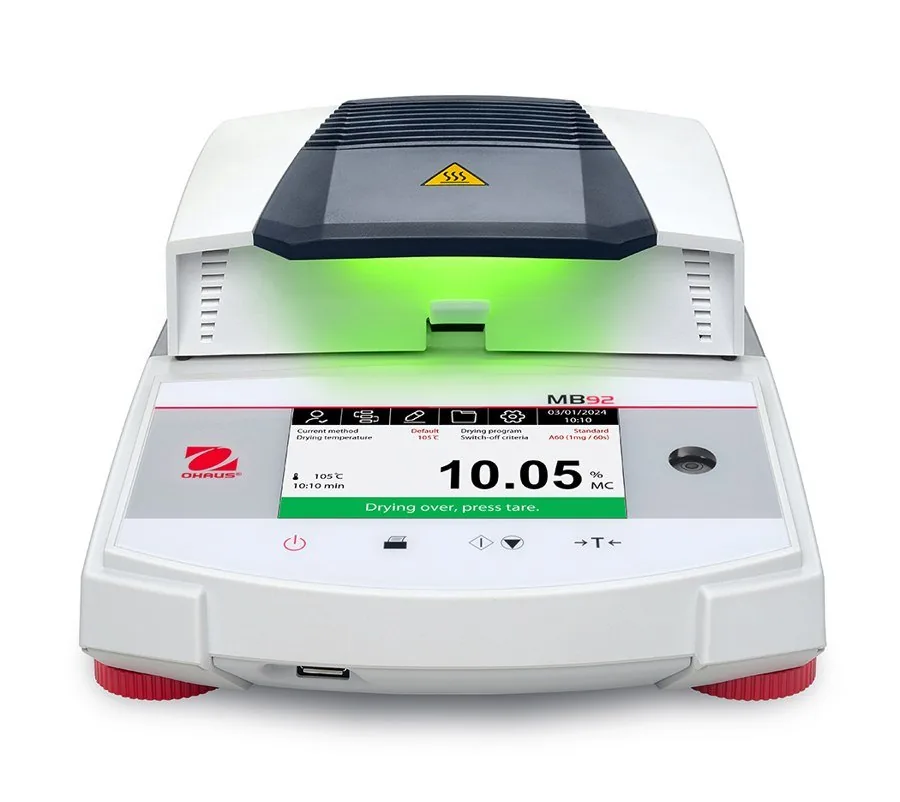
Balances and Moisture Analysis
Carbon Fiber Heated Moisture Analyzer
A carbon fiber heated moisture analyzer monitors weight loss while heating the sample and calculates moisture content within minutes. It offers 90 g capacity, 1 mg readability, a 40–200 °C temperature range and four different drying profiles. It is used for food, chemical, plastic and agricultural samples; with the appropriate sample pan and glass fiber pad, liquid, paste-like and solid samples can be measured.
Request a quote| Capacity | 90 g |
|---|---|
| Readability | 1 mg / 0.01% |
| Temperature range | 40–200 °C |
| Heater | Carbon fiber |
| Repeatability | Down to 0.015% (with 10 g sample) |
Product description
A moisture analyzer is a combination of a balance and a heater. The sample is placed on the pan, the instrument starts heating and continuously measures weight loss. When the weight stabilizes, drying is complete and the moisture content is calculated.
The drying oven method takes hours; a moisture analyzer delivers the same result within minutes. The key benefit of this instrument is that results are available within the time in which a decision must be made on the production line.
Compared with a halogen lamp, the carbon fiber heater provides more homogeneous heat distribution and reduces the risk of burning at the sample surface. Because the heating profile is selectable, a step or ramp profile can be used for heat-sensitive samples.
Model options
- Entry model: 2-line LCD display, two drying profiles (standard and fast), 40–180 °C temperature range, 0.02% repeatability (with 10 g sample). Sufficient for routine moisture control.
- Mid-range model: 5-inch LCD display, four drying profiles (standard, fast, ramp, step), 40–200 °C, 20-method memory, 100-result memory, 0.018% repeatability.
- High-end model: 4.3-inch capacitive touchscreen, drying curve display, statistics functions, 20-method and 200-result memory, 0.015% repeatability, USB host support.
Once the sample type and daily number of measurements are provided, the appropriate model is determined. Method memory and recording requirements are decisive in model selection.
Carbon fiber moisture analyzer applications
The instrument is not limited by the physical state of the sample. Powder, granular and solid samples are placed directly on the pan; liquid, paste and cream samples are measured by spreading them onto a glass fiber pad. With the appropriate consumables, any type of liquid, paste-like or solid sample can be measured.
- Moisture control of raw materials and products in food and feed production
- Moisture measurement of plastic granules and powdered raw materials before processing
- Quality control of chemical powders and additives
- Moisture monitoring of paper, textile and ceramic raw materials
- Harvest and storage control of agricultural products
Consumables
The operating cost of a moisture analyzer consists of two items: the aluminum sample pan and the glass fiber pad. The pan is replaced with every measurement; depending on the sample type, a pad is also needed.
Aluminum sample pan
The disposable aluminum pan is manufactured to fit the instrument's 90 mm pan size. The sample is placed directly on the pan, and when the measurement is finished the pan is discarded together with the sample. No cleaning is required; no residue is carried over to the next measurement.
- Boxes of 50 and 80
- Disposable; not cleaned after measurement
- Fits the instrument's pan holder exactly; lying flat is essential for measurement accuracy
- Reusable metal pan options are also available: 7 mm and 14 mm depth
The deep pan is used when samples that form a skin or have a paste-like consistency are measured after mixing with quartz sand.
Glass fiber pad
The glass fiber pad is supplied in boxes of 200 and is the moisture analyzer consumable that makes the greatest difference. Its function is to increase the surface area of the sample and ensure uniform evaporation.
- Liquid samples: Due to surface tension, liquids form droplets on the pan and drying slows down. The pad absorbs the liquid and spreads it over a wide area; the manufacturer reports that drying time is shortened by a factor of 2 to 3 as a result.
- Paste-like, fatty and melting samples: In butter and similar products, moisture is distributed evenly between the fibers. The increased surface area allows moisture to evaporate more quickly and completely.
- Skin-forming and heat-sensitive samples: In this case, the pad is placed on top of the sample rather than underneath. It gives the sample a new surface and shields it from direct infrared radiation; heating takes place by convection instead of radiation. It significantly improves repeatability for sugar-containing products.
- Sugary samples: Samples with a high sugar content caramelize at the surface. Applying a thin layer, choosing a moderate temperature and covering the sample with a pad reduce this effect.
The glass fiber pad is tared together with the sample pan. If taring is done with the pan only, the weight of the pad is added to the sample weight and the moisture percentage is calculated too low.
Other accessories
- Pan handler: Prevents handling the hot pan by hand after measurement.
- In-use cover: Protects the instrument against spills and scratches.
- Temperature calibration kit: Temperature adjustment is performed only with this kit; it is a separate procedure from weight calibration.
- Sample cage: Used for samples that spatter during heating.
- Spoon: For spreading the sample evenly on the pan.
The instruments are shipped with a quantity of aluminum pans and glass fiber pads in the box; this quantity is intended for the first measurements, and annual consumption should be planned separately.
Method development
The result of a moisture analyzer does not exactly match that of the drying oven method. The two methods work on different principles. The correct approach is to calibrate the instrument's heating program once against the drying oven result and then use this program as the standard.
Three parameters are defined in method development: drying temperature, drying profile and switch-off criterion. The switch-off criterion can be automatic, time-based or user-defined.
The amount of sample and the way it is spread on the pan also affect the result. A thin, homogeneous layer gives much more consistent results than a thick heap.
Sample placement rules
For repeatable results, the sample must be distributed on the pan in a thin, even layer. In a heaped sample, heat is not distributed homogeneously; the center dries incompletely and moisture reads low. A thick layer also prevents moisture from escaping.
The minimum sample quantity is 0.5 grams. For samples containing volatile components or treated with solvents, a maximum of 1 gram should be used and a temperature low enough to prevent ignition should be selected.
Technical evaluation
The instrument is also a balance; it should be installed on a flat, vibration-free surface away from air currents.
Sample pans are consumables. Annual consumption is calculated according to the daily number of measurements and added to the quotation.
A trial with the user's own sample is recommended before purchase; the heating profile varies significantly with sample type.
If an alternative with halogen heating is required, the halogen moisture analyzer can be considered. For weighing in comparison measurements with the drying oven method, an analytical balance is used; all options are in the balances and moisture determination category.
Technical specifications
| Maximum capacity | 90 g |
|---|---|
| Readability | 1 mg / 0.01% |
| Heater type | Carbon fiber |
| Temperature range | 40–180 °C (entry model) · 40–200 °C (higher models) |
| Moisture range | 0.01%–100% |
| Drying profiles | Standard, fast, ramp, step (depending on model) |
| Repeatability | 0.015%–0.02% (10 g sample) · 0.08%–0.15% (3 g sample) |
| Method memory | 20 methods (mid-range and high-end models) |
| Result memory | 100–200 records |
| Weighing pan | 90 mm diameter |
| Interface | USB, RS232 |
| Dimensions | 352 × 138 × 210 mm · 4.3 kg |
| Sample pan | Disposable aluminum, 90 mm; boxes of 50 and 80 |
| Glass fiber pad | Box of 200 |
| Reusable pan | 7 mm and 14 mm depth options |
| Minimum sample | 0.5 g (maximum 1 g for volatile samples) |
Values are taken from the manufacturer's published technical documentation. They may vary by configuration and are confirmed against the current datasheet before quotation.
Frequently asked questions
Does a moisture analyzer replace the drying oven?
It does for routine control, but not as a reference method. The instrument's program is calibrated once against the drying oven result; after that it delivers fast and consistent results. The drying oven continues to be used as the official reference method.
At what temperature should drying be performed?
The temperature is determined according to the sample type. Too high a temperature causes burning and apparent weight loss that does not reflect moisture; at too low a temperature, drying is not completed. The correct value is found by comparative trials against the drying oven result.
How much sample should be used?
Generally 3–10 g of sample is used. A larger sample gives better repeatability; with a 10 g sample, repeatability falls to the 0.015–0.02% band, while with a 3 g sample this value is higher.
How does a carbon fiber heater differ from a halogen heater?
The carbon fiber heater distributes heat more homogeneously and reduces the risk of surface burning. For heat-sensitive samples, this difference affects the accuracy of the result.
Can results be recorded?
Mid-range and high-end models have method and result memory; data can be transferred to a computer or printer via USB and RS232. On the high-end model, the drying curve is also displayed and reported.
How is calibration performed?
Two separate calibrations are required: weight calibration (with an external certified weight) and temperature calibration (with a special kit). The interval for both is planned according to the quality system.
What is the purpose of the glass fiber pad?
It increases the surface area of the sample. For liquid samples, it prevents droplet formation and spreads the liquid over a wide area; according to the manufacturer, it shortens drying time by a factor of 2 to 3. For paste-like and fatty samples, it ensures uniform distribution of moisture. For skin-forming or heat-sensitive samples, it is placed on top of the sample to shield it from direct infrared radiation and provide gentler heating.
How should the pad be handled when taring?
The glass fiber pad is tared together with the sample pan. If taring is done with the pan only, the weight of the pad is added to the sample weight and the moisture percentage is calculated lower than it actually is.
Can the aluminum pan be reused?
The aluminum pan is disposable; it is discarded together with the sample after measurement. Reusing it carries a risk of cross-contamination and incorrect results due to residue from the previous sample. Reusable metal pan options are available separately.
How is annual consumable usage calculated?
Each measurement uses one aluminum pan. For liquid, paste-like, fatty and sugary samples, a glass fiber pad is also used. Once the daily number of measurements and sample distribution are provided, annual consumption is calculated and added to the quotation as a separate item.
When is quartz sand used?
For skin-forming samples and paste-like products, the sample is mixed with quartz sand to increase the surface area. This method requires a high-sided, larger-volume sample pan.
Does the measurement result show only water?
No. The loss on drying method measures the total weight loss during heating and does not distinguish water from other volatile components or from decomposition of the sample. This should be taken into account for samples containing volatile components, and the temperature and time should be selected accordingly.
From the same category
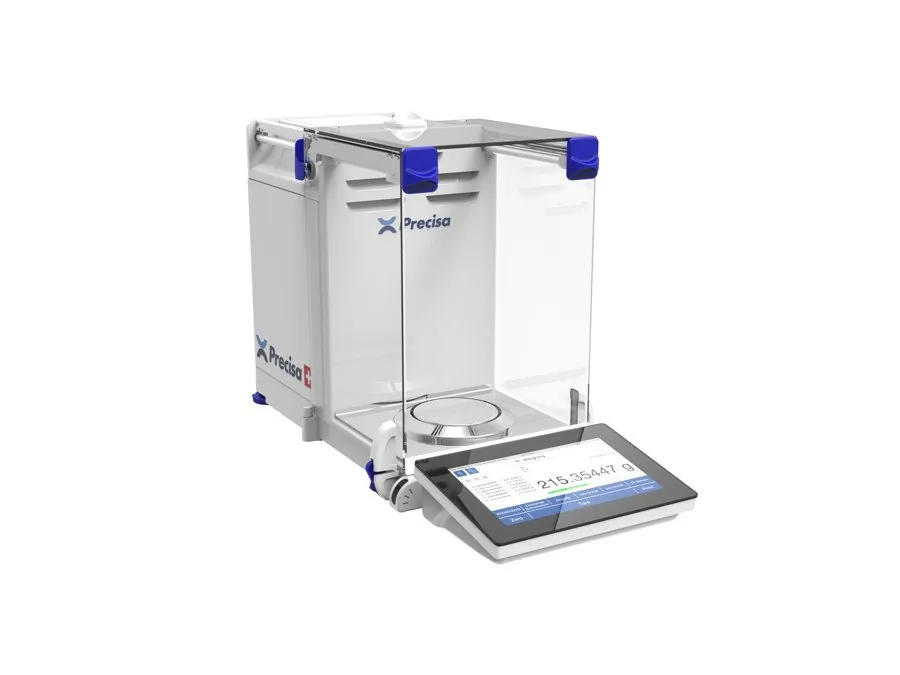
Analytical and Semi-Micro Balances
Analytical balances with 0.1 mg and 0.01 mg readability; models with internal calibration and glass draft shields.
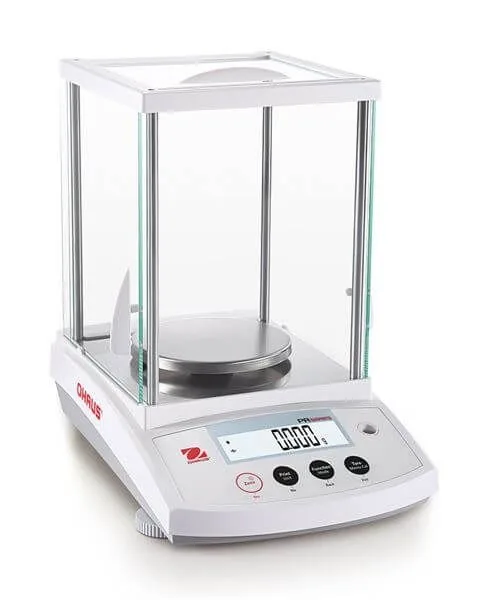
Precision and Top-Loading Balances
Precision balances with 1 mg–0.1 g readability; capacity options from 120 g to 35 kg.
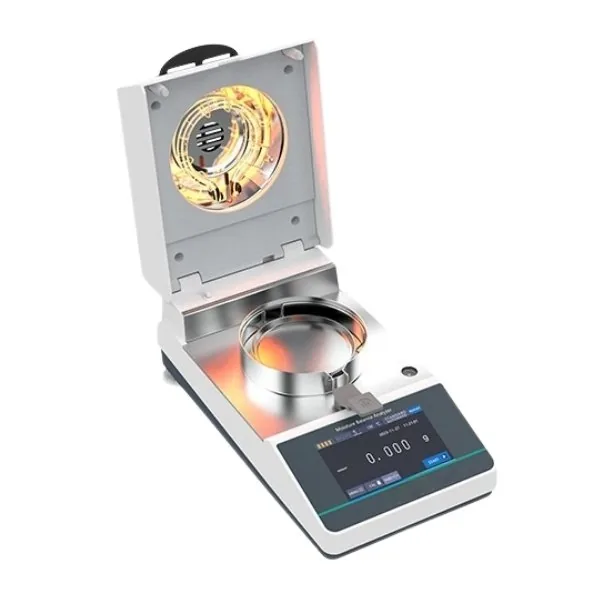
Halogen Moisture Analyzer
Fast moisture analysis with halogen heating; for food, chemical and plastic samples.
Request a quote for this model
A suitable configuration and pricing are prepared based on sample type and workload.
Request a quote