

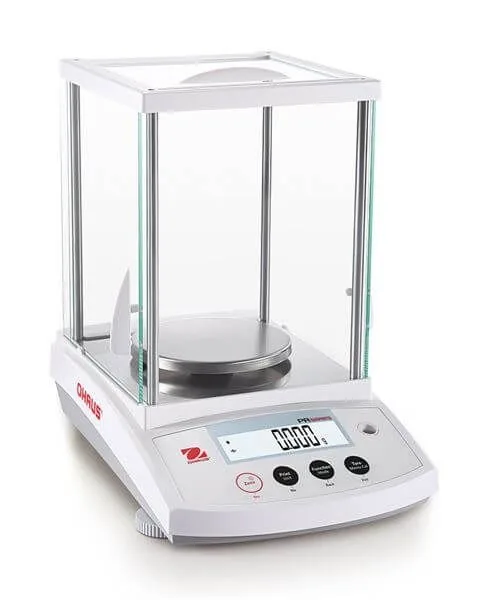
Balances and Moisture Analysis
Precision and Top-Loading Balances
Precision balance options offer 1 mg, 0.01 g and 0.1 g readability for daily laboratory weighing. Capacities range from a hundred grams to tens of kilograms, with internal or external calibration, different weighing pan sizes and application modes such as counting and percent weighing.
Request a quote| Readability | 1 mg · 0.01 g · 0.1 g |
|---|---|
| Capacity | 120 g–35 kg (depending on model) |
| Calibration | Internal automatic or external |
| Weighing pan | 120–200 mm |
| Applications | Counting, percent weighing, tare, unit conversion |
Product description
The precision balance is the most widely used weighing instrument in the laboratory. It is used in sample preparation, culture media and buffer preparation, packaging control and production control. Compared with an analytical balance, it offers higher capacity and lower readability.
The 1 mg class is referred to as top-loading (semi-analytical) and fills the gap between the analytical and precision classes. The 0.01 g and 0.1 g classes are for fast weighing of larger samples.
As capacity increases, the weighing pan size also increases: a 120–135 mm pan is typical for 1 mg models and a 170–200 mm pan for 0.01 g models. The pan size should be selected to suit the base of the container to be weighed.
Precision balance model options
1 mg class (top-loading)
- High-end series: 420–520 g capacity, 0.001 g readability, 0.002 g linearity, internal automatic calibration, 3-door sliding draft shield.
- Touchscreen series: Turkish-language menu, wide range of applications, fully automatic internal calibration.
- Mid-range series: 135 mm weighing pan, automatic calibration, various capacity steps.
- Entry level: Models with external calibration and basic functions.
0.01 g and 0.1 g class
- Laboratory models: 200 mm weighing pan, automatic calibration, multiple application modes.
- Industrial models: High capacity, durable housing, design suited to production environments.
- Compact models: Basic weighing functions, low investment cost, training and routine use.
Once the largest sample weight, the required readability and the size of the container to be used are provided, the appropriate model is determined.
Application modes
Modern precision balances do more than display weight; they include application modes that shorten repetitive tasks.
- Piece counting: Calculating quantity from a reference weight; used for counting consumables and packaging.
- Percent weighing: Proportional display relative to a reference; practical in formulation work.
- Formulation: Sequential weighing of multiple components with running total tracking.
- Check weighing: Accept or reject indication based on defined lower and upper limits.
- Density determination: Measurement of solid and liquid density with a suitable kit.
Technical evaluation
The most common mistake with precision balances is choosing a higher capacity than necessary. As capacity increases, readability becomes coarser; 1 mg resolution cannot be expected from a balance with a 6 kg capacity.
For models to be used in production environments, protection class and ease of cleaning come to the fore. In washdown environments, a model with an appropriate protection class should be selected.
The calibration weight must be of a class appropriate to the capacity of the balance. A weight set and its certificate can be included in the quotation.
For measurements requiring 0.1 mg readability or finer, analytical balance options can be reviewed, and for moisture determination, the carbon fiber heated moisture analyzer. Other models are among the balances and moisture analyzers.
Technical specifications
| Readability | 1 mg · 0.01 g · 0.1 g |
|---|---|
| Capacity | 120 g–35 kg (depending on model) |
| Repeatability | From 0.001 g |
| Linearity | From 0.002 g |
| Weighing pan size | 120–200 mm |
| Calibration | Internal automatic or external |
| Applications | Counting, percent weighing, formulation, check weighing, density |
| Interface | RS232 / USB (depending on model) |
| Power supply | 100–240 V, 50/60 Hz |
Values are taken from the manufacturer's published technical documentation. They may vary by configuration and are confirmed against the current datasheet before quotation.
Frequently asked questions
How to choose between a precision balance and an analytical balance?
The decisive factor is the smallest weighing quantity. If sub-milligram precision is required, an analytical balance is suitable; if samples are in the gram range, a precision balance is suitable. Most laboratories have both classes.
Is choosing a high-capacity balance an advantage?
No. As capacity increases, readability becomes coarser. Capacity should be chosen slightly above the largest sample weight; excessive capacity leads to a loss of precision.
How often should calibration be performed?
It depends on usage intensity and the quality system. Common practice is a daily or weekly check with a certified weight and an accredited calibration once a year.
How accurate is piece counting?
Accuracy depends on the number of reference pieces and the weight variation between pieces. The higher the reference quantity, the more reliable the result; for very light pieces, the readability of the balance sets the limit.
Can it be used in a production environment?
Models with an appropriate protection class can be used in production areas. In dusty and humid environments, models with a washdown-resistant housing should be preferred.
From the same category
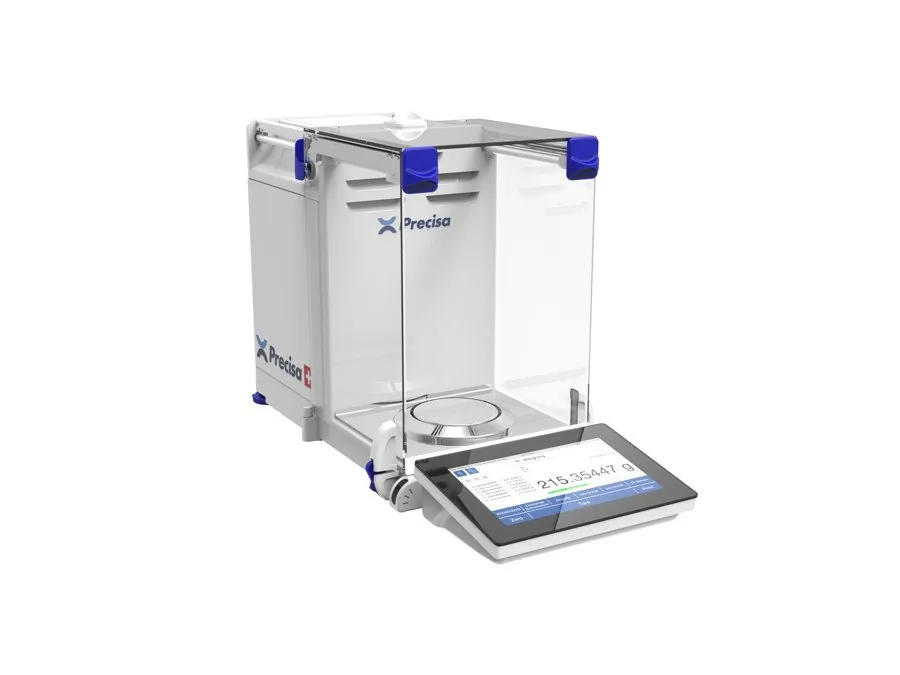
Analytical and Semi-Micro Balances
Analytical balances with 0.1 mg and 0.01 mg readability; models with internal calibration and glass draft shields.
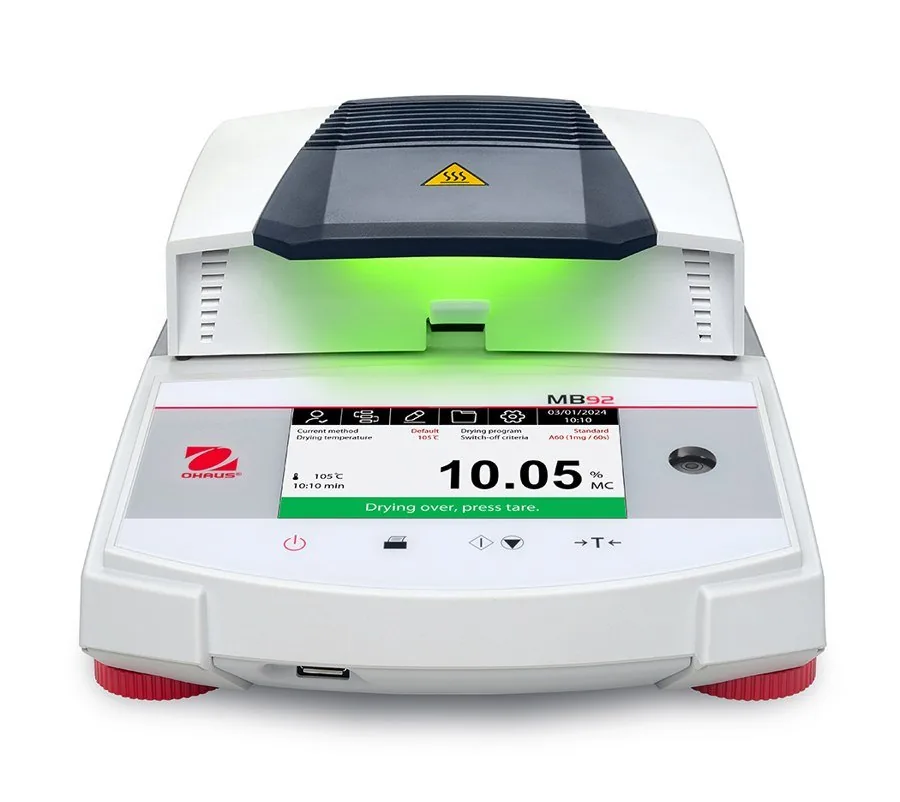
Carbon Fiber Heated Moisture Analyzer
Carbon fiber heated moisture analyzers; 90 g capacity, 1 mg readability, up to 200 °C. Suitable for liquid and solid samples.
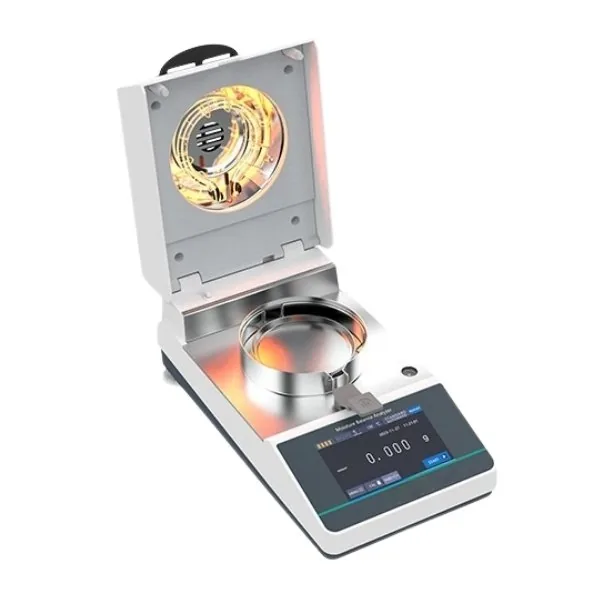
Halogen Moisture Analyzer
Fast moisture analysis with halogen heating; for food, chemical and plastic samples.
Request a quote for this model
A suitable configuration and pricing are prepared based on sample type and workload.
Request a quote