

DLAB
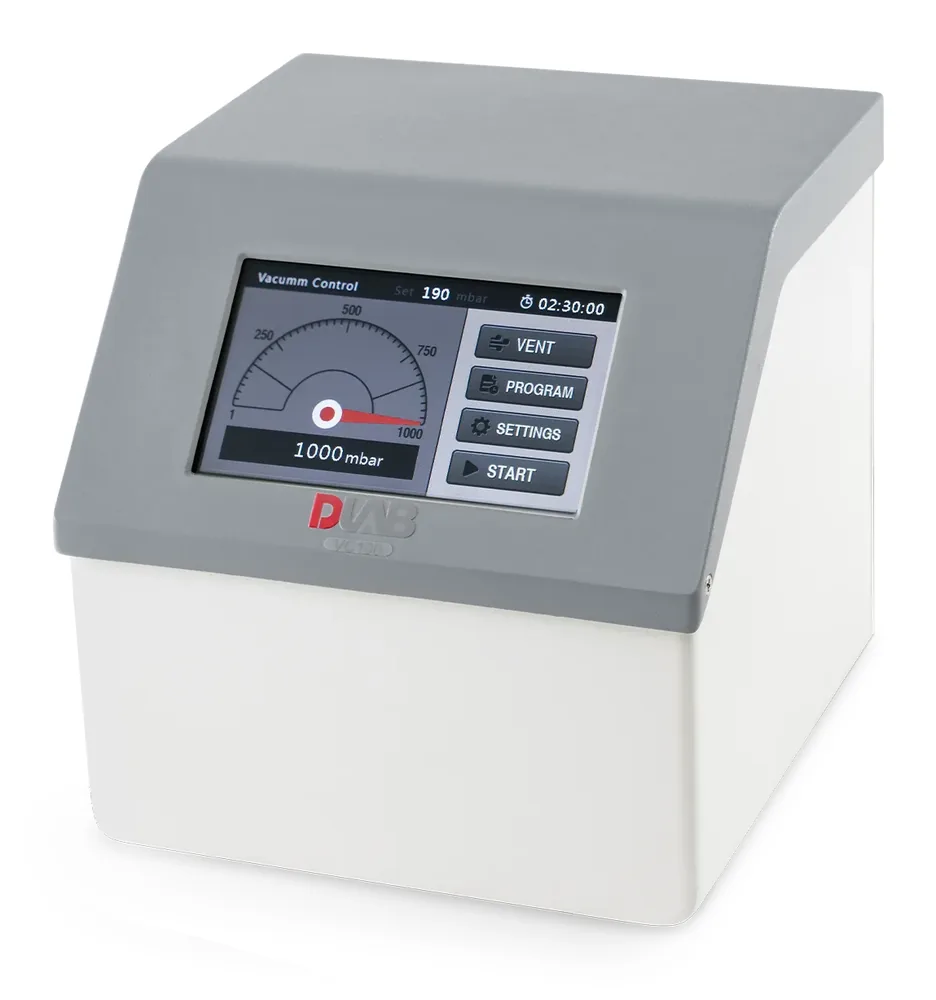
C410 Chemical Diaphragm Vacuum Pump and VC100 Vacuum Controller
The C410 chemical diaphragm vacuum pump is designed for work with corrosive organic solvent vapors, reaches an ultimate vacuum of 13 mbar and is suitable for continuous operation. Together with the pump, the VC100 vacuum controller provides single-point or programmed pressure control in the 1–1,000 mbar range.
Request a quote| Ultimate vacuum | 13 mbar (C410) |
|---|---|
| Flow rate | 25 L/min at 1,000 mbar (C410) |
| Control range | 1–1,000 mbar (VC100) |
| Programs | 5 programs × 5 steps (VC100) |
| Noise | 50 dB (C410) |
Product description
A chemical diaphragm vacuum pump is a dry vacuum source that operates without oil and is designed to withstand organic solvent vapors. The oil changes and contamination of oil by solvents associated with oil-sealed pumps do not occur with this design; it is therefore preferred for everyday tasks such as rotary evaporation and vacuum filtration.
The C410 reaches an ultimate vacuum of 13 mbar, is suitable for continuous operation and draws 95 W. The motor runs at 1,450 rpm, the flow rate at 1,000 mbar is 25 L/min and the operating noise is around 50 dB. The hose connection is 8 mm.
The VC100 vacuum controller is connected upstream of the pump and holds the pressure in the system at the desired value. Via the 5-inch TFT touchscreen, single-point control or programmed control with up to 5 programs of 5 steps each can be performed. Parts in contact with vapor are made of PTFE, PP, silicone and ceramic; an integrated venting valve allows inert gas to be fed into the system.
Model comparison
| Model | Function | Key value | Connection | Power |
|---|---|---|---|---|
| C410 | Chemical diaphragm vacuum pump | 13 mbar ultimate vacuum, 25 L/min | 8 mm hose barb | 95 W |
| VC100 | Vacuum controller | 1–1,000 mbar, 5 programs × 5 steps | 8 mm connection | 600 W |
The VC100 can be used with vacuum pumps rated up to 400 W at 50 Hz and up to 500 W at 60 Hz, and by controlling the pump power supply it can temporarily stop the pump when necessary.
Applications
- Solvent removal in rotary evaporation
- Vacuum filtration and low-pressure distillation
- Solid-phase extraction with SPE cartridges
- Synthesis work involving corrosive organic solvent vapors
University chemistry laboratories, pharmaceutical R&D units, fine chemical companies, natural product extraction laboratories and testing organizations are the main users.
Correct use and maintenance
Placing a cold trap or condensate vessel upstream of the pump reduces the amount of solvent vapor reaching the pump and extends diaphragm life. Running the pump with open air for a few minutes after work is finished purges the remaining vapor.
A small leak at the hose connections significantly degrades the ultimate vacuum. If the expected pressure cannot be reached, the connections and seals are checked first.
Chemical diaphragm vacuum pump selection criteria
- Ultimate vacuum: A pressure that lowers the boiling point of the solvent to near room temperature is required; 13 mbar is sufficient for most common organic solvents.
- Chemical resistance: If work involves acid vapors or halogenated solvents, the wetted materials of the pump and controller should be checked.
- Control requirement: For samples that foam or boil easily, VC100 programmed control is used to lower the pressure step by step.
Together with the RE100 laboratory rotary evaporator, pilot scale rotary evaporators and the DCP recirculating chiller, the pump and controller form a complete evaporation system. For low-vacuum tasks such as aspirating cell culture liquids to waste, a vacuum aspirator is more suitable. Other options are found in the rotary evaporators and chillers category.
Technical specifications
| Ultimate vacuum (C410) | 13 mbar |
|---|---|
| Flow rate (C410) | 25 L/min (at 1,000 mbar) |
| Operating mode (C410) | Continuous operation |
| Motor speed (C410) | 1,450 rpm |
| Power (C410) | 95 W |
| Noise (C410) | 50 dB |
| Hose barb | 8 mm |
| Vacuum setting range (VC100) | 1–1,000 mbar |
| Control mode (VC100) | Single-point and programmed control |
| Program memory (VC100) | 5 programs, 5 steps each (vacuum and time) |
| Display (VC100) | 5-inch TFT touchscreen |
| Sensor overpressure resistance (VC100) | 1,500 mbar |
| Compatible pump (VC100) | ≤400 W at 50 Hz · ≤500 W at 60 Hz |
| Wetted materials (VC100) | PTFE, PP, silicone, ceramic |
| Power supply (VC100) | 110–240 V, 50/60 Hz |
| Dimensions and weight (VC100) | 189 × 207 × 193 mm, 4.0 kg |
| Ambient conditions (VC100) | 10–40 °C, max. 80% relative humidity |
Values are taken from the manufacturer's published technical documentation. They may vary by configuration and are confirmed against the current datasheet before quotation.
Frequently asked questions
Why is the vacuum lowered gradually on a rotary evaporator?
When the pressure is dropped all at once, the solvent boils suddenly and the sample can foam over into the condenser. The programmed mode of the VC100 reduces this risk by lowering the pressure in steps.
Which pumps can the VC100 be used with?
The controller works with vacuum pumps rated up to 400 W on a 50 Hz supply and up to 500 W on a 60 Hz supply. The C410 is below this limit.
What advantage does a diaphragm pump offer over an oil-sealed pump?
Since a diaphragm pump uses no oil, it requires no oil changes and solvent vapor does not contaminate any oil. Its ultimate vacuum pressure is higher than that of oil-sealed pumps; it is therefore suited to medium-vacuum applications such as evaporation and filtration.
From the same category
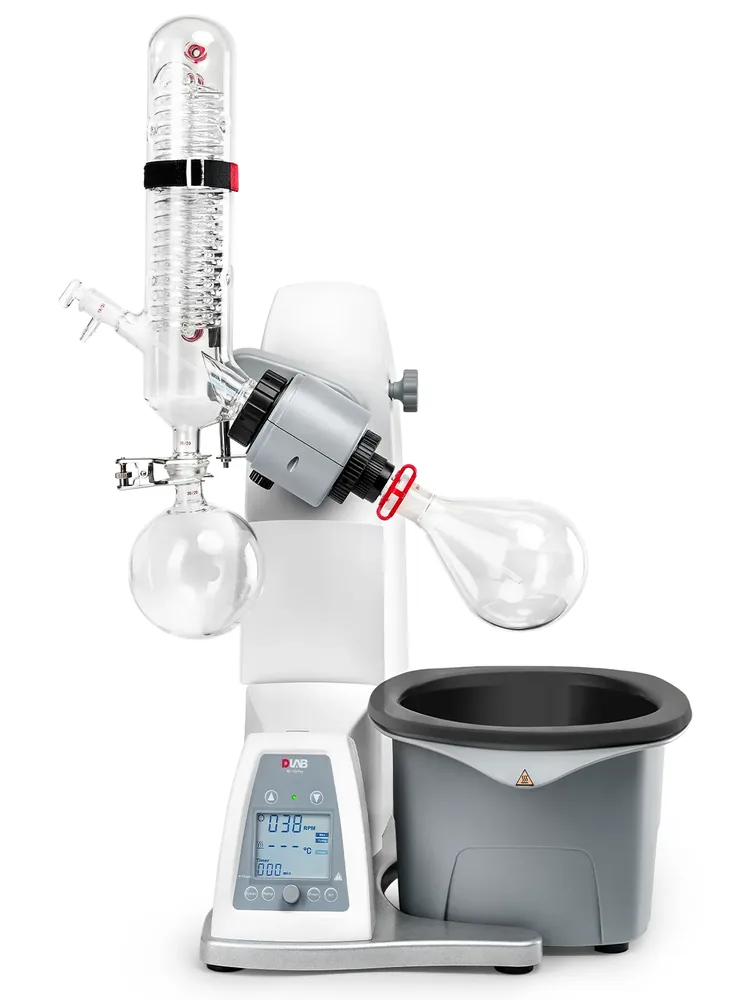
RE100 Series Rotary Evaporator
Laboratory rotary evaporators working with 50–3,000 mL flasks, with a heating bath from room temperature to 180 °C.
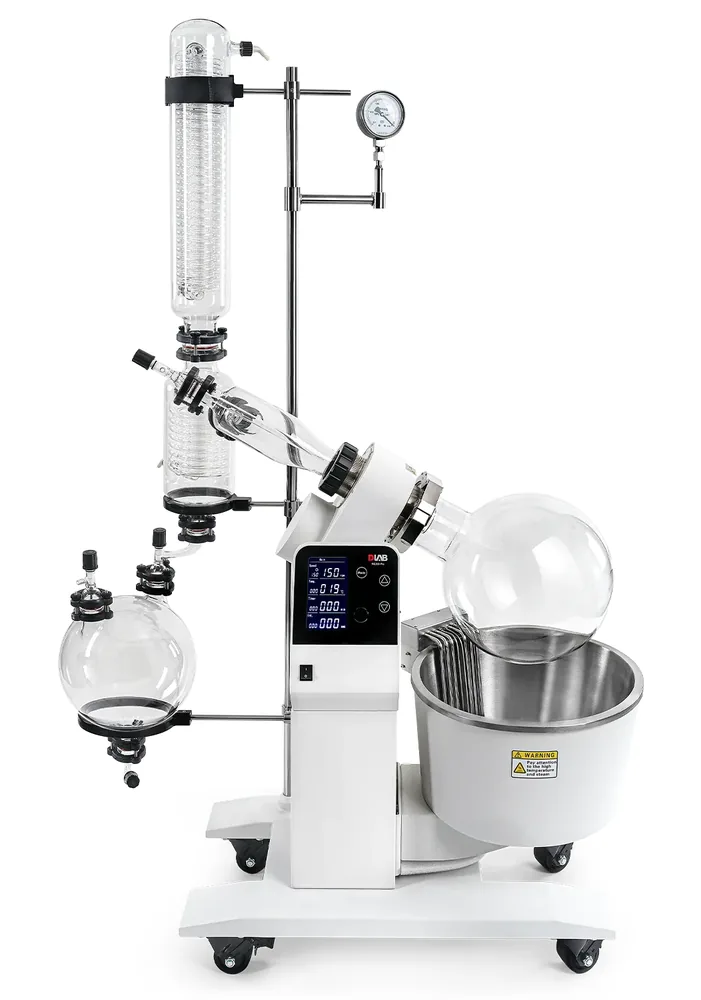
RE200-Pro and RE-E Pilot Scale Rotary Evaporator
Rotary evaporators with flask volumes from 5 L to 50 L for pilot production and large-volume solvent recovery.
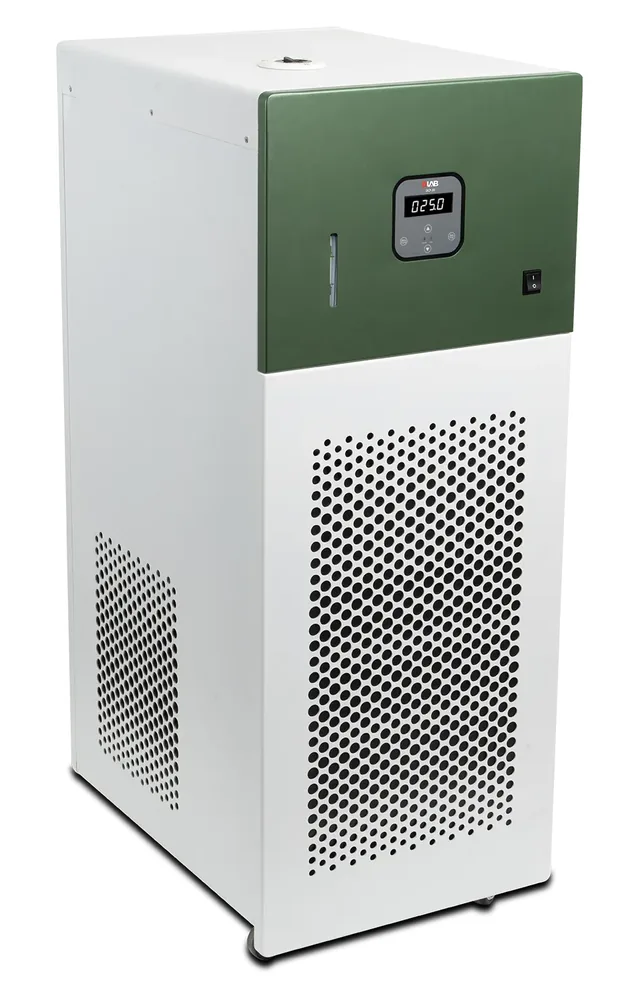
DCP and DUC Recirculating Chiller
Recirculating chillers with 4.5–20 L tanks, cooling down to -20 °C for rotary evaporator condensers and external equipment.
Request a quote for this model
A suitable configuration and pricing are prepared based on sample type and workload.
Request a quote