

Advion Interchim Scientific
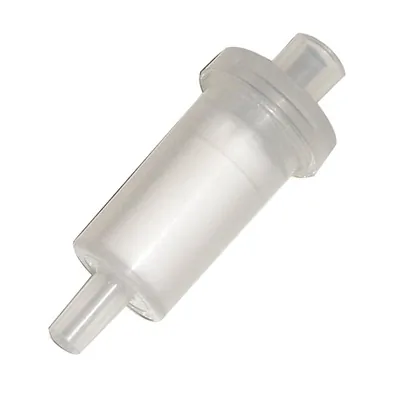
Upti-Clean SPE Cartridges
With spherical silica-based C18, C8, NH2, PSA, SCX, SAX and Florisil phases, Upti-Clean SPE cartridges provide sample cleanup and enrichment prior to HPLC and GC analysis.
Request a quote| Method | Solid phase extraction (SPE) |
|---|---|
| Base silica | Spherical, 99.9% purity, pH 1–7.5 |
| Number of phases | 30 selectivities |
| Formats | 50 mg / 1 mL to 10 g / 60 mL |
| Body | PP or glass; PE or PTFE frit |
Product description
Solid phase extraction (SPE) is a sample preparation method used to clean up the sample and enrich the target compound before analysis. The sample is passed through a cartridge containing a sorbent; the target compound is retained on the sorbent while most of the matrix flows through, and the target compound is then recovered in a small volume of solvent. The result is a cleaner chromatogram, longer column life and a lower limit of detection.
Upti-Clean cartridges are based on Interchim's Upti-prep spherical silica. The silica purity is given as 99.9%, the pore tolerance as ±10 Å and the particle tolerance as ±5 µm. Tight tolerances mean consistent flow and recovery from cartridge to cartridge, which is important for the same method to give the same result across different lots.
Applications
- Cleanup prior to pesticide and residue analysis in food and feed
- Enrichment of trace contaminants in environmental and water samples
- Extraction of drugs and metabolites from biological fluids (plasma, urine)
- Elimination of matrix effects in pharmaceutical and cosmetic products
- Reduction of ion suppression in LC-MS analyses
SPE cartridge phase selection
- Reversed phase (C18-S, C8-S, PH-S, RPAQ): Retention of nonpolar and moderately polar compounds from aqueous samples
- Normal phase (SI-S, CN-S, NH2-S, OH, Florisil, alumina): Cleanup of organic extracts, removal of polar interferences
- PSA-S: Removal of fatty acids, sugars and organic acids; common for food samples
- Ion exchange (SCX, SAX, WCX, DEAE): Selective retention of charged compounds
- Mixed mode (MM1): Combines reversed phase and cation exchange for high cleanliness with basic compounds
- Polymer (Atoll / Recovery): pH conditions that silica cannot withstand and a wide polarity range
The suitable phase is determined by the sample matrix and the structure of the target compound. The phase and sorbent amount are defined at the quotation stage according to the analytical method.
Technical assessment
The cartridges have polypropylene or glass bodies, PE or PTFE frits and a Luer outlet, so they are used with standard vacuum manifolds. The sorbent amount is selected according to the sample volume and expected load: 50–100 mg cartridges suit samples in the milliliter range, while 500 mg–2 g cartridges suit larger volumes and dirty matrices. For high sample numbers, 96-well plates enable automation.
Values are taken from Interchim catalogs; the phase, format and membrane to be ordered are confirmed against the current data sheet.
After SPE, the extract can be clarified with UptiDisc syringe filters before injection; HPLC columns and GC capillary columns are used for the analysis. 4 mL screw cap vials are suitable for eluate collection.
In environmental analysis, SPE extraction from aqueous samples is defined in EPA SW-846 Method 3535A. For an overview of sample preparation methods, see the laboratory technologies page; for other options, see the SPE cartridges section.
Technical specifications
| Base silica | Spherical Upti-prep silica, 99.9% purity, ±10 Å / ±5 µm tolerance, pH 1–7.5 |
|---|---|
| Reversed phase | C18-S, C18-S2F, C8-S, PH-S, RPAQ |
| Normal phase | SI-S, CN-S, NH2-S, OH, Florisil (FL, FL PR), alumina A / B / N |
| Specialty and ion exchange | PSA-S, SCX, SAX, WCX, DEAE, MM1, P6 |
| Polymer | Atoll / Recovery |
| Formats | 50 mg/1 mL, 100 mg/1 mL, 100 mg/3 mL, 200 mg/3 mL, 200 mg/6 mL, 500 mg/3 mL, 500 mg/6 mL, 1 g/6 mL, 2 g/6 mL, 2 g/15 mL, 2 g/25 mL, 10 g/60 mL |
| Other formats | 96-well plates, large-volume cartridges |
| Body and frit | Polypropylene or glass; PE or PTFE frit; Luer outlet |
Values are taken from the manufacturer's published technical documentation. They may vary by configuration and are confirmed against the current datasheet before quotation.
Frequently asked questions
What is the difference between SPE and QuEChERS?
In SPE, the sample is passed through a cartridge and the retention, washing and elution steps are performed in a controlled manner. QuEChERS is a fast dispersive method in which the sorbent is mixed directly into the extract. When higher cleanliness and enrichment are required, an SPE cartridge is preferred.
Can a cartridge be reused?
SPE cartridges are single-use. Reuse leads to carryover from the previous sample and loss of recovery.
How is the sorbent amount selected?
The sample volume and the expected matrix load are decisive. For samples in the milliliter range, 50–100 mg is preferred; for large volumes and dirty matrices, 500 mg–2 g of sorbent.
Request a quote for this model
A suitable configuration and pricing are prepared based on sample type and workload.
Request a quote