

GC Columns
GC Capillary Columns
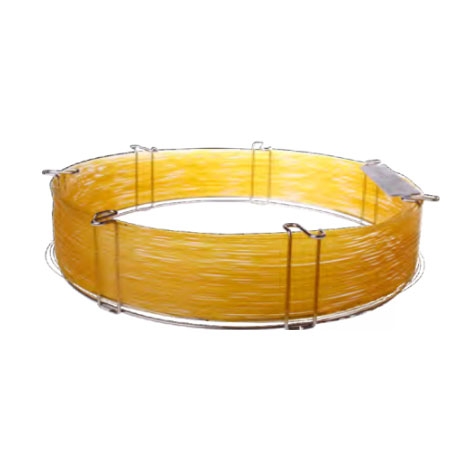
A GC capillary column is a thin silica column that separates compounds in gas chromatography according to their interactions with the stationary phase. Offered in a wide range of phases from nonpolar polydimethylsiloxane to polar polyethylene glycol, with various internal diameter, length and film thickness options.
Request a quote| Phase range | Nonpolar, mid-polar, polar and application-specific phases |
|---|---|
| Internal diameter | 0.20 · 0.25 · 0.32 · 0.53 mm |
| Length | 5–105 m |
| Film thickness | 0.10–5.00 µm |
| Temperature limit | −60 °C to 400 °C, depending on phase |
Phase groups
In gas chromatography, the key factor that determines separation is the stationary phase on the inner surface of the column. The columns supplied fall into four main groups.
Nonpolar and low-polarity phases
Phases of 100% polydimethylsiloxane and phases containing 5% diphenyl separate compounds primarily by boiling point. Most general-purpose analyses are run on these two phases. Low-bleed MS versions reduce baseline noise in systems coupled to a mass spectrometer. For applications requiring high temperatures, polyimide-coated options stable up to 400 °C are available.
Mid-polarity phases
Phases containing cyanopropyl-phenyl are used in applications such as pesticide analysis, volatile organic compounds and cis/trans separation of fatty acid methyl esters. This group can resolve structural analogs that nonpolar phases cannot separate.
Polar phases
Polyethylene glycol-based phases are preferred for the analysis of alcohols, aroma compounds and free fatty acids. Versions modified with nitroterephthalic acid were developed for acidic compounds, and base-deactivated versions for amines. Polar phase options resistant to aqueous samples are also available.
Application-specific phases
- Volatile organic compound analysis (EPA methods 502.2, 524.2, 624, 8260)
- Chlorinated pesticide analysis (EPA 508, 608 and EPA 8081B methods)
- Simulated distillation (ASTM D2887)
- Hydrocarbon distribution analysis in petrochemicals
- Residual solvent determination (pharmacopoeia methods)
GC capillary column selection criteria
If the method specifies a phase or USP code, the selection follows it. When developing a new method, four parameters are evaluated together.
- Internal diameter: 0.25 mm provides high resolution; 0.53 mm provides high sample capacity.
- Length: A longer column improves separation and extends analysis time.
- Film thickness: A thick film retains volatile compounds; a thin film shortens run time for high-boiling compounds.
- Temperature limit: The upper temperature of the oven program must remain below the column's limit.
When the technical specifications or chromatogram of the current column are provided, an equivalent phase and dimension recommendation is presented along with its rationale.
Technical evaluation
Column life depends largely on maintenance of the injection port. In systems where the liner and septum are not replaced regularly, even the highest-quality column wears out prematurely.
Even for equivalent column changes that do not require a method change, the system suitability test must be repeated; retention times differ slightly from manufacturer to manufacturer.
Keeping a spare column is recommended for critical analyses. A column that fails during an analysis campaign means work stops for the duration of the delivery time.
In headspace and volatile analyses, the vial system affects the result as much as the column; crimp headspace vials and screw headspace vials are used for these applications. For liquid-injection GC, standard 9 mm screw HPLC vials and PTFE/silicone septa are preferred. An overview of the technique is available on the laboratory technologies page.
Frequently asked questions
Which phase should a new method start with?
For general-purpose analyses, a low-polarity phase containing 5% diphenyl is a common starting point. For polar compounds (alcohols, free fatty acids), polyethylene glycol-based phases are considered.
What does the choice of internal diameter change?
A 0.25 mm internal diameter provides high resolution and is common in GC-MS. A 0.53 mm internal diameter gives greater sample capacity, but lower resolution.
What shortens column life?
The main causes of shortened column life are a poorly maintained injection port, carrier gas containing oxygen and operating the column above its temperature limit.
Request a quote for this model
A suitable configuration and pricing are prepared based on sample type and workload.
Request a quote