

Vials, Caps and Septa
ND18 Headspace Vials and Magnetic Caps
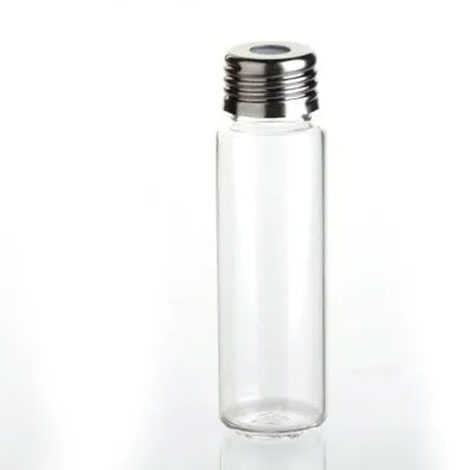
ND18 is a screw thread headspace vial with an 18 mm neck for gas chromatography headspace analyses. It is offered in 10 and 20 mL volumes with a rounded bottom, a magnetic silver cap and a PTFE/silicone septum rated from -40 °C to 200 °C.
Request a quote| Neck type | ND18 screw thread (18 mm) |
|---|---|
| Volume | 10 mL and 20 mL |
| Bottom | Rounded |
| Cap | Magnetic silver, 1.5 or 3.0 mm septum |
| Septum temperature | −40 °C – 200 °C |
Product description
In headspace analysis, the sample is heated in the vial and the gas phase above the liquid phase is injected. For this to work properly, the vial must be leak-tight and the cap must stay in place under pressure throughout heating. The screw thread design of ND18 ensures this.
A magnetic cap is required for the autosampler to hold the vial. The robotic arm grips the magnetic cap and transfers the vial to the heating block and the injection position. This is standard practice in the headspace units of Agilent, Shimadzu, Thermo, PerkinElmer and CombiPAL systems.
The septum temperature range is -40 °C to 200 °C. In volatile organic compound and residual solvent analyses, heating between 80-120 °C is typical; this range is covered comfortably.
Selection criteria for screw thread headspace vials
- Volume: 10 mL and 20 mL. The vial volume stated in the method text must match the heating block position exactly.
- Septum thickness: 1.5 mm and 3.0 mm. At high temperature and with multiple injections, 3.0 mm is more secure.
- Glass color: Clear and amber. Amber is preferred for light-sensitive volatile components.
Cap and septum
The ND18 vial closes with an 18 mm magnetic screw cap. No crimper is needed; however, because the tightening force depends on the operator, tightening practice should be standardized in laboratories with multiple users.
Cap type
Suitable cap: magnetic headspace caps. If the vial is used for storage only, standard 18 mm screw caps can also be used.
Septum type
- PTFE/silicone septum: PTFE on the side facing the sample, silicone on the back. Provides both chemical inertness and resealing; it is the standard choice for HPLC and GC applications.
- Single-layer silicone septum: No PTFE facing. Reseals better; used for multiple piercings and storage, not recommended for trace analysis.
For headspace work, a 3.0 mm septum is selected; a thin septum cannot withstand the internal pressure that builds up during heating.
In pharmaceutical applications such as residual solvent determination, method conditions are defined by the ICH quality guidelines and pharmacopoeia texts; vial volume and septum thickness are selected according to the text.
Place in the analytical workflow
The headspace unit heats the vial and transfers the gas phase to the GC capillary column. For laboratories that prefer crimp closures, the ND20 crimp headspace vial is an alternative. All options are listed in the vials, caps and septa section.
Common mistakes
- Overfilling the vial with sample; the gas phase becomes smaller and sensitivity drops. Unless the method states otherwise, the vial is generally filled to no more than half.
- Retightening the cap after heating; the septum is damaged and the seal is compromised.
- Leaving method parameters unchanged when using a vial of a different volume.
Frequently asked questions
Can a screw thread headspace vial replace a crimp vial?
In most headspace applications it can, and it makes investing in a crimper unnecessary. For work that requires the highest repeatability and a constant closing force, a crimp vial is preferred.
Should 10 mL or 20 mL be chosen?
The volume stated in the method text is selected; the heating block position is also designed for this volume. If the method does not specify it, the decision is based on sample volume and the required sensitivity.
Why is a magnetic cap needed?
Most automated headspace samplers transfer the vial with a magnetic gripper. Without a magnetic top, the instrument cannot pick the vial up from the tray.
From the same category
ND8 Vials and Caps
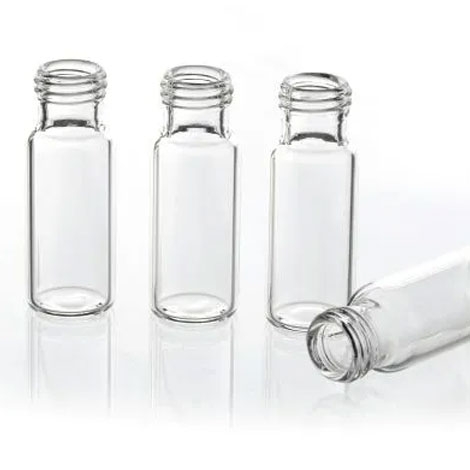
8-425 thread, 1.5 mL screw thread HPLC vials; clear and amber, with printed options.
ND9 Vials and Caps
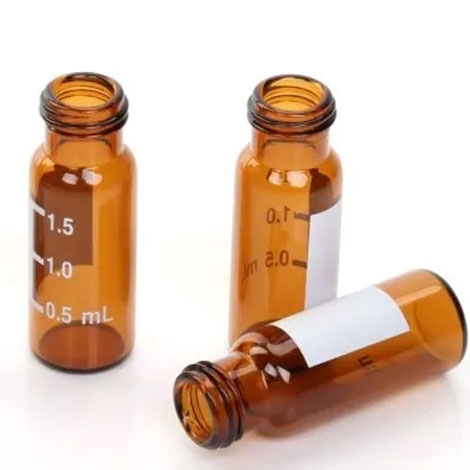
The most common HPLC vial: 9 mm screw thread, 1.5 mL, with options featuring fitted inserts.
ND11 Crimp Vials and Caps
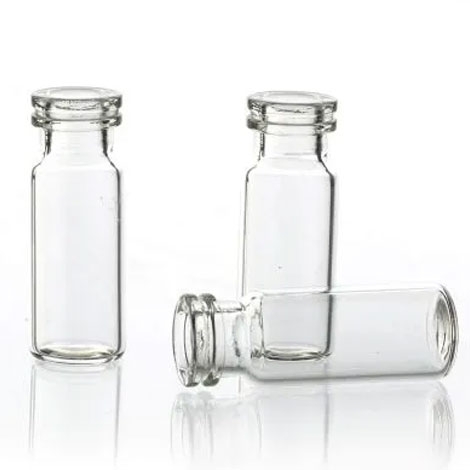
1.5 mL vials with 11 mm crimp neck; aluminum cap and rubber/PTFE septum options.
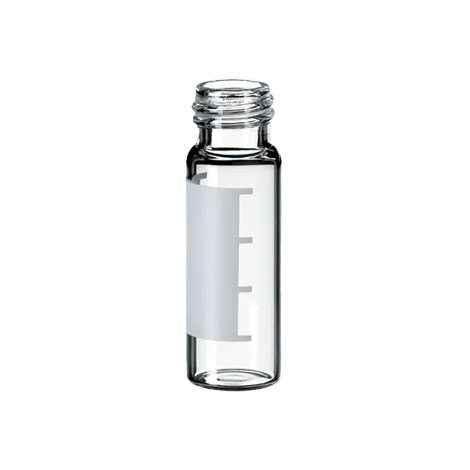
ND13 Vials and Caps
4 mL, 13 mm screw thread vials for large-volume samples and storage.
Request a quote for this model
A suitable configuration and pricing are prepared based on sample type and workload.
Request a quote