

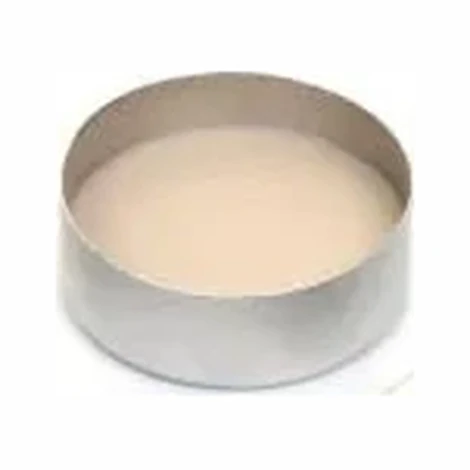
Vials, Caps and Septa
Silicone Septa
A single-layer silicone septum is a flexible septum without a PTFE lining. With its high resealing capability, it is used in multiple-injection work and sample storage; it is not recommended for applications involving trace analysis or aggressive solvents.
Request a quote| Structure | Single-layer silicone |
|---|---|
| Thickness | 1.3 mm · 1.5 mm · 3.0 mm |
| Temperature | -60 … +200 °C |
| Strength | Resealing and multiple piercing |
| Limitation | Not suitable for trace analysis |
Product description
A single-layer silicone septum is a septum without a PTFE lining. The most distinctive property of silicone is its flexibility: after the needle passes through, the puncture contracts and largely closes.
This property is an advantage in work in which more than one injection is made from the same vial. With PTFE-lined septa, the upper layer does not stretch, so the hole tends to remain open; with pure silicone, this problem is significantly reduced.
On the other hand, silicone is not chemically inert. On contact with solvent, low-molecular-weight silicone compounds can pass into the solution. These compounds appear as extraneous peaks in the chromatogram and produce characteristic ions in the mass spectrometer.
A silicone septum is therefore suitable for applications in which contact with the sample is brief and concentrations are high. For trace analysis and samples with long holding times, a PTFE-lined septum should be used.
Where single-layer silicone septa are used
- Multiple-injection work: Methods requiring repeated injections from the same vial.
- High-concentration samples: Applications in which trace-level contamination does not affect the result.
- Sample storage: Samples archived after analysis that will not be measured again.
- Aqueous solutions: Samples containing no organic solvent that would dissolve the silicone.
- Teaching and routine checks: Work in which cost is the priority and sensitivity is not critical.
If unexplained peaks appear in the chromatogram and a silicone septum is in use, the first check is to measure the same sample again with a PTFE/silicone septum. If the peaks disappear, the septum is the source.
Technical considerations
Silicone has a wide temperature range: it retains its elasticity between -60 °C and +200 °C. The fact that it does not harden at low temperatures is an advantage in cooled autosamplers.
Butyl rubber septa are offered as an alternative to silicone. Their gas permeability is lower than that of silicone; they perform better at retaining volatile components, but their chemical resistance is more limited.
The cost advantage is clear. In laboratories working with high sample volumes and not performing trace analysis, it makes a difference in the annual consumables budget.
Silicone septa are used with screw vial caps and aluminum crimp caps; all options are listed in the vials, caps and septa section.
Correct use
A vial with a silicone septum should not be inverted or filled completely, so that contact between the sample and septum is kept to a minimum. If a long holding time in the tray is planned, a PTFE-faced septum is preferred over silicone. If siloxane-related background ions appear in mass spectrometry analyses, the septum is the first component to suspect.
Silicone septa, preferred in teaching laboratories and high-concentration routine checks because they are economical, should be used after sample and solvent compatibility has been verified. For samples with a high proportion of organic solvent, a short trial series shows whether septum-related peaks occur.
Technical specifications
| Structure | Single-layer silicone |
|---|---|
| Thickness options | 1.3 mm · 1.5 mm · 3.0 mm |
| Temperature range | -60 °C … +200 °C |
| Hardness | 40–50 Shore A |
| Resealing | High; suitable for multiple-injection work |
| Chemical resistance | Limited; may release substances in organic solvents |
| Alternative | Butyl rubber (low gas permeability) |
| Pack | Boxes of 100 and 1,000 |
Values are taken from the manufacturer's published technical documentation. They may vary by configuration and are confirmed against the current datasheet before quotation.
Frequently asked questions
When should a silicone septum be preferred?
It is preferred for work in which more than one injection is made from the same vial, sample concentrations are high and trace-level contamination does not affect the result. It is also widely used for sample storage.
Why is it not used in trace analysis?
On contact with solvent, silicone can release low-molecular-weight compounds. These compounds create extraneous peaks in measurements at ppm and ppb level and distort the result. A PTFE-lined septum should be used in trace analysis.
How does it differ from a PTFE/silicone septum?
In a PTFE/silicone septum, the face toward the sample is PTFE-lined and provides chemical isolation. A pure silicone septum has no such lining. Silicone reseals better, while the PTFE-lined septum gives a cleaner chromatogram.
What is a butyl rubber septum used for?
Its gas permeability is lower than that of silicone; it performs better at keeping volatile components in the vial. On the other hand, its chemical resistance is more limited. It is considered as an alternative in headspace applications.
From the same category
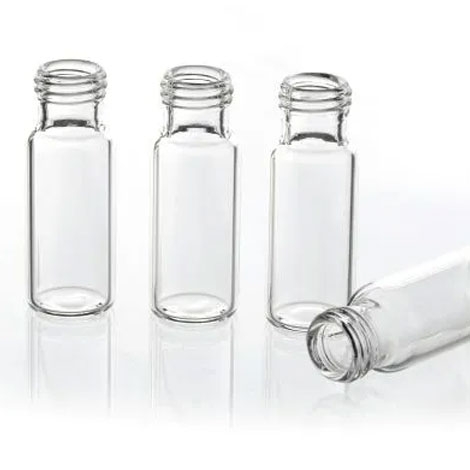
ND8 Vials and Caps
8-425 thread, 1.5 mL screw thread HPLC vials; clear and amber, with printed options.
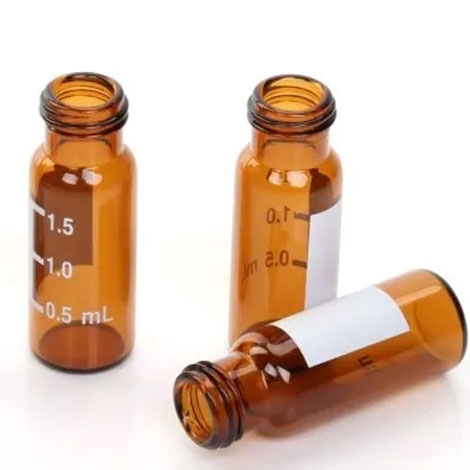
ND9 Vials and Caps
The most common HPLC vial: 9 mm screw thread, 1.5 mL, with options featuring fitted inserts.
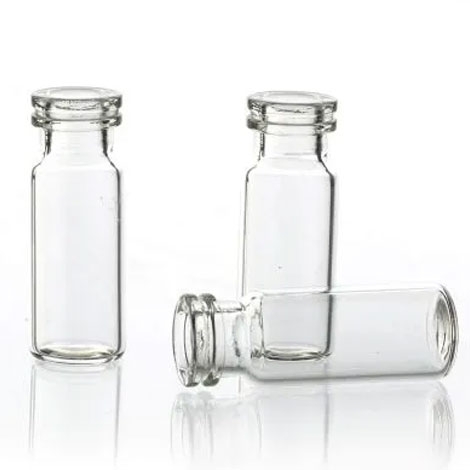
ND11 Crimp Vials and Caps
1.5 mL vials with 11 mm crimp neck; aluminum cap and rubber/PTFE septum options.
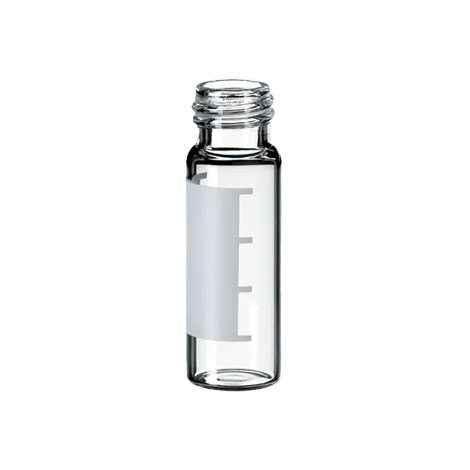
ND13 Vials and Caps
4 mL, 13 mm screw thread vials for large-volume samples and storage.
Request a quote for this model
A suitable configuration and pricing are prepared based on sample type and workload.
Request a quote