

Vials, Caps and Septa
Crimp Caps
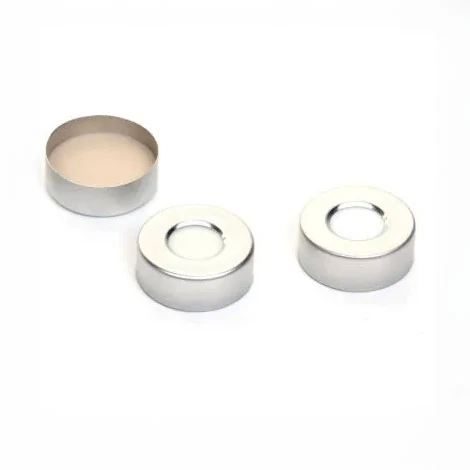
An aluminum crimp cap is a cap fixed to the vial neck by being crimped with a crimping tool. It is offered in 11 mm analytical and 20 mm headspace sizes, with magnetic-top and tear-off options, and provides the most reliable sealing for volatile samples and at high temperatures.
Request a quote| Sizes | 11 mm (analytical) · 20 mm (headspace) |
|---|---|
| Material | Aluminum |
| Sealing | Crimper required |
| Top type | Plain · magnetic · tear-off |
| Septum | PTFE/silicone · PTFE/rubber · silicone |
Product description
A crimp cap is fixed by crimping an aluminum ring under the vial lip with a crimping tool. The connection is permanent; the cap can only be removed with a decapper. This design provides a level of sealing that a screw cap cannot achieve.
Crimp caps are preferred for samples containing volatile components and for headspace analysis. In the headspace method, the vial is heated to 40–150 °C and the internal pressure increases. A screw cap can loosen at this pressure; a crimp cap does not.
Magnetic-top crimp caps allow the autosampler to grip the vial with a magnetic gripper. This feature is essential in headspace and automated sample transfer systems.
With the tear-off option, the top part of the cap is lifted off by finger; no decapper is required. It is used in work in which the sample is re-examined after storage.
Crimping and sealing aluminum crimp caps
Crimp caps must be sealed with a correctly adjusted crimper. The jaw opening of the crimper is adjusted according to the cap size.
- Under-crimped cap: Can be turned by finger. It loosens during heating and the sample evaporates.
- Correctly crimped cap: Cannot be turned, the aluminum ring sits fully on the vial neck and the top surface is flat.
- Over-crimped cap: The aluminum wrinkles, there is a risk of cracking at the vial neck and the septum is crushed.
The check is simple: if the cap cannot be turned by finger and the top surface is flat, the crimp is correct. This check should be performed on the first few vials of each new batch of caps.
Manual crimpers are sufficient for low sample numbers. If the daily sample number is high, an electric crimper both keeps the crimping force constant and eliminates operator fatigue.
Applications
- Headspace GC: 20 mm magnetic caps on ND20 crimp headspace vials, sealing under heating at 40–150 °C.
- Volatile organic compound analysis: Preventing sample loss during holding time.
- Residual solvent determination: Preserving low-concentration volatiles in pharmaceutical samples.
- Long-term storage: Preventing evaporation and moisture uptake in archived samples.
- Autosamplers: Systems requiring magnetic gripping.
11 mm caps are used with 11 mm crimp HPLC vials ND11. For septum selection, see the PTFE/silicone septum page; for headspace work without a crimper, see magnetic headspace caps. All options are listed in the vials, caps and septa section.
Correct use
After the cap is seated squarely on the vial neck, the crimper is closed in a single, continuous motion. An incomplete crimp leaves one side of the cap loose. On headspace vials to be heated, the cap is checked by finger after sealing; a cap that turns is not re-crimped but replaced with a new one.
Technical specifications
| Sizes | 11 mm · 20 mm |
|---|---|
| Body material | Aluminum |
| Top type | Plain · magnetic · tear-off |
| Septum options | PTFE/silicone · PTFE/rubber · silicone · butyl |
| Septum thickness | 1.3 mm · 3.0 mm (headspace) |
| Sealing | Manual or electric crimper |
| Temperature | Up to 150 °C in headspace applications |
| Pack | Boxes of 100 and 1,000 |
Values are taken from the manufacturer's published technical documentation. They may vary by configuration and are confirmed against the current datasheet before quotation.
Frequently asked questions
Is a tool required for crimp caps?
Yes. A crimper is required to crimp the aluminum ring onto the vial neck. A separate decapper is also used for opening; this is not required with the tear-off option.
How can it be determined whether the cap is crimped correctly?
The cap should not turn by finger and its top surface should remain flat. If it can be turned, it is under-crimped; if the aluminum is wrinkled, it is over-crimped. Over-crimping creates a risk of cracking at the vial neck.
Why is a magnetic cap needed?
Headspace samplers and some autosamplers grip the vial with a magnetic gripper. Without a magnetic-top cap, the instrument cannot pick up the vial from the tray. The gripper type of the instrument should be verified before ordering.
Which septum thickness is used for headspace?
A 3.0 mm thick septum is used on headspace vials. It resists the internal pressure that builds up under heating better than a thin septum and reseals better after needle piercing.
Can a crimp cap be reused?
No. The aluminum ring is permanently deformed; a removed cap cannot be re-crimped. A new cap is used for each vial.
From the same category
ND8 Vials and Caps
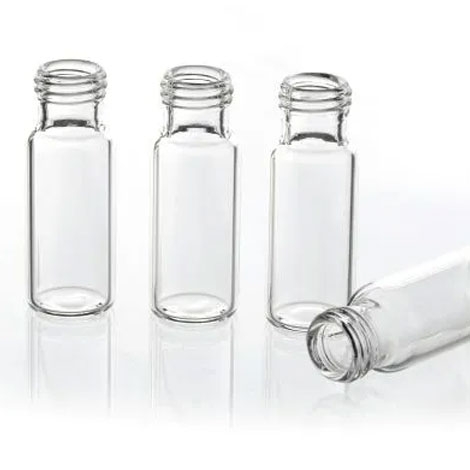
8-425 thread, 1.5 mL screw thread HPLC vials; clear and amber, with printed options.
ND9 Vials and Caps
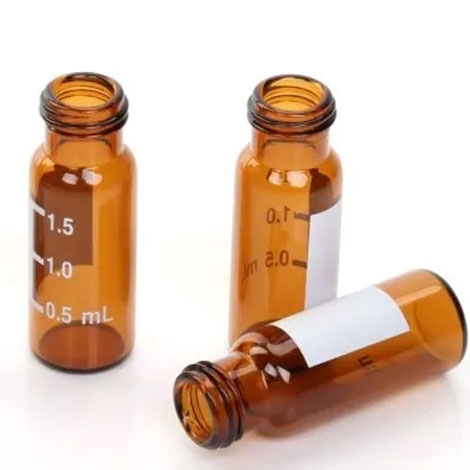
The most common HPLC vial: 9 mm screw thread, 1.5 mL, with options featuring fitted inserts.
ND11 Crimp Vials and Caps
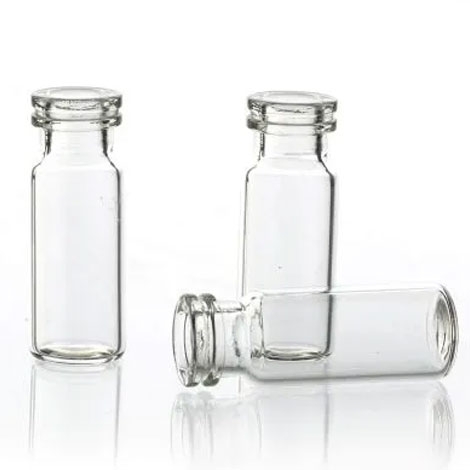
1.5 mL vials with 11 mm crimp neck; aluminum cap and rubber/PTFE septum options.
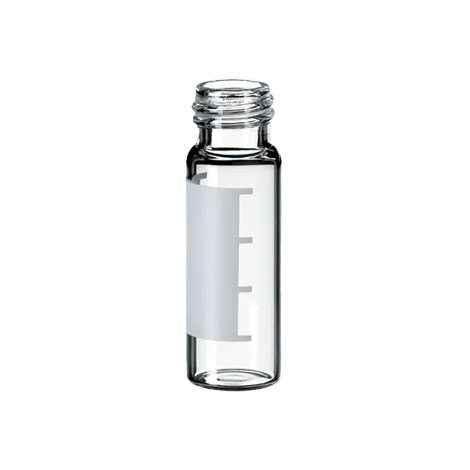
ND13 Vials and Caps
4 mL, 13 mm screw thread vials for large-volume samples and storage.
Request a quote for this model
A suitable configuration and pricing are prepared based on sample type and workload.
Request a quote