

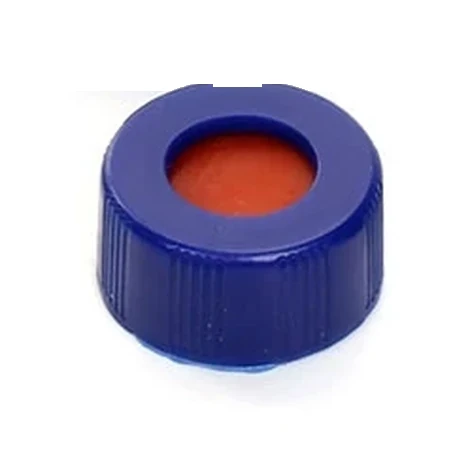
Vials, Caps and Septa
PTFE/Silicone Septa
A PTFE/silicone septum is a two-layer septum with a PTFE-lined face toward the sample and a silicone backing. PTFE provides chemical isolation, while the silicone layer reseals the puncture after the needle passes through; it is the standard choice for HPLC and GC autosampler applications.
Request a quote| Structure | PTFE face + silicone backing |
|---|---|
| Sample contact | PTFE only |
| Thickness | 1.0 · 1.3 · 1.5 · 3.0 mm |
| Temperature | -40 … +200 °C |
| Piercing | Single use recommended |
Product description
A PTFE/silicone septum consists of two layers. The thin upper PTFE layer is the face in contact with the sample; the thicker silicone layer below provides flexibility and resealing.
These two layers solve two different problems. PTFE is almost chemically inert; it releases no substances on contact with solvent and does not create ghost peaks in the chromatogram. Silicone, on the other hand, contracts to close the puncture after the needle passes through; when PTFE is used alone, this resealing does not occur and the sample evaporates.
The septum is placed in the vial with the PTFE face toward the sample. If the septum is fitted upside down, the silicone contacts the sample; components leaching from the silicone appear as extraneous peaks in the chromatogram. This is the most common cause of septum-related problems.
Why a PTFE face is needed
In analytical chromatography, the concentrations measured are often in the ppm and ppb range. At this level, even a trace amount of a substance leaching from the septum produces a detectable peak.
- Ghost peaks: Oligomers and additives released from the septum create peaks that are not present in the sample.
- Baseline rise: Continuous release disturbs the chromatogram baseline.
- Calibration drift: In trace analysis, the results of low-concentration standards are affected.
- Column contamination: Released components accumulate on the column over time.
The protection provided by the PTFE face applies only when the septum is fitted correctly. Purchasing caps with pre-fitted septa completely eliminates the risk of upside-down fitting.
PTFE/silicone septum thickness selection
- 1.0 mm: Standard analytical vials; low piercing resistance, preserves needle life.
- 1.3 mm: The most common thickness; balance between sealing and piercing resistance.
- 1.5 mm: Volatile samples and long holding times.
- 3.0 mm: Headspace vials; internal pressure that builds up under heating.
A thicker septum provides better sealing, but the load on the needle increases. In systems processing large numbers of samples, this accelerates needle wear.
1.0–1.5 mm septa are used in screw vial caps and 11 mm crimp caps, while 3.0 mm septa are used in magnetic headspace caps. For multiple-injection work, the single-layer silicone septum is an alternative; all options are listed in the vials, caps and septa section.
Technical considerations
The septum sustains some permanent damage each time the needle pierces it. In multiple-injection work, more than one injection can be made from the same vial; however, the risk of evaporation rises as the number of piercings increases.
Pre-slit septa allow the needle to pass through with less force and reduce coring. In return, their sealing is lower than that of unslit septa; they are not recommended for volatile samples.
The septum is single-use. A reused septum both leaks and creates a risk of carryover from the previous sample.
Technical specifications
| Structure | PTFE face + silicone backing (two-layer) |
|---|---|
| Sample contact face | PTFE |
| Thickness options | 1.0 mm · 1.3 mm · 1.5 mm · 3.0 mm |
| Temperature range | -40 °C … +200 °C |
| Hardness | 45 ± 5 Shore A (silicone layer) |
| Options | Unslit · pre-slit |
| Compatible caps | All screw and crimp caps |
| Pack | Boxes of 100 and 1,000 |
Values are taken from the manufacturer's published technical documentation. They may vary by configuration and are confirmed against the current datasheet before quotation.
Frequently asked questions
Which side of the septum should face the sample?
The PTFE face should face the sample. If fitted upside down, the silicone contacts the sample and extraneous peaks appear in the chromatogram. Using caps with pre-fitted septa eliminates this risk.
Why is a pure PTFE septum not used?
PTFE is not flexible; after the needle passes through, the hole remains open and the sample evaporates. The silicone layer contracts to close this hole. Together, the two layers provide both chemical isolation and sealing.
When is a pre-slit septum used?
It is used when the needle needs to pass through with less force and coring must be prevented. Because its sealing is lower, it is not recommended for volatile samples.
How many injections can be made from the same vial?
Technically, several are possible; however, each piercing increases the risk of evaporation. A single injection for volatile samples and up to three injections for stable samples is common practice.
Which thickness should be selected?
For standard HPLC work, 1.3 mm is sufficient. For volatile samples and long holding times, 1.5 mm is used, and for headspace applications, 3.0 mm.
From the same category
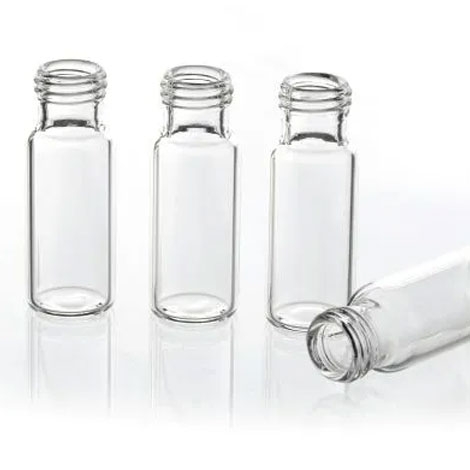
ND8 Vials and Caps
8-425 thread, 1.5 mL screw thread HPLC vials; clear and amber, with printed options.
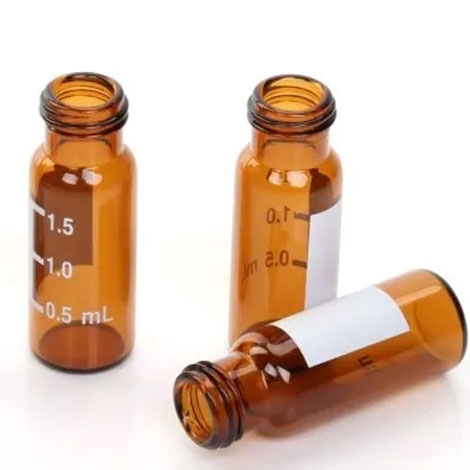
ND9 Vials and Caps
The most common HPLC vial: 9 mm screw thread, 1.5 mL, with options featuring fitted inserts.
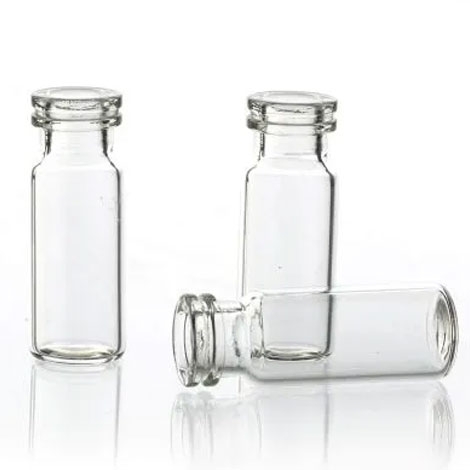
ND11 Crimp Vials and Caps
1.5 mL vials with 11 mm crimp neck; aluminum cap and rubber/PTFE septum options.
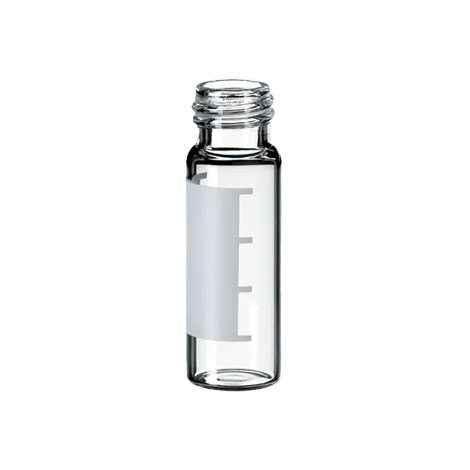
ND13 Vials and Caps
4 mL, 13 mm screw thread vials for large-volume samples and storage.
Request a quote for this model
A suitable configuration and pricing are prepared based on sample type and workload.
Request a quote