

Vials, Caps and Septa
Screw Caps
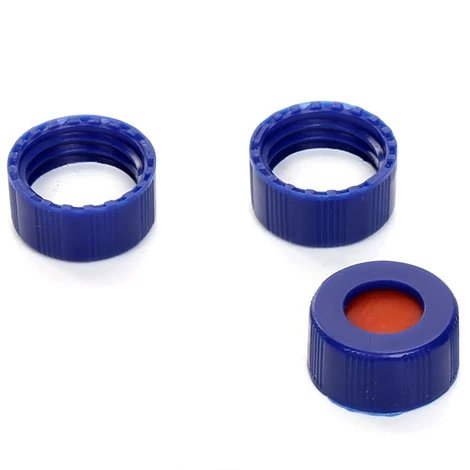
A screw vial cap is a cap that seats on the vial neck by a thread and can be tightened and opened by hand. It is available in 8-425, 9 mm, 13-425 and 18 mm thread sizes, with open-top caps with septum and closed-top caps without septum.
Request a quote| Thread sizes | 8-425 · 9 mm · 13-425 · 18 mm |
|---|---|
| Top type | Open top (with septum) · closed top (storage) |
| Material | Polypropylene |
| Septum | PTFE/silicone · silicone · PTFE/rubber |
| Use | Opened and closed by hand, no tool required |
Product description
A screw cap seats on the thread at the vial neck and is tightened by hand. Unlike a crimp cap, it does not require a crimping tool; it is therefore preferred in laboratories working with small numbers of samples and when the sample needs to be reopened.
The top of the cap is produced in two forms. The open top leaves the center of the septum exposed; the autosampler needle passes through this opening to reach the sample. The closed top fully covers the septum and is used only for storage; it is not suitable for needle penetration.
Tightening torque is important. An under-tightened cap leads to evaporation and loss of volatiles; an over-tightened cap deforms the septum and causes coring during piercing. It is sufficient to stop at the point where the cap can still be turned comfortably by hand.
Selecting the screw vial cap thread size
- 8-425: ND8 vials; narrow neck, low evaporation.
- 9 mm: ND9 vials, the most common HPLC size. The wide opening makes fitting inserts and filling with a pipette easier.
- 13-425: 4 mL ND13 vials; sample storage and dilution work.
- 18 mm: 10 and 20 mL ND18 headspace vials; with magnetic-top headspace caps.
The cap thread size must match the vial neck size. A 9 mm cap does not fit an 8-425 vial; because the two sizes look very similar, this is the detail most often confused when ordering.
Color and coding
The caps are produced in different colors. Color is used to distinguish septum type or sample group; it makes no technical difference.
Assigning meanings to colors within the laboratory is recommended: for example, one color is reserved for standards and another for customer samples. This simple arrangement reduces confusion in the autosampler tray.
Technical considerations
The cap body is made of polypropylene. Polypropylene is resistant to common HPLC solvents; however, prolonged contact with strong oxidizers and some chlorinated solvents is not recommended.
The septum sits inside the cap and provides the actual seal. When selecting a cap, it should also be decided whether a PTFE/silicone septum or a single-layer silicone septum will be used; the two work as a single system. All options are listed in the vials, caps and septa section.
Caps with pre-fitted septa shorten preparation time compared with buying septa and caps separately, and eliminate the risk of the septum being fitted upside down.
When ordering, the top type (open or closed), septum material and septum thickness should be specified together with the thread size; these four pieces of information identify the correct cap in one step.
Technical specifications
| Thread sizes | 8-425 · 9 mm · 13-425 · 18 mm |
|---|---|
| Body material | Polypropylene |
| Top type | Open top (needle access) · closed top (storage) |
| Septum options | PTFE/silicone · silicone · PTFE/rubber |
| Septum thickness | 1.0 mm · 1.3 mm · 1.5 mm |
| Color | Numerous color options |
| Supplied | With pre-fitted septum or without septum |
| Pack | Boxes of 100 and 1,000 |
Values are taken from the manufacturer's published technical documentation. They may vary by configuration and are confirmed against the current datasheet before quotation.
Frequently asked questions
Should a screw cap or a crimp cap be selected?
If the sample will be reopened or the daily number of samples is small, a screw cap is suitable; no tool is required. For work in which many samples are prepared and sealing is critical, an aluminum crimp cap is more secure.
What is the difference between an open top and a closed top?
The open top leaves the center of the septum exposed and allows the autosampler needle to pass through. The closed top fully covers the septum; it is used only for storage and is not suitable for needle penetration.
How tightly should the cap be tightened?
Stop at the point where the cap can still be turned comfortably by hand. Under-tightening leads to evaporation, while over-tightening leads to septum deformation and coring during piercing.
Does the cap color mean anything?
It has no technical meaning on the manufacturer's side. Within the laboratory, it can be used to distinguish sample groups or septum types; this arrangement reduces confusion in the tray.
Should caps with pre-fitted septa or separate septa be purchased?
Caps with pre-fitted septa shorten preparation time and prevent the septum from being fitted upside down. For laboratories working with different septum types, buying them separately may be more flexible.
From the same category
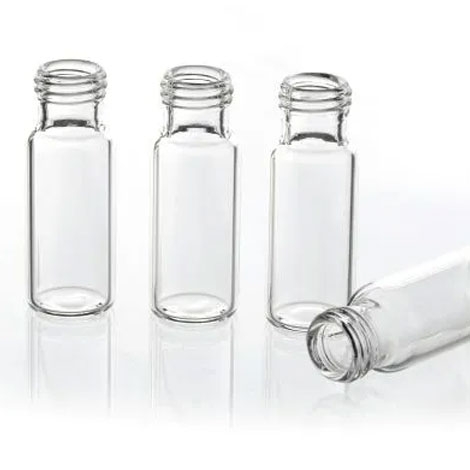
ND8 Vials and Caps
8-425 thread, 1.5 mL screw thread HPLC vials; clear and amber, with printed options.
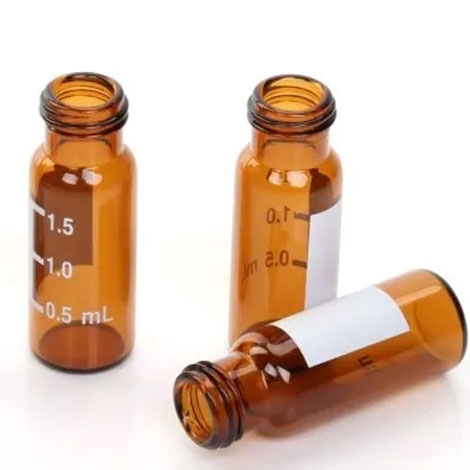
ND9 Vials and Caps
The most common HPLC vial: 9 mm screw thread, 1.5 mL, with options featuring fitted inserts.
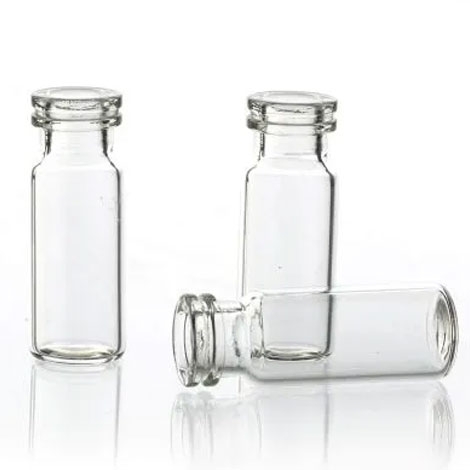
ND11 Crimp Vials and Caps
1.5 mL vials with 11 mm crimp neck; aluminum cap and rubber/PTFE septum options.
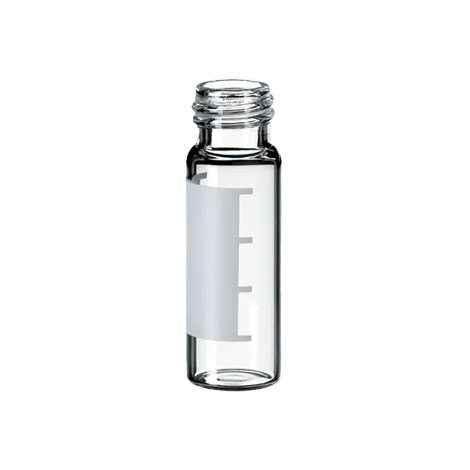
ND13 Vials and Caps
4 mL, 13 mm screw thread vials for large-volume samples and storage.
Request a quote for this model
A suitable configuration and pricing are prepared based on sample type and workload.
Request a quote