

Vials, Caps and Septa
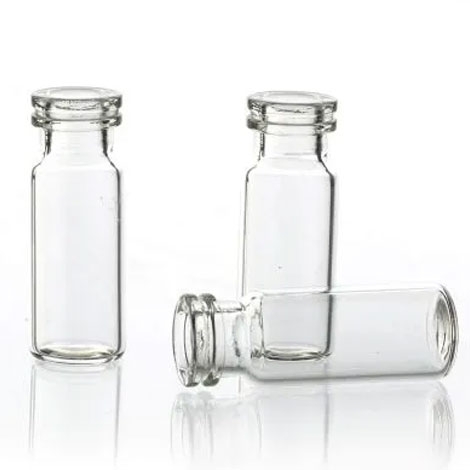
ND11 Crimp Vials and Caps
ND11 is a classic crimp HPLC vial with an 11 mm crimp neck. The aluminum cap is closed with a crimping tool and provides a tighter seal than a screw cap; it is preferred for volatile samples and long-term storage.
Request a quote| Neck type | ND11 crimp (11 mm) |
|---|---|
| Volume | 1.5 mL |
| Dimensions | 11.6 × 32 mm |
| Cap | Silver aluminum crimp cap, 1.0 mm septum |
| Septum | TEF/rubber or PTFE/silicone |
Product description
A crimp cap is permanently crimped onto the vial neck with a crimping tool. The result is a tighter seal than a screw cap. The advantage of the crimp cap becomes clear when working with volatile solvents or when the sample will stand for some time.
The price of this advantage is handling effort: a crimper is needed to close the vial and a decapper to open it. If the sample is to be reused, the cap has to be cut off. For this reason, the crimp system makes more sense for routine, single-injection work.
The body dimensions are the same as the 9 mm screw thread HPLC vial: 11.6×32 mm. The tray and autosampler stay the same; only the closure system changes.
11 mm crimp HPLC vial septum options
- TEF / natural rubber: Economical option. Sufficient for aqueous and mildly aggressive samples.
- TEF / red rubber: Classic GC/HPLC combination for general-purpose use.
- PTFE / silicone: The combination with the highest chemical resistance. Preferred with organic solvents and in trace analysis.
Rubber septa can swell in organic solvents and introduce impurities into the sample. PTFE/silicone septa should be preferred for trace analyses.
Cap and septum
The ND11 vial closes with an 11 mm aluminum crimp cap. Because the cap is crimped onto the neck with a crimper, the closing force does not depend on the operator, which provides consistent sealing from series to series.
Cap type
Suitable cap: 11 mm aluminum crimp caps.
Septum type
- PTFE/silicone septum: PTFE on the side facing the sample, silicone on the back. Provides both chemical inertness and resealing; it is the standard choice for HPLC and GC applications.
- Single-layer silicone septum: No PTFE facing. Reseals better; used for multiple piercings and storage, not recommended for trace analysis.
1.0-1.3 mm septa are common in 11 mm crimp caps; a PTFE-faced septum is selected for organic solvents and trace analysis.
The crimper setting should be checked on the first few vials of every cap lot: a correctly closed cap cannot be turned by hand and its top surface remains flat.
Compatibility
Works with the 11 mm crimp trays of Waters, Agilent, Shimadzu, Dionex and Thermo systems. If an insert is required, the same inserts as for ND9 can be used: conical or flat-bottom in the 200-350 µL range.
Common mistakes
- Leaving the crimper at the 20 mm cap setting and using it on 11 mm caps; the cap closes loosely and leaks.
- Leaving samples containing organic solvent in the tray for a long time in vials with rubber septa; the septum swells and introduces impurities into the sample.
- Trying to reclose an opened crimp vial with the same cap; the deformed aluminum ring does not provide a seal a second time.
Frequently asked questions
Should a crimp vial or a screw thread vial be chosen?
When volatile solvents, long standing times in the tray or storage are involved, a crimp vial is more secure. For routine work where the sample needs to be reopened and tools are to be avoided, a screw thread vial is more practical.
Can an insert be fitted in an ND11 vial?
Yes. HPLC vial inserts of the same size as for ND9, conical or flat-bottom in the 200-350 µL range, can be used.
Which tools are needed for crimp caps?
A crimper is needed to close the vial and a decapper to open it. For small sample numbers, manual crimpers are sufficient; for high sample numbers, an electric crimper keeps the crimping force constant.
From the same category
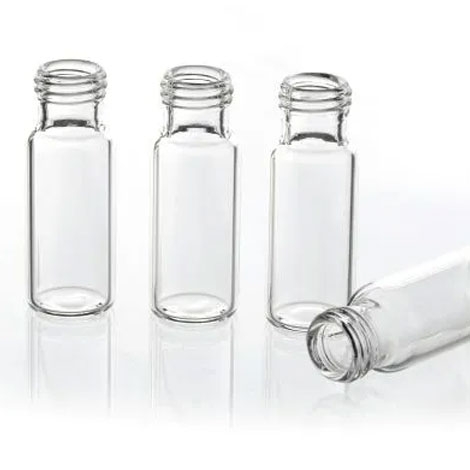
ND8 Vials and Caps
8-425 thread, 1.5 mL screw thread HPLC vials; clear and amber, with printed options.
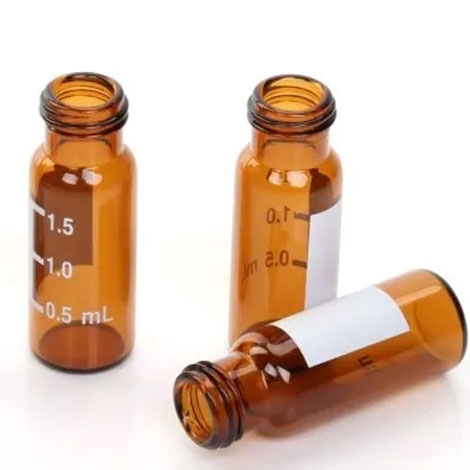
ND9 Vials and Caps
The most common HPLC vial: 9 mm screw thread, 1.5 mL, with options featuring fitted inserts.
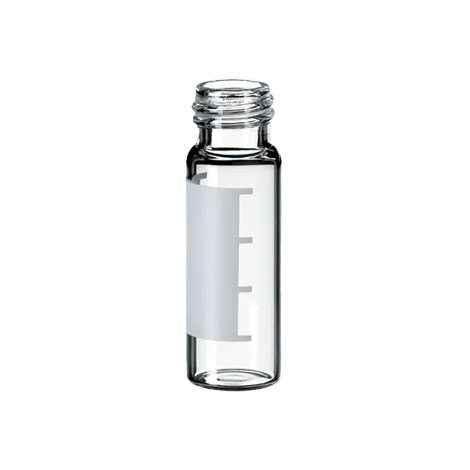
ND13 Vials and Caps
4 mL, 13 mm screw thread vials for large-volume samples and storage.
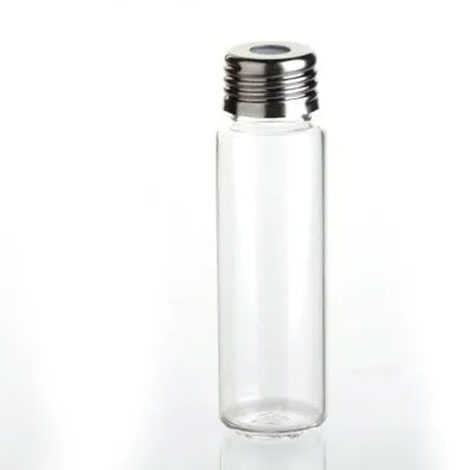
ND18 Headspace Vials and Magnetic Caps
18 mm screw thread headspace vials, 10 and 20 mL, with magnetic cap options.
Request a quote for this model
A suitable configuration and pricing are prepared based on sample type and workload.
Request a quote