

Vials, Caps and Septa
ND20 Crimp Headspace Vials and Caps
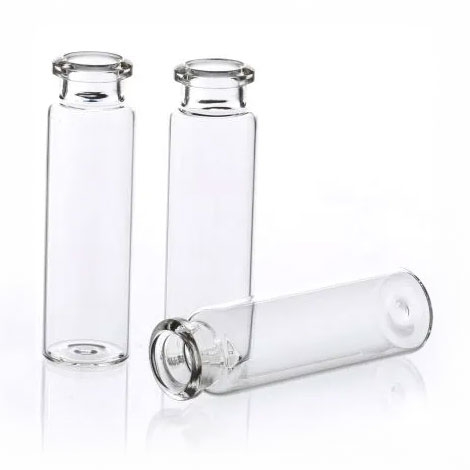
ND20 is a crimp headspace vial with a 20 mm neck. It is offered in 10 mL (22.5×46 mm) and 20 mL (22.5×75 mm) volumes, with flat and rounded bottom options and silver crimp caps fitted with 3.0 mm PTFE/silicone septa.
Request a quote| Neck type | ND20 crimp (20 mm) |
|---|---|
| Volume | 10 mL and 20 mL |
| Dimensions | 22.5 × 46 mm / 22.5 × 75 mm |
| Bottom | Flat or rounded |
| Septum | 3.0 mm PTFE/silicone, −40 °C – 200 °C |
Product description
ND20 is the most widely used crimp vial size in headspace analysis. When closed with a crimping tool, the 20 mm aluminum cap provides a tight seal against the pressure generated during heating.
Residual solvent determination, alcohol determination, volatile organic compounds in water and food aroma analyses are typical applications. Most of these methods are described in pharmacopoeia and standard texts using a 20 mL crimp vial.
The bottom type affects the result. A flat bottom increases the contact surface with the heating block and speeds up heat transfer. A rounded bottom keeps the liquid more compact in low-volume samples.
Crimp headspace vial technical assessment
A crimp cap is single-use. If the crimping tool is out of adjustment, the cap either stays loose or the glass neck cracks. Checking the crimping depth of the tool several times a year is recommended.
If the vial volume and septum thickness are defined in the headspace method, the product list is prepared accordingly. If the method does not specify them, a suitable combination is recommended based on the heating temperature and sample volume.
Cap and septum
The ND20 vial closes with a 20 mm aluminum crimp cap. A magnetic-top cap is required for the automated headspace sampler to grip the vial; the crimper keeps the closing force the same on every vial.
Cap type
Suitable cap: 20 mm aluminum crimp caps.
Septum type
- PTFE/silicone septum: PTFE on the side facing the sample, silicone on the back. Provides both chemical inertness and resealing; it is the standard choice for HPLC and GC applications.
- Single-layer silicone septum: No PTFE facing. Reseals better; used for multiple piercings and storage, not recommended for trace analysis.
For headspace work, a septum thickness of 3.0 mm is selected; a thin septum cannot withstand the internal pressure that builds up during heating.
An example reference for volatile organic compounds in water is EPA SW-846 Method 8260D; vial and cap requirements should be taken from the relevant section of the method.
Place in the analytical workflow
After the ND20 vial is heated in the headspace unit, the gas phase is transferred to the GC capillary column. For laboratories that do not want to use a crimper, the ND18 screw thread headspace vial can be considered; all options are in the vials, caps and septa section.
Common mistakes
- Not checking the crimper setting when switching to a new cap lot.
- Working with a thin septum at high temperature; leakage occurs during heating.
- Using a sample volume different from the value defined in the method; the gas-to-liquid phase ratio changes and results cannot be compared.
Frequently asked questions
Should a flat bottom or a rounded bottom be chosen?
A flat bottom increases the contact surface with the heating block and speeds up heat transfer. A rounded bottom keeps the liquid compact at small sample volumes. Compatibility with the bottom type of the instrument position should be checked.
Why is the crimper setting important?
A loose cap leaks during heating, and an overtightened cap can crack the glass neck. Periodic checks of the crimper setting are necessary for repeatable results.
Can the ND20 vial be reused?
The glass vial can be reused after proper washing; however, the crimp cap and septum are single-use. New vials are recommended for trace analyses.
From the same category
ND8 Vials and Caps
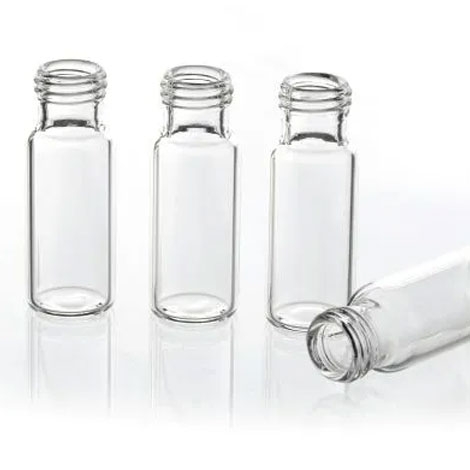
8-425 thread, 1.5 mL screw thread HPLC vials; clear and amber, with printed options.
ND9 Vials and Caps
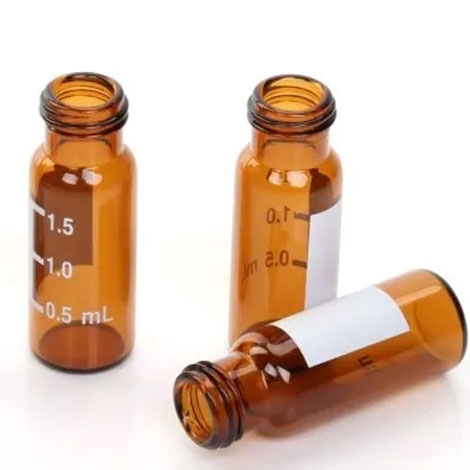
The most common HPLC vial: 9 mm screw thread, 1.5 mL, with options featuring fitted inserts.
ND11 Crimp Vials and Caps
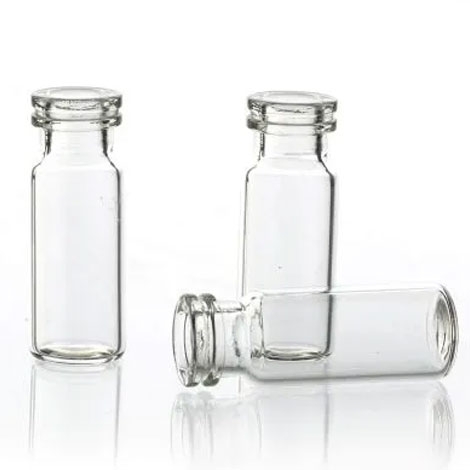
1.5 mL vials with 11 mm crimp neck; aluminum cap and rubber/PTFE septum options.
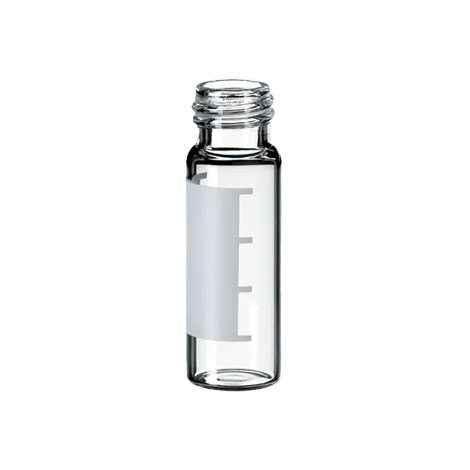
ND13 Vials and Caps
4 mL, 13 mm screw thread vials for large-volume samples and storage.
Request a quote for this model
A suitable configuration and pricing are prepared based on sample type and workload.
Request a quote