

Vials, Caps and Septa
ND8 Vials and Caps
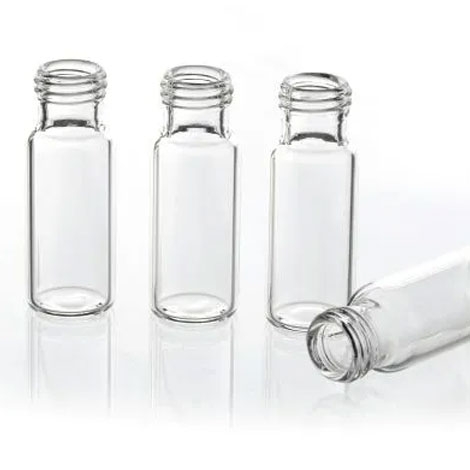
ND8 is a 1.5 mL screw thread HPLC vial with an 8-425 thread. It is offered with a standard 11.6×32 mm body, in clear and amber glass, with or without a printed writing area, and is supplied together with screw caps fitted with PTFE/silicone septa.
Request a quote| Neck type | ND8 screw thread (8-425) |
|---|---|
| Volume | 1.5 mL |
| Dimensions | 11.6 × 32 mm |
| Glass | Borosilicate, clear or amber |
| Cap | Screw cap, PTFE/silicone septum |
Product description
ND8 is one of the most common vial types used in autosamplers. Thanks to its narrow opening, the 8-425 screw thread HPLC vial keeps the evaporation surface small; the cap seats tightly and the needle passes cleanly through the septum. With body dimensions of 11.6×32 mm, it fits standard HPLC trays without issue.
Clear glass allows the color of the sample and any precipitation to be checked visually. Amber glass slows degradation of light-sensitive compounds. Amber is preferred in vitamin, active pharmaceutical ingredient and some pesticide analyses.
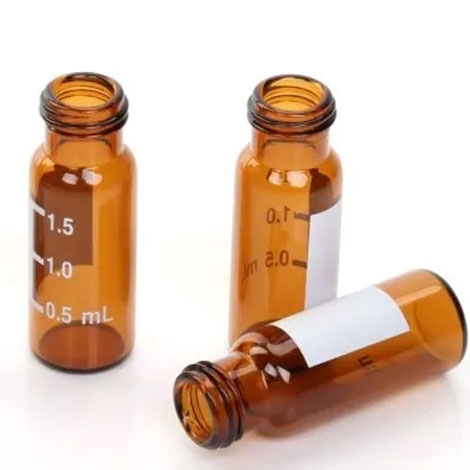
The printed version has a white writing area and graduation on the body. The sample name can be written with a pen and the volume can be checked visually. Because it eliminates the need for labels, it saves time in large series.
Cap and septum options
Cap selection is often more critical than the vial itself. The wrong septum leads to solvent evaporation or to the needle tearing off pieces of the septum (coring).
- Cap with hole: The center hole through which the needle passes is open. Suitable for standard autosampler use.
- Pre-slit septum: The septum is pre-cut. Needle resistance is reduced and the risk of coring is lower. Preferred for series with many injections.
- Septum thickness: 1.0 mm and 1.3 mm options are available. A thicker septum provides better sealing, while a thinner septum gives lower needle resistance.
If multiple injections are to be made from the same sample, a pre-slit septum should be preferred over a cap with hole; otherwise the concentration drifts due to evaporation. The combination suited to the method is determined at the quotation stage.
Cap and septum
The ND8 vial closes only with an 8-425 threaded cap; a 9 mm cap does not fit this vial. The part that actually provides the seal is the septum inside the cap, so the cap and septum are selected together.
Cap type
Suitable cap: 8-425 screw caps for vials.
Septum type
- PTFE/silicone septum: PTFE on the side facing the sample, silicone on the back. Provides both chemical inertness and resealing; it is the standard choice for HPLC and GC applications.
- Single-layer silicone septum: No PTFE facing. Reseals better; used for multiple piercings and storage, not recommended for trace analysis.
On the narrow-opening ND8, a 1.0 mm septum keeps needle resistance low; if the sample will sit in the tray for several hours, a 1.3 mm septum increases the sealing margin.
A cap with a pre-fitted septum shortens preparation time and prevents the septum from being inserted upside down. With an inverted septum, the silicone comes into contact with the sample and extraneous peaks appear in the chromatogram.
8-425 screw thread HPLC vial compatibility
ND8 vials are used with common autosamplers of Agilent, Shimadzu, Dionex and Thermo Fisher systems. If the instrument's tray type and needle depth are included in the quote request, a recommendation for an HPLC vial insert for small-volume samples is also added.
Removing particles from the sample before transferring it to the vial protects both the needle and the column. For this step, syringe filters can be planned together with HPLC columns on the separation side. For other neck sizes, see the vial, cap and septum options section.
Frequently asked questions
What is the difference between ND8 and ND9 vials?
The body dimensions are the same (11.6×32 mm); the difference lies in the neck and thread. ND8 has an 8-425 thread with a narrow opening and a smaller evaporation surface. ND9 has a 9 mm wide opening that makes fitting an insert easier. The caps are not interchangeable.
When is an amber vial needed?
Amber glass is preferred for vitamins, some active pharmaceutical ingredients and pesticides that degrade under light. If there is no light sensitivity, clear glass is more practical because it allows visual inspection of the sample.
What is the advantage of a printed vial?
The white writing area and graduation on the body make it possible to write the sample ID without a label and to check the fill volume visually. It shortens preparation time in long series.
From the same category
ND9 Vials and Caps
The most common HPLC vial: 9 mm screw thread, 1.5 mL, with options featuring fitted inserts.
ND11 Crimp Vials and Caps
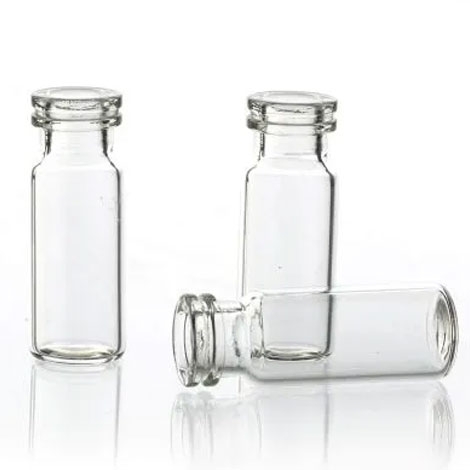
1.5 mL vials with 11 mm crimp neck; aluminum cap and rubber/PTFE septum options.
ND13 Vials and Caps
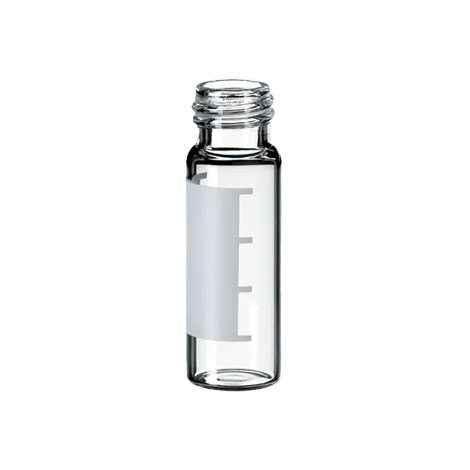
4 mL, 13 mm screw thread vials for large-volume samples and storage.
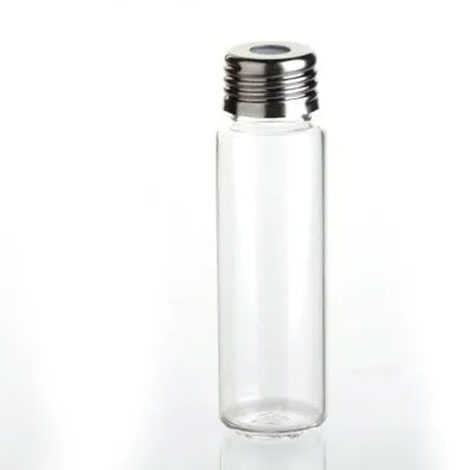
ND18 Headspace Vials and Magnetic Caps
18 mm screw thread headspace vials, 10 and 20 mL, with magnetic cap options.
Request a quote for this model
A suitable configuration and pricing are prepared based on sample type and workload.
Request a quote