

Syringe Filters
Syringe filter types are offered in a range of membrane materials, diameters and pore sizes for removing particles from samples before HPLC and GC analysis.
Syringe Filters: models
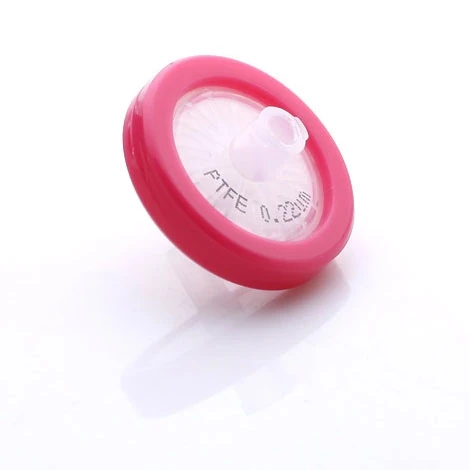
PTFE Syringe Filters
The most solvent-resistant membrane: PTFE syringe filter for HPLC mobile phases and aggressive solvents.
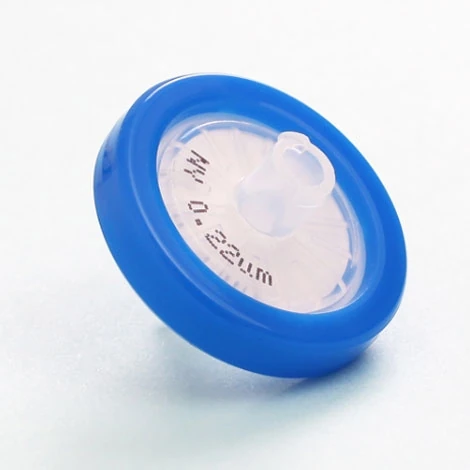
Nylon Syringe Filters
General-purpose nylon syringe filter for both aqueous and organic samples; the most common HPLC choice.
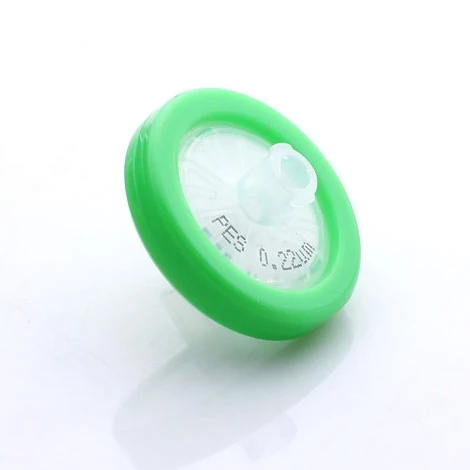
PES Syringe Filters
PES syringe filter offering low protein binding and high flow rate; for biological and aqueous samples.
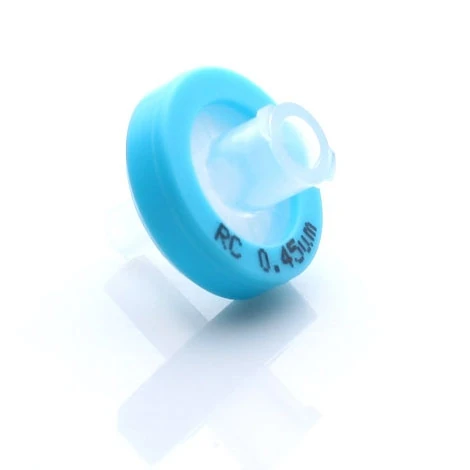
RC (Regenerated Cellulose) Syringe Filters
RC syringe filter with the lowest level of extractables; for trace analysis of aqueous and organic samples.
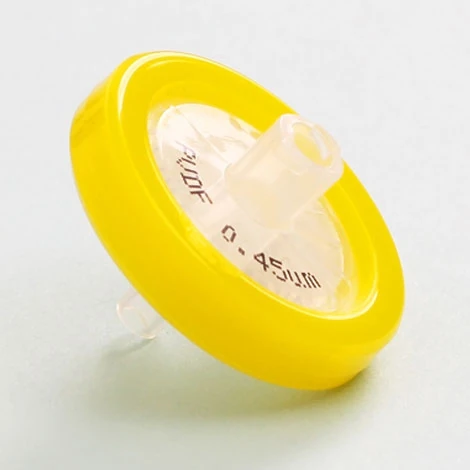
PVDF Syringe Filters
PVDF syringe filter combining low protein binding with chemical resistance; for protein solutions.
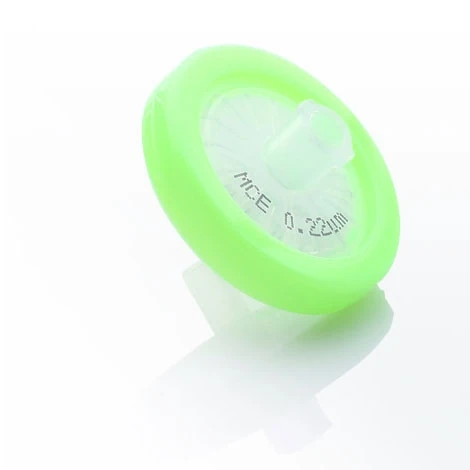
MCE Syringe Filters
MCE syringe filter with mixed cellulose ester membrane; economical clarification and sterile filtration of aqueous samples.
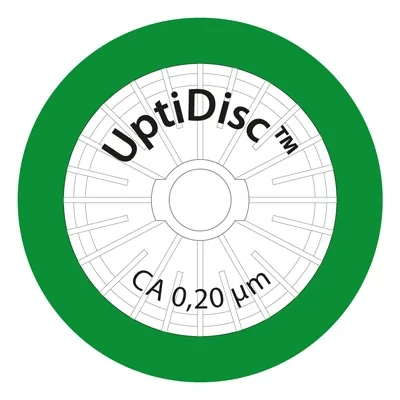
UptiDisc Syringe Filters
UptiDisc syringe filter in 4, 13, 25 and 30 mm diameters with 0.20 and 0.45 µm pore sizes; wide membrane choice and prefilter models.
What a syringe filter does
Chromatography columns are sensitive to submicron particles in the sample. These particles clog the column inlet and injection system, raise pressure and shorten column life. A syringe filter retains these particles just before the sample is transferred to the vial.
The filter housing attaches to the syringe with a Luer connection; the sample passes through the membrane directly into the vial. The process takes a few seconds, but the wrong membrane can release substances into the sample or retain the analyte. Membrane material is therefore the first selection criterion.
After the membrane material, the filter housing is also evaluated. A polypropylene housing resists most solvents; nevertheless, when working with aggressive solvents, it is checked that the housing has the same compatibility as the membrane.
Syringe filter selection guide
Membrane by sample and solvent
- Aggressive organic solvents: PTFE membrane stands out for chemical resistance; aqueous samples require the hydrophilic version.
- General-purpose HPLC: For aqueous and organic samples, nylon membrane is a common starting point; it is not preferred for protein-containing samples.
- Biological and aqueous samples: PES membrane is used for low protein binding and high flow.
- Trace analysis: Regenerated cellulose (RC) membrane is selected when extractables must be at the lowest level.
- Protein solutions and solvent mixtures: PVDF membrane combines low binding with chemical resistance.
- Economical aqueous filtration: MCE membrane is sufficient for samples without organic solvents.
Series and format selection
When different membranes, diameters and models with prefilter are needed in a single series, the UptiDisc series offers diameters from 4 mm to 30 mm. The diameter is determined by the volume to be filtered and the pore size by the column's particle size: a smaller pore size is preferred for UHPLC columns.
The membrane is selected according to the most aggressive component of the sample. Even if the sample is mostly water, a small amount of solvent in it can swell an incompatible membrane or cause it to release substances into the sample.
Pore size and its relation to the column
Pore size is determined by the column's packing particle size and the pressure level of the system. In routine analyses with conventional HPLC columns, a 0.45 µm pore size provides sufficient protection for most samples. For UHPLC columns with small particle sizes, a 0.22 µm pore size is preferred because the column inlet is narrower.
A smaller pore size provides better protection, but slows the flow and accelerates clogging with samples high in particle load. In this case, a model with a glass fiber prefilter is considered before reducing the pore size. The prefilter retains coarse particles before they reach the membrane and increases filtration capacity.
- Clear samples: A single-layer membrane is sufficient.
- Turbid or fibrous samples: A model with prefilter delays clogging.
- Microbiological requirement: For sterile filtration, a 0.22 µm product in sterile packaging is selected.
Applications
- Clarification of HPLC samples before injection in pharmaceutical analysis
- Extract filtration for food and environmental samples
- Filtration of protein and peptide solutions in biotechnology
- Small-volume filtration of mobile phases and buffer solutions
For samples with high matrix interference, filtration alone may not be sufficient; in this case, cleanup is performed with SPE cartridges. The filtered sample is transferred to HPLC vials and analyzed on HPLC columns; suitable vial and cap options are listed on the vials, caps and septa page.
Key points for proper filtration
The first few drops of filtrate are discarded to prevent trace components from the membrane from entering the vial. Filters are single-use; when clogging begins, a larger-diameter model or one with a prefilter is used. Excessive pressure is not applied during filtration, as the membrane may otherwise rupture.
A detailed comparison of membrane materials in terms of solvent compatibility, protein binding and extractables is available in the syringe filter membrane selection guide.
Frequently asked questions
How many different membranes should a laboratory keep in stock?
In most analytical laboratories, a general-purpose membrane and PTFE for organic solvents are sufficient. If biological samples or trace analysis are involved, PES, PVDF or RC membranes are added to the list.
What is the difference between a syringe filter and an SPE cartridge?
A syringe filter only retains particles physically. An SPE cartridge uses a sorbent to separate the analyte from the matrix, clean it up and, if necessary, concentrate it.
How is the filter diameter determined?
The diameter is selected according to the volume of sample to be filtered. For small-volume samples, a small diameter reduces dead volume and sample loss; for large volumes, a wider diameter allows more sample to pass without clogging.
What information is required for a quotation?
Sample type and solvent, membrane preference, diameter, pore size, sterility requirement and annual consumption are sufficient to prepare a quotation.
Related guides
Selecting the right model together
Based on sample type, measuring range and workload, a suitable model and configuration are recommended with a clear rationale.
Request a quote