

Syringe Filters
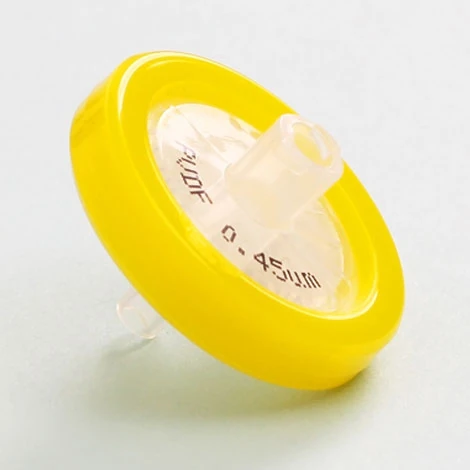
PVDF Syringe Filters
With its polyvinylidene fluoride membrane, the PVDF syringe filter combines low protein binding with good chemical resistance. It is preferred in applications where protein-containing samples are mixed with organic solvents.
Request a quote| Membrane | Polyvinylidene fluoride (PVDF) |
|---|---|
| Diameter | 13 · 25 · 33 mm |
| Pore size | 0.22 µm · 0.45 µm |
| Protein binding | Low |
| Chemical resistance | Good |
Product description
PVDF membrane is made from a fluorine-containing polymer. This structure gives it chemical resistance approaching that of PTFE, while its hydrophilic-treated version also allows it to work with aqueous samples.
Its protein binding rate is low. It shares this property with PES; the difference with PVDF is its greater resistance to organic solvents.
This combination meets a specific need: samples that contain protein but also contain organic solvent. Filtration of supernatants containing acetonitrile or methanol after protein precipitation is a typical example.
Its low level of extractables also allows it to be used in LC-MS applications.
Applications
- After protein precipitation: Filtration of supernatant containing acetonitrile or methanol.
- Bioanalytical methods: Preparation of plasma and serum samples.
- Pharmaceutical formulation: Clarification of protein-based drug solutions.
- Cell culture: Filtration of media and supernatant.
- LC-MS: Biological samples requiring a low background.
Protein precipitation is the most common sample preparation step in bioanalytical laboratories. PVDF behaves as if designed for the output of this step: it resists organic solvents and does not retain protein.
For purely aqueous protein solutions, the faster-flowing PES membrane filter may be preferred. All options can be seen in the syringe filters category.
PVDF syringe filter diameter and pore size selection
For PVDF filters, the pore size is determined by the system the sample will go to: 0.22 µm for bioanalytical LC-MS and UHPLC samples, while 0.45 µm is sufficient for general clarification. For small-volume supernatants from plasma or serum, a small diameter reduces sample loss.
- Hydrophilic and hydrophobic PVDF: The hydrophilic version is used for aqueous and protein-containing samples; the hydrophobic version is intended for gas and solvent applications.
- Protein samples containing organic solvents: It is the suitable membrane for supernatants obtained after protein precipitation.
- Purely aqueous protein solutions: The faster-flowing PES can also be considered.
Correct use of PVDF filters and common mistakes
A common mistake after protein precipitation is applying the supernatant to the filter together with the precipitate. In this case the membrane clogs quickly. The supernatant is first separated by centrifugation, and only the clear portion is passed through the PVDF filter.
- Hydrophilic and hydrophobic PVDF packages are not mixed up; the hydrophobic version does not pass aqueous samples.
- Supernatants with a high organic solvent content are filtered in a fume hood.
- For small-volume biological samples, the liquid retained in the housing is recovered by pushing the plunger all the way.
- Since carryover directly affects the result with biological samples, a separate PVDF filter is used for each sample.
In bioanalytical sample preparation, the supernatant filtered through PVDF is transferred to a 2 mL HPLC vial; protein residue and particles are thus retained before they reach HPLC columns.
Technical specifications
| Membrane material | Polyvinylidene fluoride (PVDF) |
|---|---|
| Diameter options | 13 mm · 25 mm · 33 mm |
| Pore size | 0.22 µm · 0.45 µm |
| Wettability | Hydrophilic-treated |
| Protein binding | Low |
| Chemical resistance | Good; including alcohols and acetonitrile |
| Extractables | Low |
| Maximum temperature | 85 °C |
| Use | Single use |
| Package | Box of 100 |
Values are taken from the manufacturer's published technical documentation. They may vary by configuration and are confirmed against the current datasheet before quotation.
Frequently asked questions
Why PVDF after protein precipitation?
After precipitation, the supernatant contains both protein residue and organic solvent. PVDF meets both conditions together: it resists the solvent and does not retain the remaining protein.
When is PVDF used instead of PTFE?
PVDF is suitable if the sample is aqueous and contains protein; PTFE is hydrophobic and offers no advantage in terms of protein binding. For pure organic solvents, however, PTFE is more resistant.
What is the difference between PVDF and PES?
Both membranes retain little protein. The distinction lies in chemical resistance: PVDF better withstands mixtures containing acetonitrile and methanol, while PES provides a higher flow rate with purely aqueous biological samples.
How are hydrophilic and hydrophobic PVDF distinguished?
The version is stated on the product label and data sheet. If flow does not start with an aqueous sample, the hydrophobic version may be in use; in that case the filter is not forced and the hydrophilic version is used instead.
From the same category
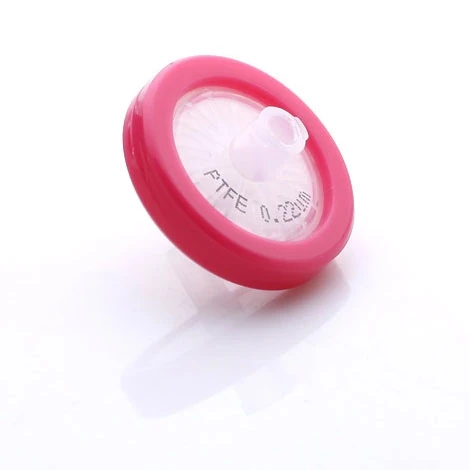
PTFE Syringe Filters
The most solvent-resistant membrane: PTFE syringe filter for HPLC mobile phases and aggressive solvents.
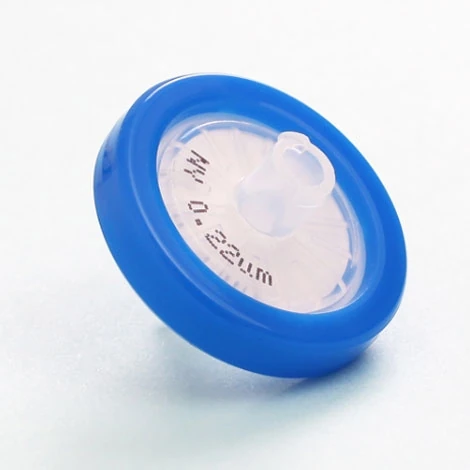
Nylon Syringe Filters
General-purpose nylon syringe filter for both aqueous and organic samples; the most common HPLC choice.
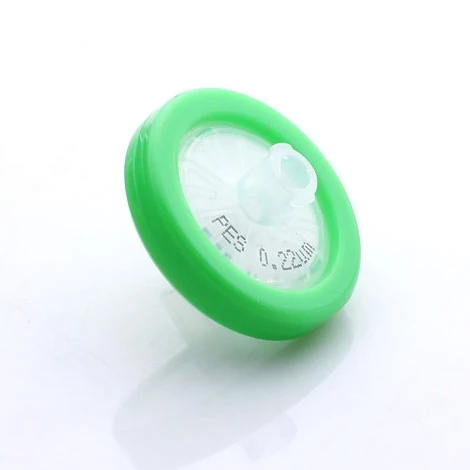
PES Syringe Filters
PES syringe filter offering low protein binding and high flow rate; for biological and aqueous samples.
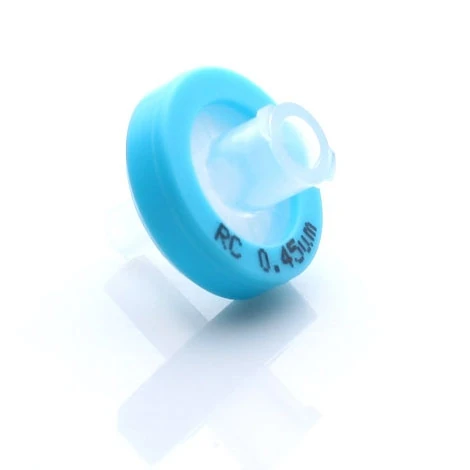
RC (Regenerated Cellulose) Syringe Filters
RC syringe filter with the lowest level of extractables; for trace analysis of aqueous and organic samples.
Request a quote for this model
A suitable configuration and pricing are prepared based on sample type and workload.
Request a quote