

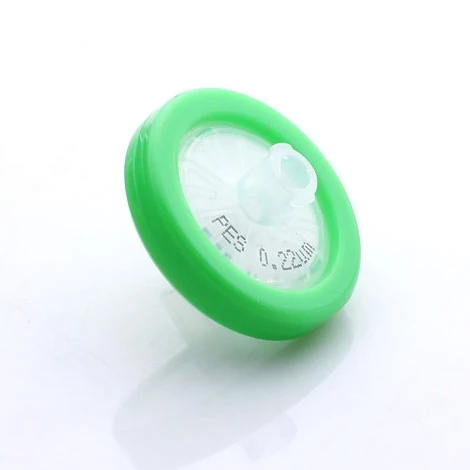
Syringe Filters
PES Syringe Filters
With its polyethersulfone membrane, the PES syringe filter combines low protein binding with a high flow rate. It is preferred for cell culture media, buffer solutions and protein-containing samples.
Request a quote| Membrane | Polyethersulfone (PES) |
|---|---|
| Diameter | 13 · 25 · 33 mm |
| Pore size | 0.22 µm · 0.45 µm |
| Protein binding | Low |
| Flow rate | High |
Product description
PES membrane stands out for two properties: low protein binding and high flow rate. Together, these two properties allow biological samples to be filtered quickly and without loss.
Protein binding is the most important selection criterion for biological samples. Protein adhering to the membrane surface is depleted from the solution; in low-concentration samples this loss reaches a measurable level. The binding rate of PES is significantly lower than that of nylon.
A high flow rate means filtering in a shorter time at the same pressure. In laboratories preparing large numbers of samples, this directly shortens the total preparation time.
PES is naturally hydrophilic and has a low level of extractables. It is widely used for sterilizing cell culture media and buffer solutions.
Applications
- Cell culture media: Sterile filtration with 0.22 µm.
- Buffer solutions: Removal of particles and microorganisms.
- Protein and peptide samples: High recovery thanks to low binding.
- Biopharmaceutical quality control: Preparation of antibody and protein solutions.
- Aqueous HPLC samples: Routine work requiring fast filtration.
A 0.22 µm pore size is mandatory for sterile filtration. 0.45 µm allows bacteria to pass and is intended for clarification only.
For protein samples with a high organic solvent content, a PVDF membrane filter is a more resistant option. Alternative membranes can be reviewed in the syringe filters category.
PES syringe filter diameter and pore size selection
For PES filters, the pore size is mostly selected according to sterility requirements: cell culture media and buffers require 0.22 µm, while 0.45 µm provides clarification only. Thanks to the high flow rate, large volumes of media are filtered quickly with large-diameter filters.
- Biological samples: Low protein binding preserves recovery in low-concentration protein solutions.
- Aqueous buffers: The naturally hydrophilic structure requires no prewetting.
- Mixtures with a high organic solvent content: PES is not suitable for these mixtures; PVDF or PTFE is selected.
Correct use of PES filters and common mistakes
The most common mistake in sterile filtration is collecting the filtrate in a non-sterile container or touching the filter outlet by hand. When the filter is removed from its packaging, the outlet is not left exposed and filtration is performed directly into a sterile container.
- Cell culture media are filtered inside a laminar flow cabinet.
- For protein solutions, the plunger is pushed slowly and at a constant rate to prevent foaming.
- A solution passed through a 0.45 µm filter is not considered sterile.
- When flow slows down noticeably, the retention capacity of the membrane has been reached; the process is continued with a new filter.
For aqueous HPLC samples, the fast flow of PES shortens intensive sample preparation. Collecting the filtrate in a 2 mL HPLC vial prevents particles from being carried to HPLC columns.
Technical specifications
| Membrane material | Polyethersulfone (PES) |
|---|---|
| Diameter options | 13 mm · 25 mm · 33 mm |
| Pore size | 0.22 µm · 0.45 µm |
| Wettability | Naturally hydrophilic |
| Protein binding | Low |
| Flow rate | High |
| Compatibility | Aqueous solutions, buffers, weak alcohols |
| Maximum temperature | 80 °C |
| Use | Single use |
| Package | Box of 100 |
Values are taken from the manufacturer's published technical documentation. They may vary by configuration and are confirmed against the current datasheet before quotation.
Frequently asked questions
Which pore size is required for sterile filtration?
0.22 µm is mandatory. This pore size retains bacteria. 0.45 µm allows bacteria to pass and is used for clarification only.
Can it be used with samples containing organic solvents?
It can be used with aqueous mixtures containing a low proportion of alcohol. For samples containing a high proportion of acetonitrile, acetone or chlorinated solvents, PTFE should be preferred.
How is the choice made between PES and PVDF?
The decision depends on the solvent in the sample. For fully aqueous biological samples, PES filters faster; for protein samples with added organic solvent, PVDF, with its higher chemical resistance, is the safe option.
How does a PES filter affect protein recovery?
The polyethersulfone surface retains little protein; therefore, concentration loss after filtration remains limited in low-concentration enzyme, antibody and peptide solutions. For critical samples, the loss can be measured during method validation by comparing concentrations before and after filtration.
From the same category
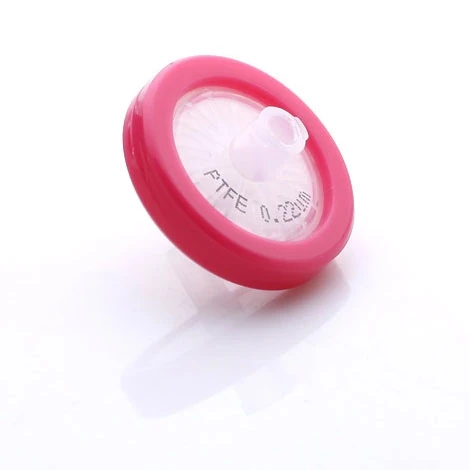
PTFE Syringe Filters
The most solvent-resistant membrane: PTFE syringe filter for HPLC mobile phases and aggressive solvents.
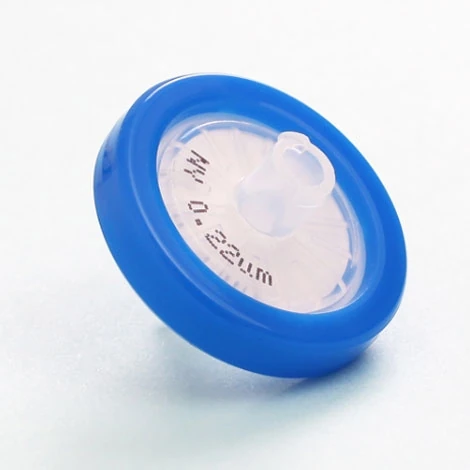
Nylon Syringe Filters
General-purpose nylon syringe filter for both aqueous and organic samples; the most common HPLC choice.
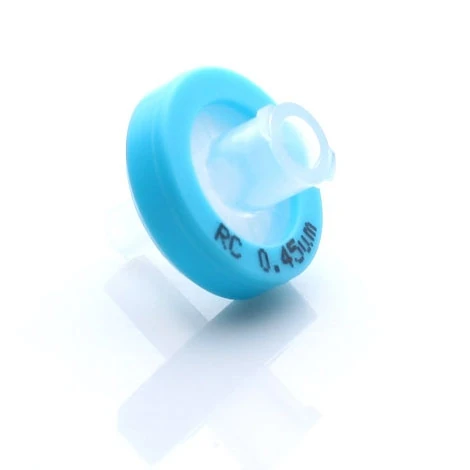
RC (Regenerated Cellulose) Syringe Filters
RC syringe filter with the lowest level of extractables; for trace analysis of aqueous and organic samples.
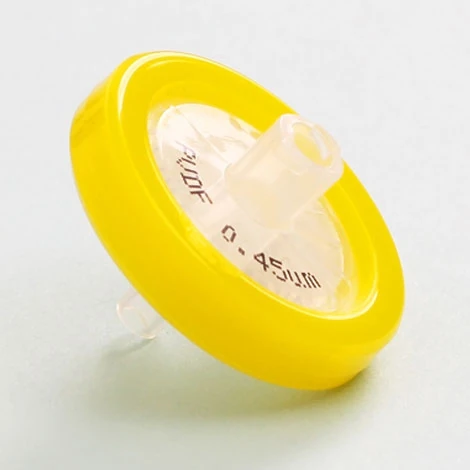
PVDF Syringe Filters
PVDF syringe filter combining low protein binding with chemical resistance; for protein solutions.
Request a quote for this model
A suitable configuration and pricing are prepared based on sample type and workload.
Request a quote