

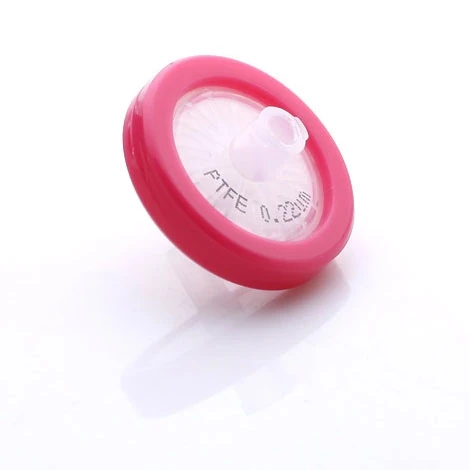
Syringe Filters
PTFE Syringe Filters
With its polytetrafluoroethylene membrane, the PTFE syringe filter is the syringe filter type with the highest chemical resistance. It works reliably with organic solvents, acids and bases, and is the standard choice for HPLC mobile phase filtration and solvent-based samples.
Request a quote| Membrane | PTFE |
|---|---|
| Diameter | 13 · 25 · 33 mm |
| Pore size | 0.22 µm · 0.45 µm |
| Compatibility | Organic solvents, acids, bases |
| Aqueous samples | Hydrophilic version required |
Product description
In terms of chemical resistance, PTFE membrane ranks at the top among filter materials. It does not degrade or release substances in contact with acetone, acetonitrile, methanol, dichloromethane, tetrahydrofuran or strong acid and base solutions.
This property makes PTFE the preferred option for HPLC mobile phase filtration and solvent-based samples. Other membranes swell, dissolve or release extractables in strong solvents; PTFE does not exhibit this behavior.
PTFE is inherently hydrophobic; water does not wet it spontaneously. With aqueous samples, the membrane must either be prewetted with alcohol or a hydrophilic-treated version must be used.
PTFE is also used for gas filtration. Its hydrophobic structure blocks moisture passage, a property required for venting filters and vacuum line protection.
Applications
- HPLC mobile phase: Clarification of the prepared mobile phase before it enters the pump.
- Solvent-based samples: Solutions containing acetonitrile, methanol and dichloromethane.
- Aggressive media: Samples containing strong acids and bases.
- Gas and venting: Moisture-proof venting thanks to the hydrophobic structure.
- Residual solvent analysis: Low level of extractables.
Hydrophobic PTFE does not pass aqueous samples. For work with aqueous solutions, the hydrophilic PTFE version or a PES/nylon membrane should be considered.
For aqueous samples, a nylon syringe filter or a PES membrane filter is a more practical choice than hydrophobic PTFE. A comparison of the other membranes is available in the syringe filters category.
PTFE syringe filter diameter and pore size selection
For PTFE filters, the pore size is usually selected according to the column that the mobile phase or sample will go to: UHPLC columns with small particle size are protected with 0.22 µm, conventional HPLC columns with 0.45 µm. The diameter increases with the volume of solvent to be filtered; 13 mm is sufficient for samples of a few milliliters, while larger diameters speed up mobile phase preparation.
- Hydrophobic or hydrophilic PTFE: The standard hydrophobic membrane is sufficient for pure organic solvents; for mixtures with a high water content, the hydrophilic-treated version facilitates flow.
- Gas and venting: Hydrophobic PTFE is preferred in applications where air must pass but moisture must not.
- Housing compatibility: With aggressive solvents, the filter housing must resist the solvent as well as the membrane; the housing material is confirmed against the solvent at the quotation stage.
Correct use of PTFE filters and common mistakes
The most common mistake with PTFE is trying to pass an aqueous sample through a hydrophobic membrane: the plunger stiffens, flow does not start and the forced membrane may rupture. For aqueous mixtures, the membrane is first wetted with a small amount of methanol or isopropanol and the sample is then applied; if aqueous work is routine, hydrophilic PTFE is selected directly.
- The sample is drawn into the syringe first and the filter is attached afterwards, so the solvent does not force the membrane in the reverse direction.
- If prewetting was performed, the first drops are discarded, as the wetting alcohol may dilute the sample.
- Aggressive solvents are filtered in a fume hood while wearing gloves; the plunger is not pushed with sudden force.
- A used PTFE filter is not reused for a second sample; particles retained on the membrane carry over to the next injection.
Mobile phase and sample filtration protect the inlet frit of HPLC columns and the pump check valves against particle-induced clogging. If the sample in organic solvent is filtered directly into a 2 mL HPLC vial, no separate transfer step is needed.
Technical specifications
| Membrane material | Polytetrafluoroethylene (PTFE) |
|---|---|
| Diameter options | 13 mm · 25 mm · 33 mm |
| Pore size | 0.22 µm · 0.45 µm |
| Wettability | Hydrophobic (hydrophilic version available) |
| Housing material | Polypropylene |
| Chemical resistance | Very high; all common HPLC solvents |
| Maximum temperature | 100 °C |
| Use | Single use |
| Package | Box of 100 |
Values are taken from the manufacturer's published technical documentation. They may vary by configuration and are confirmed against the current datasheet before quotation.
Frequently asked questions
Why is PTFE considered the most resistant membrane?
Owing to the strength of its carbon-fluorine bonds, polytetrafluoroethylene is chemically almost inert. In contact with common HPLC solvents, strong acids and bases, it does not swell, dissolve or release substances.
Can PTFE be used with aqueous samples?
Standard hydrophobic PTFE does not pass aqueous samples; water does not wet the membrane. The solution is to prewet the membrane with alcohol or to use the hydrophilic-treated PTFE version.
Is mobile phase filtration really necessary?
Yes. Undissolved salt particles and glass-derived dust in the prepared mobile phase clog the pump valves and the column frit. Filtration extends the life of both the pump and the column.
Which pore size should be selected for a PTFE filter?
0.22 µm is commonly used for mobile phases and UHPLC samples, and 0.45 µm for conventional HPLC samples. Low-viscosity organic solvents pass through fine-pore membranes at a reasonable rate as well; the actual limiting factor here is the particle load of the sample.
From the same category
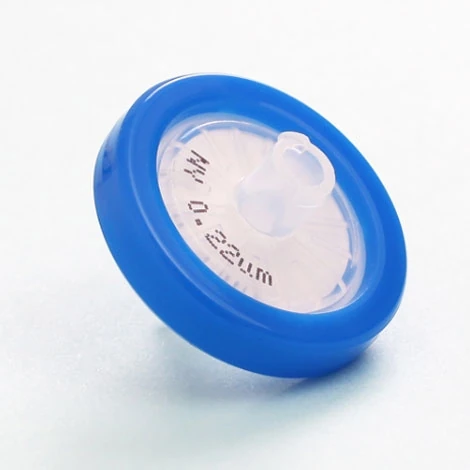
Nylon Syringe Filters
General-purpose nylon syringe filter for both aqueous and organic samples; the most common HPLC choice.
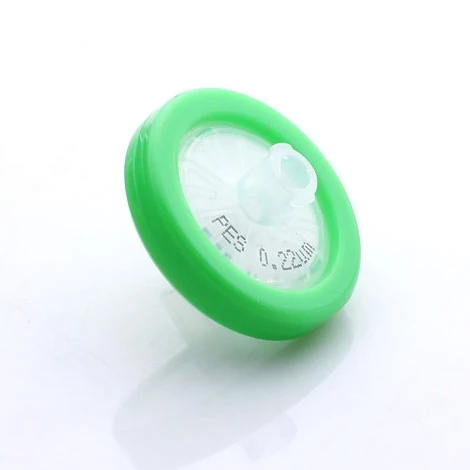
PES Syringe Filters
PES syringe filter offering low protein binding and high flow rate; for biological and aqueous samples.
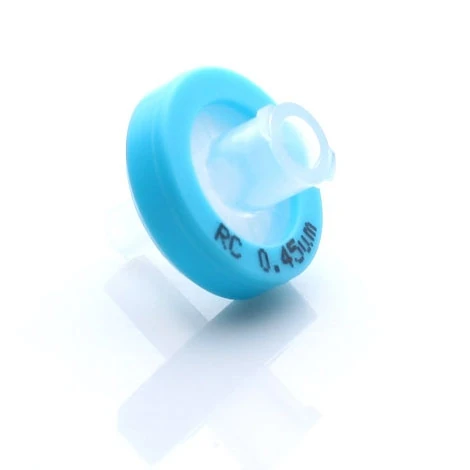
RC (Regenerated Cellulose) Syringe Filters
RC syringe filter with the lowest level of extractables; for trace analysis of aqueous and organic samples.
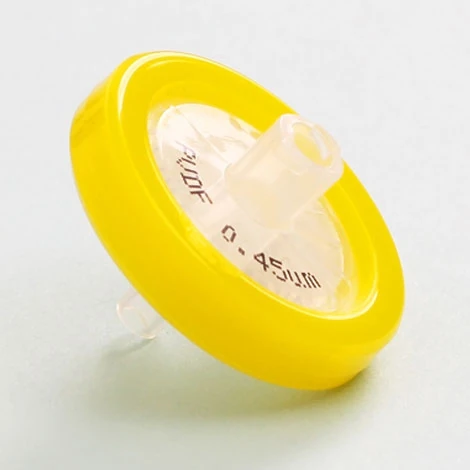
PVDF Syringe Filters
PVDF syringe filter combining low protein binding with chemical resistance; for protein solutions.
Request a quote for this model
A suitable configuration and pricing are prepared based on sample type and workload.
Request a quote