

Advion Interchim Scientific
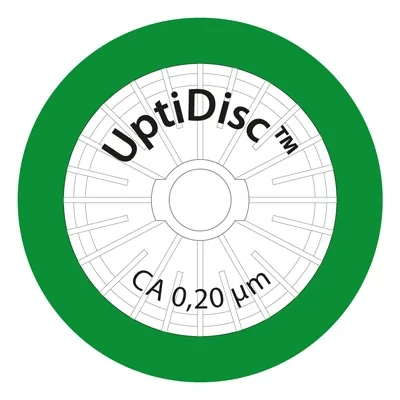
UptiDisc Syringe Filters
UptiDisc is Interchim's syringe filter series with PTFE, nylon, PVDF, PES, RC, CA and PP membrane options. Available with 0.20 and 0.45 µm pore sizes in diameters from 4 to 30 mm, it is used to clarify samples prior to HPLC and UHPLC injection.
Request a quote| Diameter | 4, 13, 25, 30 mm |
|---|---|
| Pore size | 0.20 / 0.45 µm (glass fiber prefilter 1.0 µm) |
| Membranes | PTFE, nylon, PVDF, PES, RC, CA, PP |
| Connection | Female Luer-lock inlet, male Luer outlet |
| Maximum pressure | Approx. 7 bar |
Product description
UptiDisc is Interchim's syringe filter series. The sample is drawn into the syringe, the filter is attached to the syringe tip and the sample is filtered directly into the vial. This simple step retains the particles that clog HPLC and UHPLC columns, extending column life and preventing backpressure increases and system failures.
The series offers numerous membrane types and four diameter options in the same housing design. This allows a consistent filter family from a single series to be used for the different samples and solvents in the laboratory. Versions adapted for robotic sample preparation systems are also available.
The filtered sample is collected directly in a 2 mL HPLC vial and is free of particles before injection onto the same manufacturer's Uptisphere Strategy analytical HPLC columns. For samples with high matrix interference, cleanup with Upti-Clean SPE cartridges can be performed before filtration.
UptiDisc syringe filter membrane selection
- PTFE: Organic solvents and aggressive chemicals; hydrophobic, prewetting required for aqueous samples
- Nylon: General purpose for most aqueous and organic solvents; tends to bind protein
- PVDF: Low protein binding; biological samples and general HPLC preparation
- PES: High flow and low protein binding; aqueous and biological samples
- RC (regenerated cellulose): Compatible with aqueous and organic solvents, low extractables
- CA (cellulose acetate): Aqueous samples and work requiring low protein binding
- PP: Broad chemical compatibility, economical general use
- With glass fiber (GF) prefilter: Delays clogging with turbid samples carrying a high particle load
HLC versions are also available for PTFE and PVDF. For a detailed comparison by membrane type, see the PTFE, nylon and PVDF syringe filter pages and the syringe filters category.
Diameter and pore size selection
- 4 mm: Very small sample volumes below 1 mL; lowest dead volume
- 13 mm: Routine HPLC samples of a few milliliters
- 25 and 30 mm: Larger volumes and samples with a high particle load
- 0.45 µm: Standard HPLC columns and general clarification
- 0.20 µm: UHPLC and columns with small particle size, reduction of microbial load
Technical assessment
The housing is polypropylene; the inlet is female Luer-lock and the outlet is male Luer, so the filters are used with standard disposable syringes. The maximum operating pressure is given as approximately 7 bar (87 psi); for viscous samples, selecting a large-diameter or prefilter model keeps the pressure below this limit.
Values are taken from Interchim catalogs; the phase, format and membrane to be ordered are confirmed against the current data sheet.
Technical specifications
| Diameter | 4, 13, 25, 30 mm (47 mm as membrane disc) |
|---|---|
| Pore size | 0.20 and 0.45 µm; glass fiber prefilter 1.0 µm |
| Membranes | CA, nylon, PP, PTFE, PTFE-HLC, PVDF, PVDF-HLC, RC, PES; versions with glass fiber prefilter and robotic versions |
| Housing | Polypropylene |
| Connection | Female Luer-lock inlet, male Luer outlet |
| Maximum operating pressure | Approx. 7 bar / 87 psi |
Values are taken from the manufacturer's published technical documentation. They may vary by configuration and are confirmed against the current datasheet before quotation.
Frequently asked questions
Should 0.20 or 0.45 µm be selected for HPLC samples?
For standard HPLC columns with a particle size of 3 µm and above, 0.45 µm is generally sufficient. For UHPLC columns with a particle size below 2 µm and for sensitive systems, 0.20 µm is recommended.
Can a syringe filter be reused?
No. Syringe filters are single-use; reuse leads to carryover between samples and clogging of the membrane.
Which membrane should be selected in the UptiDisc series?
The selection depends on the solvent and content of the sample. PTFE is the common choice for organic solvents, nylon or RC for mixed aqueous-organic samples, and PES or PVDF for protein-containing samples; for turbid samples, a model with a glass fiber prefilter delays clogging.
From the same category
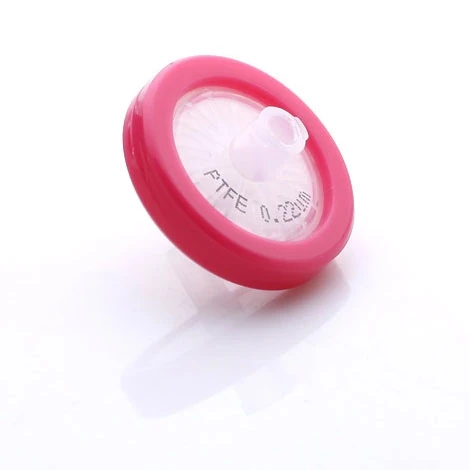
PTFE Syringe Filters
The most solvent-resistant membrane: PTFE syringe filter for HPLC mobile phases and aggressive solvents.
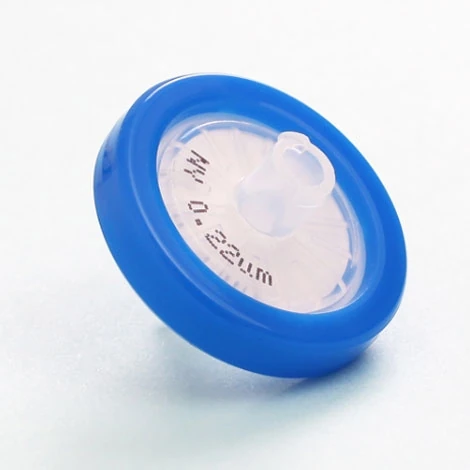
Nylon Syringe Filters
General-purpose nylon syringe filter for both aqueous and organic samples; the most common HPLC choice.
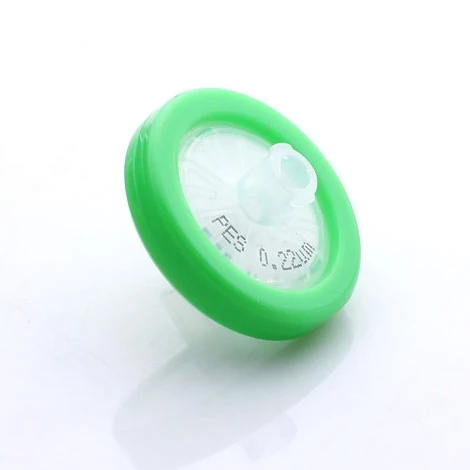
PES Syringe Filters
PES syringe filter offering low protein binding and high flow rate; for biological and aqueous samples.
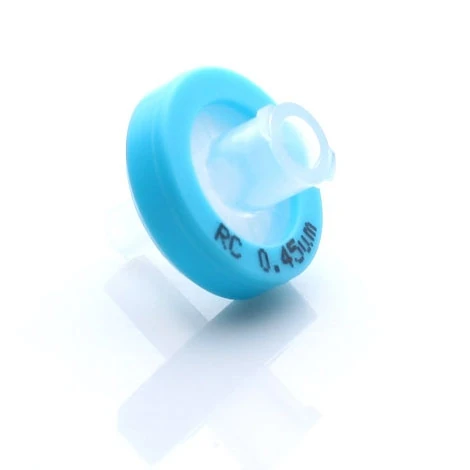
RC (Regenerated Cellulose) Syringe Filters
RC syringe filter with the lowest level of extractables; for trace analysis of aqueous and organic samples.
Request a quote for this model
A suitable configuration and pricing are prepared based on sample type and workload.
Request a quote