

Vials, Caps and Septa
HPLC vials, caps and septa are offered as compatible sets for analytical, headspace and sample storage applications, matched by neck size, glass type and septum material.
Vials, Caps and Septa: models
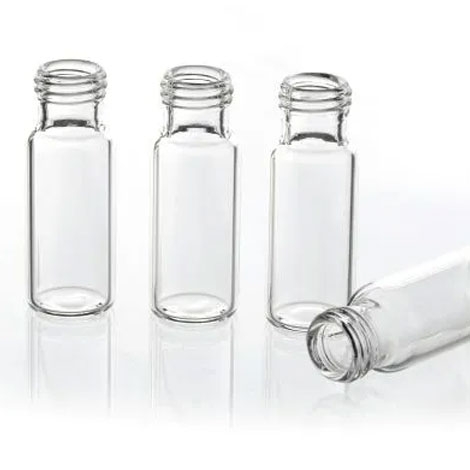
ND8 Vials and Caps
8-425 thread, 1.5 mL screw thread HPLC vials; clear and amber, with printed options.
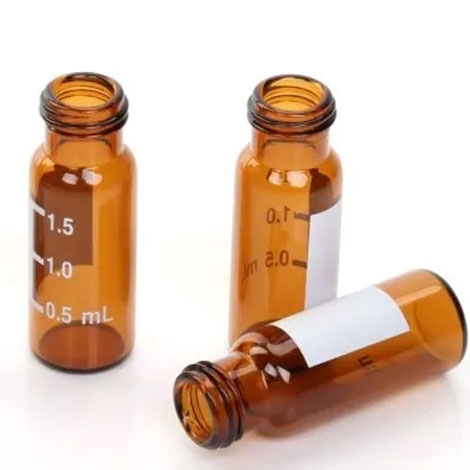
ND9 Vials and Caps
The most common HPLC vial: 9 mm screw thread, 1.5 mL, with options featuring fitted inserts.
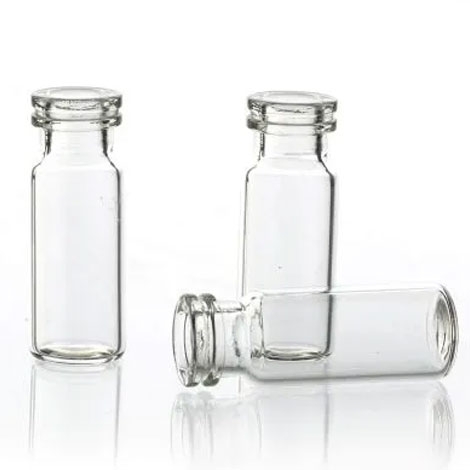
ND11 Crimp Vials and Caps
1.5 mL vials with 11 mm crimp neck; aluminum cap and rubber/PTFE septum options.
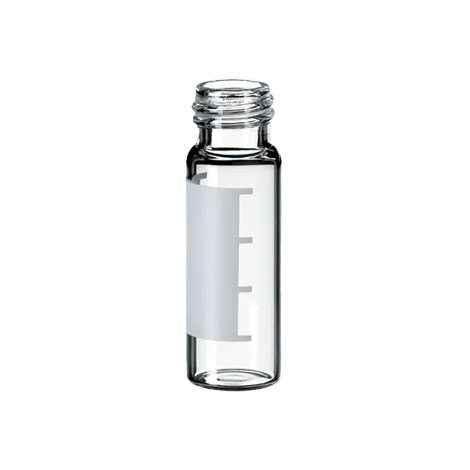
ND13 Vials and Caps
4 mL, 13 mm screw thread vials for large-volume samples and storage.
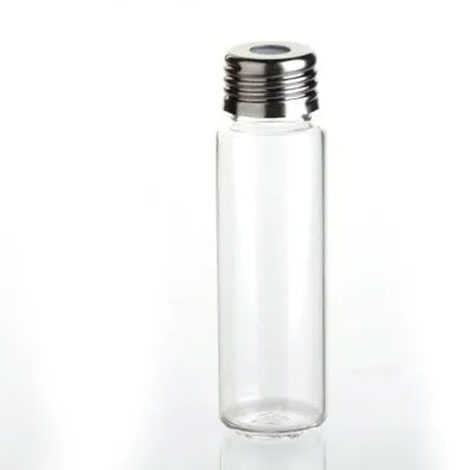
ND18 Headspace Vials and Magnetic Caps
18 mm screw thread headspace vials, 10 and 20 mL, with magnetic cap options.
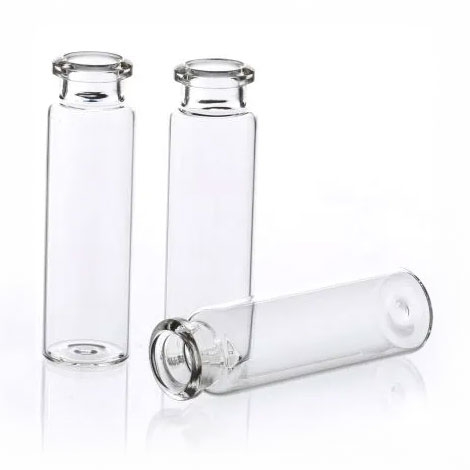
ND20 Crimp Headspace Vials and Caps
20 mm crimp headspace vials; 10 and 20 mL, with flat and rounded bottom options.
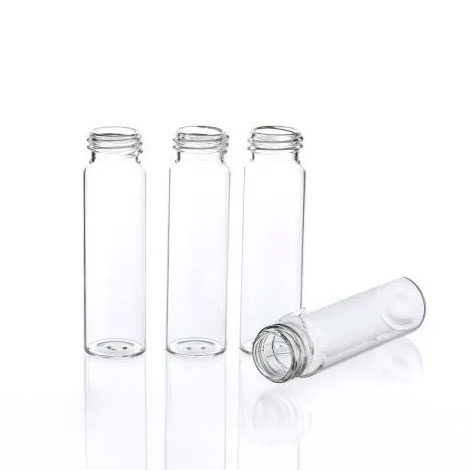
ND24 TOC and EPA Vials
TOC, EPA and sample storage vials; clear and amber borosilicate glass.
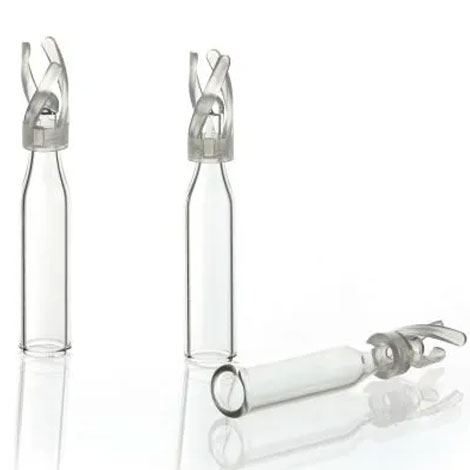
Vial Inserts
150-350 µL inserts that fit ND8, ND9 and ND11 vials and allow work with small sample volumes.
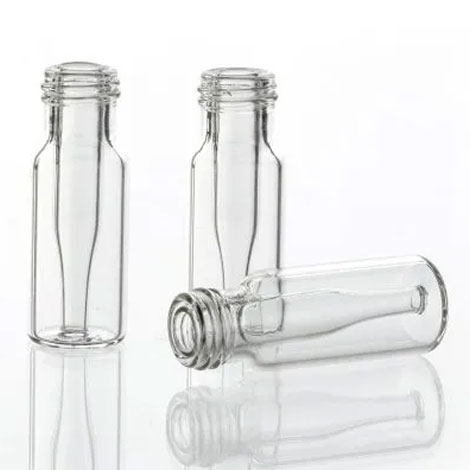
Vials with Fitted Inserts
Vials with factory-fitted inserts; ND8, ND9 and ND11 compatible, clear and amber.
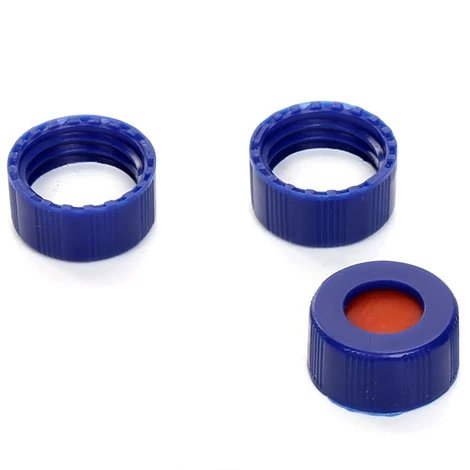
Screw Caps
8, 9, 13 and 18 mm screw caps; open-top and closed-top, with or without septum.
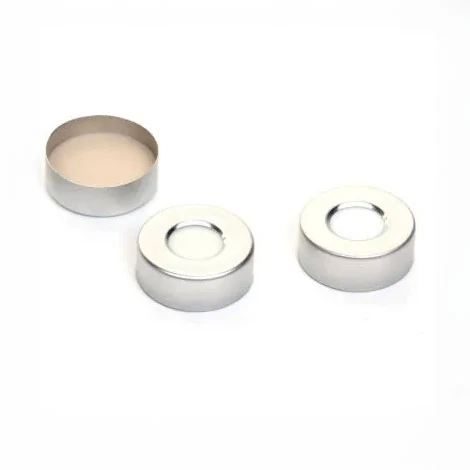
Crimp Caps
11 and 20 mm aluminum crimp caps; sealed with a crimper for the highest level of sealing.
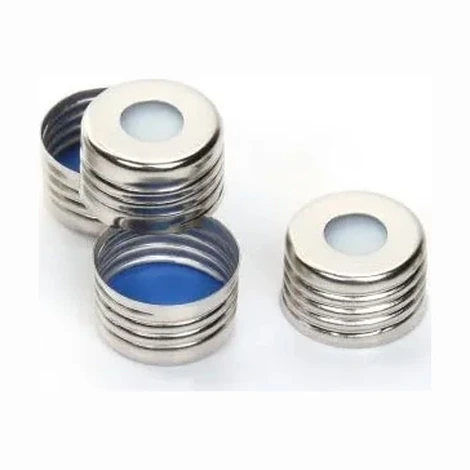
Magnetic Headspace Screw Caps
18 mm magnetic screw headspace caps; 3 mm septum, up to 150 °C.
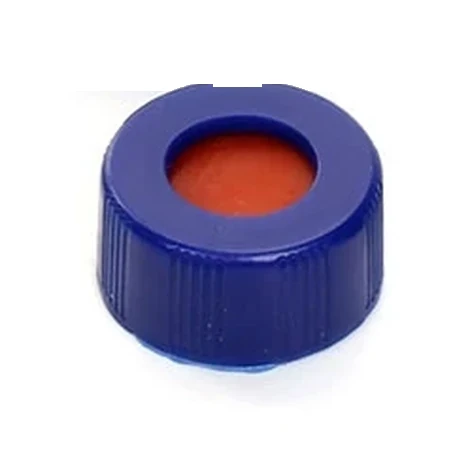
PTFE/Silicone Septa
Two-layer septum: PTFE on the sample side, silicone behind. The most common choice for HPLC.
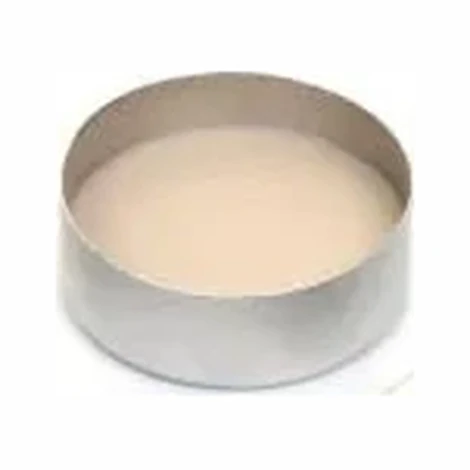
Silicone Septa
Single-layer silicone septum; an economical option for multiple-injection work and storage.
Why vials, caps and septa are selected together
The job of a chromatography vial is not only to hold the sample. The autosampler needle must reach the correct depth, the septum must not leak after being pierced, and the sample must not pick up substances from the glass or the septum. These three conditions are met by selecting a vial, cap and septum that are compatible with one another.
Selection starts with the neck size, followed by the cap type and septum material. The neck size defines the cap thread, the cap type defines the closure method, and the septum defines chemical compatibility and re-piercing behavior. Orders are therefore planned as sets rather than single items.
HPLC vial, cap and septum selection guide
Analytical HPLC and GC vials (1.5 mL)
- 9 mm screw: The ND9 vial family is the general choice used in most autosamplers; the screw cap is closed by hand without a tool.
- 8-425 screw: The ND8 vial option, designed for the rack and needle design of certain instrument manufacturers, offers a different thread with the same outer dimensions.
- 11 mm crimp: When a tighter seal is needed with volatile solvents and long queue times, the ND11 crimp vial and aluminum crimp caps are used together; a crimping tool is required for closure.
Small samples and larger volumes
- Micro volume: When sample is limited, vial inserts are fitted into existing vials; vials with pre-fitted inserts are preferred to avoid the assembly step.
- 4 mL and storage: ND13 vials are used for larger sample volumes and stock solution storage.
Headspace and environmental analysis
- Screw headspace: ND18 headspace vials are closed without a tool using magnetic screw caps.
- Crimp headspace: ND20 crimp vials are used for maximum sealing during heated incubation.
- TOC and EPA: ND24 vials stand out for total organic carbon and environmental methods.
Caps and septa
Screw vials are closed with screw caps. The most common septum choice is the PTFE/silicone septum, where only the PTFE face contacts the sample. When many injections are made from the same vial and trace analysis is not involved, a single-layer silicone septum is an economical alternative.
Glass type, color and surface features
Most HPLC and GC vials are made of borosilicate glass. Borosilicate glass has low thermal expansion and high chemical resistance, so ion release remains limited in samples that are in prolonged contact with solvents. Because it also withstands temperature changes, it is preferred in headspace applications.
Glass color is selected according to the light sensitivity of the sample. Clear vials allow visual inspection of the sample and are sufficient for routine analyses. For light-sensitive compounds such as vitamins, certain active pharmaceutical ingredients and pigments, amber glass is used; amber glass protects the sample from short-wavelength light.
- Printed writing area: Reduces mix-ups in workflows where the sample ID must be written on the vial.
- Base design: For headspace vials, a flat or rounded base is selected according to the instrument's transport mechanism.
- Storage: For long-term storage, a solid-top cap is used instead of an open-top cap to prevent evaporation.
Applications
- Routine HPLC analyses and stability samples in pharmaceutical quality control
- Residue, pesticide and volatile organic compound analyses in food and environmental laboratories
- GC and headspace applications in chemicals and petrochemicals
- Analysis of small quantities of synthesis products in R&D laboratories
Vial selection is considered together with the column and sample preparation. Before injection, the sample is filtered through syringe filters; analysis is performed on HPLC columns or GC columns.
Common selection mistakes
- Choosing the neck size without checking the instrument's rack and needle depth
- Using pre-slit septa with volatile solvents and overlooking evaporation losses
- Choosing clear vials for light-sensitive samples; amber glass is preferred in this case
- Mixing caps and septa from different series and putting the seal at risk
The general framework for classifying laboratory glass is defined in the ASTM E438 standard. A detailed comparison of neck sizes, insert designs and septum materials is available in the HPLC vial selection guide.
Frequently asked questions
What information is needed when ordering HPLC vials?
The instrument model and autosampler type, neck size, closure method (screw or crimp), glass color, septum material and annual consumption are sufficient to prepare an accurate quotation.
Can vials with different neck sizes be used in the same rack?
ND8, ND9 and ND11 vials with the same outer dimensions fit most standard racks. However, since the cap thread and needle depth may differ, the compatibility list in the instrument manual is the reference.
Can vials, caps and septa be purchased separately?
Yes. However, since sealing and needle penetration depend on how well the parts fit together, using a vial, cap and septum from the same series as a set is recommended.
Can a standard HPLC vial be used for headspace analysis?
No. In headspace analysis, the sample is heated and pressure builds up inside the vial; therefore 18 or 20 mm headspace vials with larger volume, thicker septa and a tight seal are preferred.
Related guides
Selecting the right model together
Based on sample type, measuring range and workload, a suitable model and configuration are recommended with a clear rationale.
Request a quote