

Vials, Caps and Septa
Magnetic Headspace Screw Caps
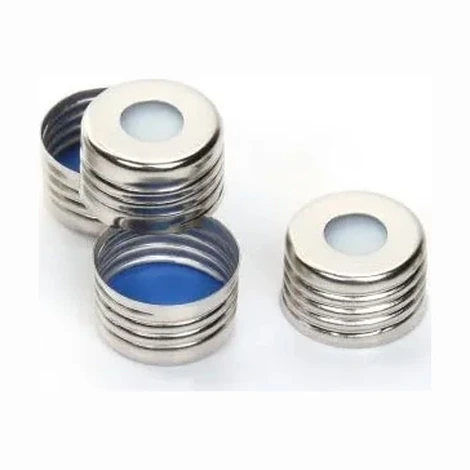
A magnetic headspace cap is a screw cap that fits 18 mm threaded headspace vials and has a top covered with magnetic steel. Together with a 3 mm septum, it provides sealing under heating up to 150 °C and does not require a crimper.
Request a quote| Thread size | 18 mm |
|---|---|
| Top | Magnetic steel cover |
| Septum | 3.0 mm PTFE/silicone |
| Temperature | Up to 150 °C |
| Sealing | By hand; no tool required |
Product description
A magnetic screw cap combines the sealing of a crimp cap with the ease of use of a screw cap. The cap is tightened by hand, but its top surface is covered with magnetic steel; the autosampler grips the vial by this surface.
In the headspace method, the vial is held at a set temperature while volatile components pass into the gas phase. The vial must remain fully sealed throughout this period; even the smallest leak produces low results.
The 3 mm thick septum is significantly thicker than standard analytical septa. It resists the internal pressure that builds up under heating and reseals the puncture better after the needle is withdrawn.
Its main advantage over the crimp system is that no tool is required. Laboratories running headspace with low to medium sample numbers can work with this cap without investing in a crimper.
Magnetic headspace cap selection criteria
- Instrument gripper type: It should be verified that the autosampler uses magnetic gripping; a magnetic cap is unnecessary on systems with mechanical grippers.
- Operating temperature: The method temperature must remain below the septum's resistance limit.
- Vial volume: 10 mL and 20 mL screw headspace vials use an 18 mm thread.
- Septum face: The face in contact with the sample must be PTFE; the silicone face does not face the sample.
If repeatability problems occur in headspace measurements, the cap is the first thing to check. Differences in tightening force produce larger deviations than method parameters.
Technical considerations
With a screw headspace cap, the tightening force depends on the operator. With a crimper, the force is constant; with a screw cap, it can vary from person to person. In laboratories with multiple operators, this difference needs to be eliminated through training.
The cap and septum are single-use. After needle piercing, the septum does not return to its original sealing; if the same vial needs to be measured a second time, a new cap should be used.
Annual consumption is calculated according to the daily number of samples and replicates and is added to the quotation as a separate line item.
For high sample numbers in which the tightening force must be kept constant, aluminum crimp caps and crimp headspace vials are an alternative. In pharmaceutical residual solvent analyses, method conditions are based on the ICH quality guidelines.
Correct use
The cap is seated squarely on the vial neck and tightened by hand to the stop point; no extra turn is then applied. Over-tightening makes the septum bulge and can cause it to crack during heating. In laboratories with multiple operators, demonstrating the correct tightening feel on a reference vial reduces differences between operators. A heated vial is cooled to room temperature before opening.
When the cap and septum batch is changed, monitoring the repeatability of a control standard in the first measurements allows leak-related deviations to be detected early.
Technical specifications
| Thread size | 18 mm |
|---|---|
| Body material | Polypropylene |
| Top cover | Magnetic steel |
| Septum | PTFE/silicone, 3.0 mm |
| Compatible vials | 10 mL and 20 mL headspace vials |
| Temperature | Up to 150 °C |
| Use | Single-use |
| Pack | Box of 100 |
Values are taken from the manufacturer's published technical documentation. They may vary by configuration and are confirmed against the current datasheet before quotation.
Frequently asked questions
Can a magnetic screw cap replace a crimp cap?
In most headspace applications, yes. A crimp cap gives the highest repeatability because it keeps the tightening force constant; with a screw cap, the force depends on the operator. For low to medium sample numbers, the screw cap makes an investment in a crimper unnecessary.
Why is a 3 mm septum used?
In a headspace vial, the sample is heated and the internal pressure increases. A thick septum resists this pressure and reseals the puncture better after the needle is withdrawn. A thin septum may leak under these conditions.
Does the instrument require a magnetic cap?
It depends on how the autosampler grips the vial. On systems using a magnetic gripper, a magnetic cap is mandatory; on systems with mechanical grippers, it is not required. Compatibility is confirmed once the instrument model is provided.
Can the cap be reused?
No. After needle piercing, the septum loses its original sealing. A new cap should be used for each measurement.
From the same category
ND8 Vials and Caps
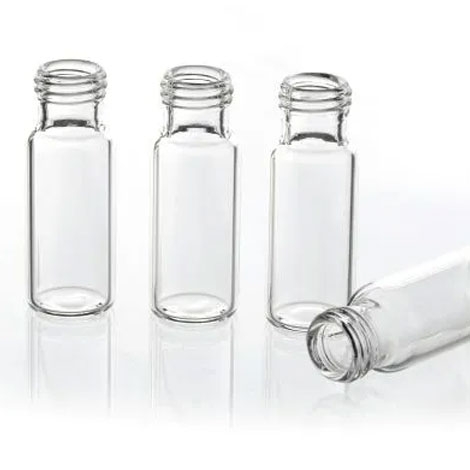
8-425 thread, 1.5 mL screw thread HPLC vials; clear and amber, with printed options.
ND9 Vials and Caps
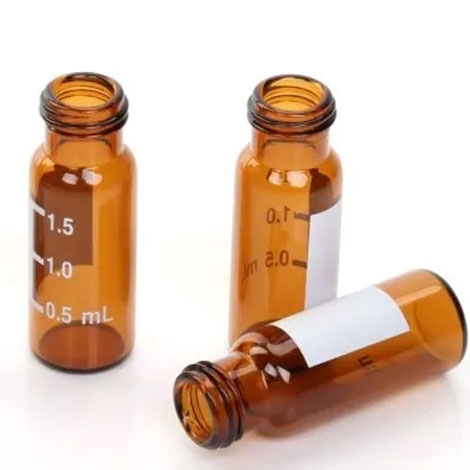
The most common HPLC vial: 9 mm screw thread, 1.5 mL, with options featuring fitted inserts.
ND11 Crimp Vials and Caps
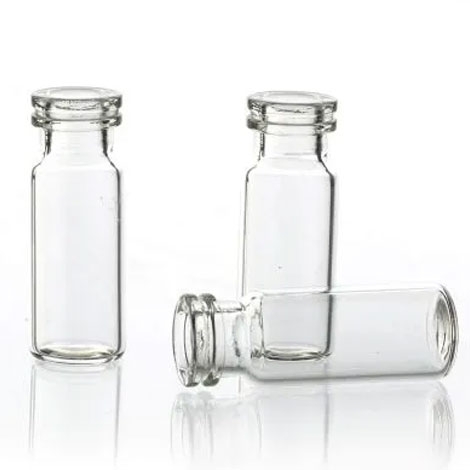
1.5 mL vials with 11 mm crimp neck; aluminum cap and rubber/PTFE septum options.
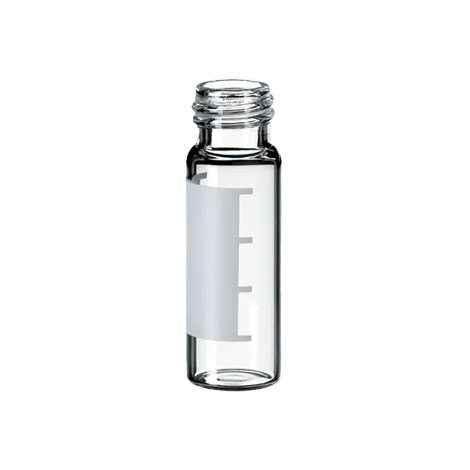
ND13 Vials and Caps
4 mL, 13 mm screw thread vials for large-volume samples and storage.
Request a quote for this model
A suitable configuration and pricing are prepared based on sample type and workload.
Request a quote