

DLAB
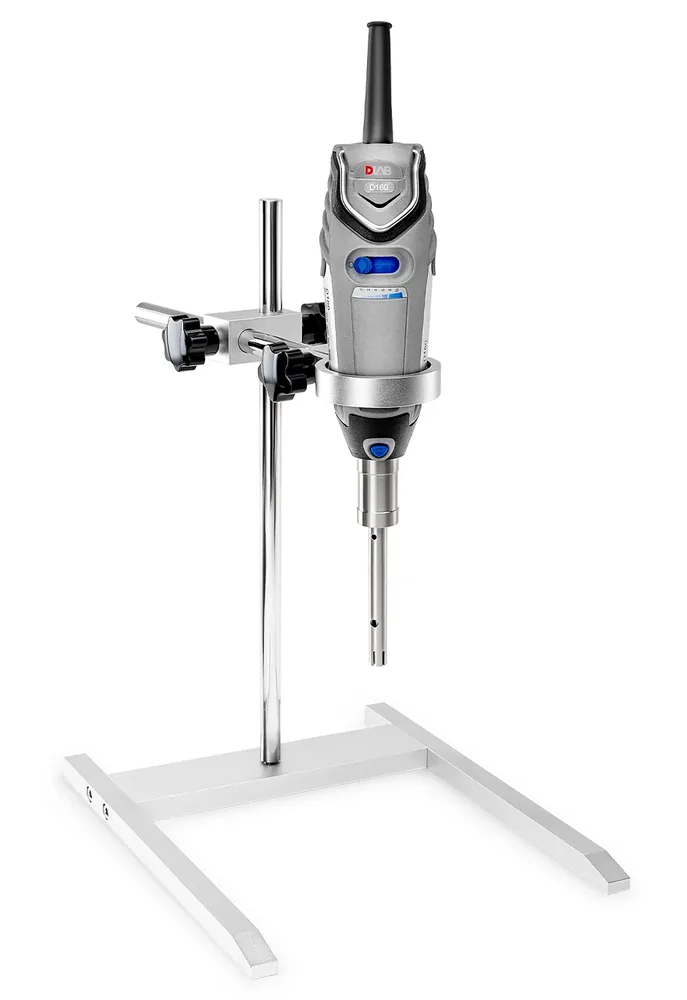
D-160 and D-500 Homogenizer
A laboratory homogenizer uses the high shear force generated by a rotor-stator dispersing shaft for tissue disruption and for preparing emulsions and suspensions. In the DLAB series, the handheld D-160 is designed for small volumes and the D-500 for working volumes up to 40 liters.
Request a quote| Speed range | 8,000–32,000 rpm (D-160) · 10,000–30,000 rpm (D-500) |
|---|---|
| Working volume | 0.1–50 mL (D-160) · 10–40,000 mL (D-500) |
| Max. viscosity | 5,000 / 10,000 mPa·s |
| Shaft material | 316L stainless steel, PTFE |
| Power | 160 W / 500 W |
Product description
A homogenizer subjects the sample to shear force in the narrow gap between a rotor spinning at high speed and a stationary stator. This action disrupts tissue, reduces droplet size and disperses solid particles in the liquid. The dispersing shafts are made of 316L stainless steel and PTFE; they can be removed, cleaned and autoclaved.
The D-160 is a handheld instrument with a lightweight, ergonomic body and offers 10 speed levels. The D-500, with its 500 W motor and 6 speed levels, is positioned for large-volume emulsion and suspension work; it uses interchangeable rotors and stators that fit the same shaft. On both models, soft start reduces the risk of splashing.
Model comparison
| Model | Speed range | Speed levels | Working volume | Max. viscosity | Weight |
|---|---|---|---|---|---|
| D-160 | 8,000–32,000 rpm | 10 | 0.1–50 mL (with DS-160/5 shaft) | 5,000 mPa·s | 0.54 kg |
| D-500 | 10,000–30,000 rpm | 6 | 10–40,000 mL | 10,000 mPa·s | 1.7 kg |
For the D-160, the manufacturer also specifies a working range of 1–250 mL depending on the shaft.
Applications
- Disruption of plant and animal tissue samples before analysis
- Emulsion and cream preparation in cosmetics and food
- Drug carrier formulation and suspension development
- Dispersion of pigments and fillers in liquids
Correct use
The dispersing shaft is immersed in the sample so that it does not touch the bottom of the vessel or rest against its wall; the shaft tip must remain below the liquid surface, otherwise air is drawn in and foam forms. Processing starts at a low speed level, and the speed is increased as the sample disperses.
After each use, the shaft is dismantled and cleaned; tissue fragments left in the narrow gap between rotor and stator can contaminate the next sample. On the D-500, interchangeable rotors and stators fitted to the same shaft allow the same motor to be used for different volumes and viscosities. Automatic overload protection extends motor life.
The result of homogenization depends not only on speed but also on processing time and sample volume. For this reason, once the speed level, time and volume have been established for a given sample type, they should be kept constant for every batch. In addition, choosing a vessel diameter matched to the diameter of the dispersing shaft helps the sample circulate around the rotor and shortens processing time.
Laboratory homogenizer selection criteria
The first selection criterion is sample volume. The D-160 suits microtube and small beaker volumes, while the D-500 suits liter-scale emulsions and suspensions. If viscosity exceeds 5,000 mPa·s, the higher power and viscosity limit of the D-500 make it the preferred choice.
If only gentle mixing of liquids is needed, a vortex mixer or an overhead stirrer is sufficient instead of a homogenizer. For disrupting cells and microorganisms with the bead method, the MX-C cell disruptor is an alternative. All instruments are listed in the mixing and shaking category.
With heat-sensitive samples, prolonged homogenization raises the temperature; processing should be done in short intervals and in an ice bath.
Technical specifications
| Speed range | D-160: 8,000–32,000 rpm · D-500: 10,000–30,000 rpm |
|---|---|
| Speed levels | D-160: 10 · D-500: 6 |
| Working volume | D-160: 0.1–50 mL · D-500: 10–40,000 mL |
| Max. peripheral speed | D-160: 6.3 / 10 / 14 m/s · D-500: 22.7–36 m/s |
| Max. viscosity | D-160: 5,000 mPa·s · D-500: 10,000 mPa·s |
| Shaft material | 316L stainless steel, PTFE |
| Motor | AC brushed motor |
| Noise | D-160: 72 dB(A) · D-500: 79 dB(A) |
| Protection class | IP20 |
| Power | D-160: 160 W · D-500: 500 W |
| Power supply | 110–120 V/60 Hz, 220–240 V/50–60 Hz |
| Weight | D-160: 0.54 kg · D-500: 1.7 kg |
| Ambient conditions | 0–40 °C, 85% relative humidity |
Values are taken from the manufacturer's published technical documentation. They may vary by configuration and are confirmed against the current datasheet before quotation.
Frequently asked questions
Can the dispersing shaft be autoclaved?
Yes. The 316L stainless steel shafts are fully autoclavable; because they can be dismantled for cleaning, the risk of carryover between samples is reduced.
What volumes is the D-160 suitable for?
With the DS-160/5 shaft it works in the 0.1–50 mL range; the manufacturer also specifies a 1–250 mL range with a different shaft. It is designed for small-volume work such as tissue disruption in microtubes.
What is the difference between a homogenizer and an overhead stirrer?
An overhead stirrer moves the sample with low shear. A homogenizer, by contrast, creates high shear in the rotor-stator gap, reducing the size of particles and droplets.
From the same category
OS Series Mechanical (Overhead) Stirrer
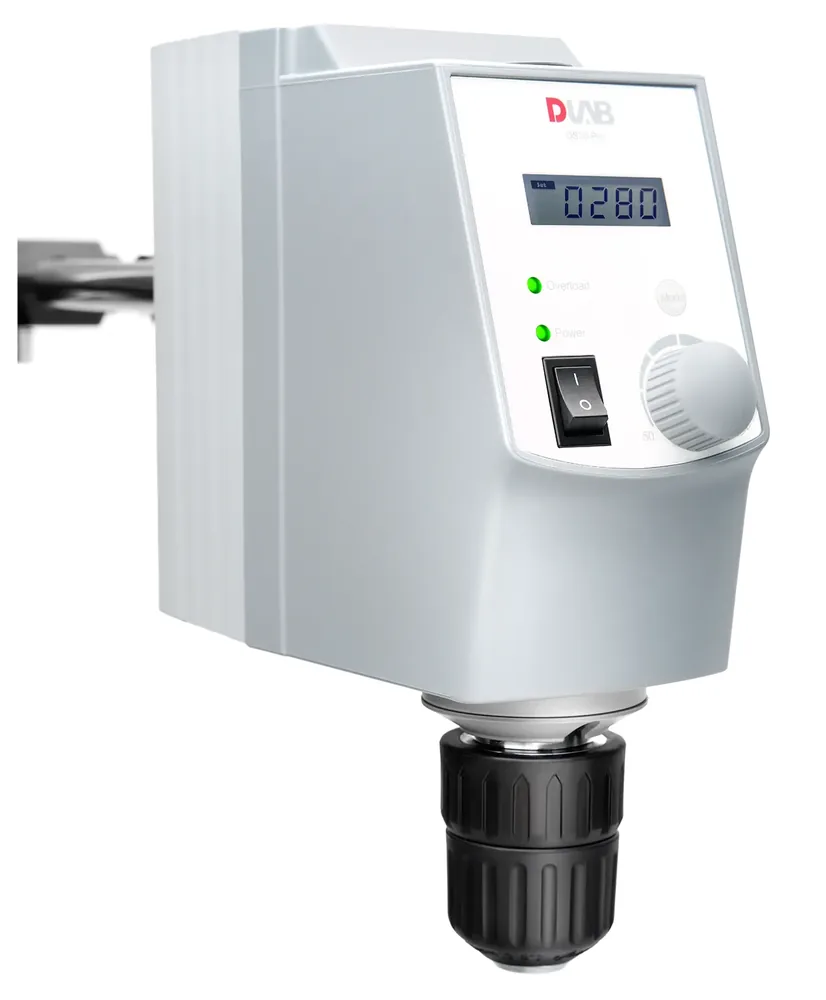
OS series overhead stirrers with brushless motors for water-equivalent volumes of up to 20, 40 and 70 liters.
MS-H Series Hotplate Stirrer
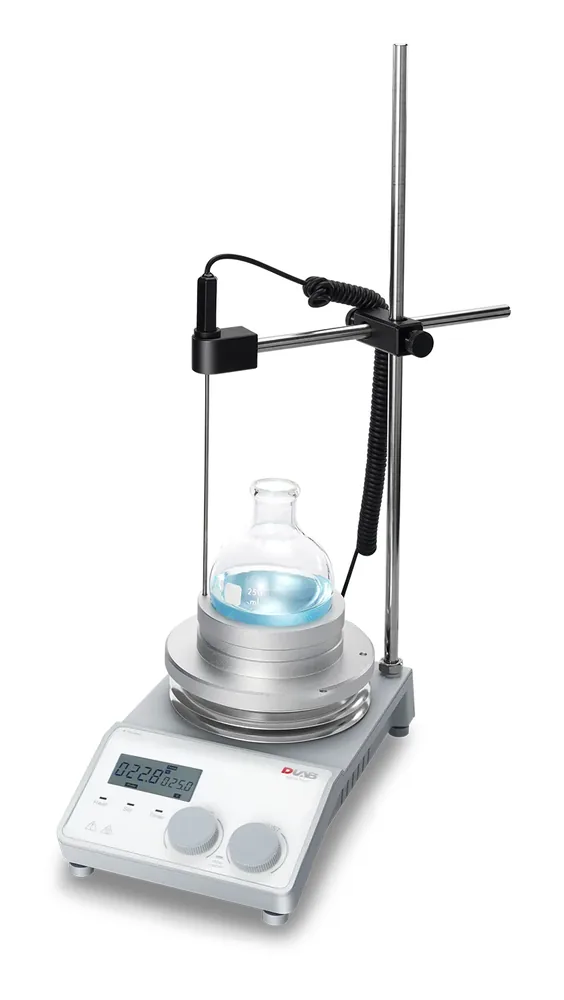
MS-H series hotplate stirrers with a 5-inch plate, heating up to 340 °C and stirring up to 20 L of water.
Multi-Position Magnetic Stirrers
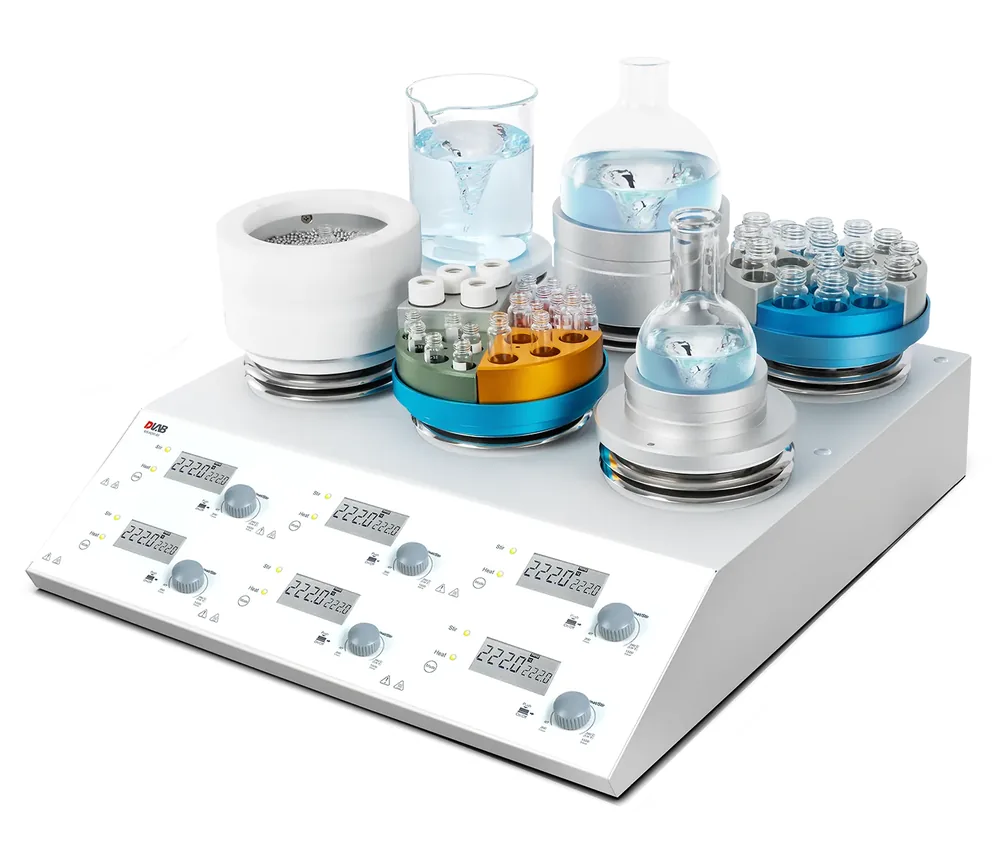
Parallel sample preparation with 4-, 6-, 10- and 15-position DLAB magnetic stirrers, with or without heating.
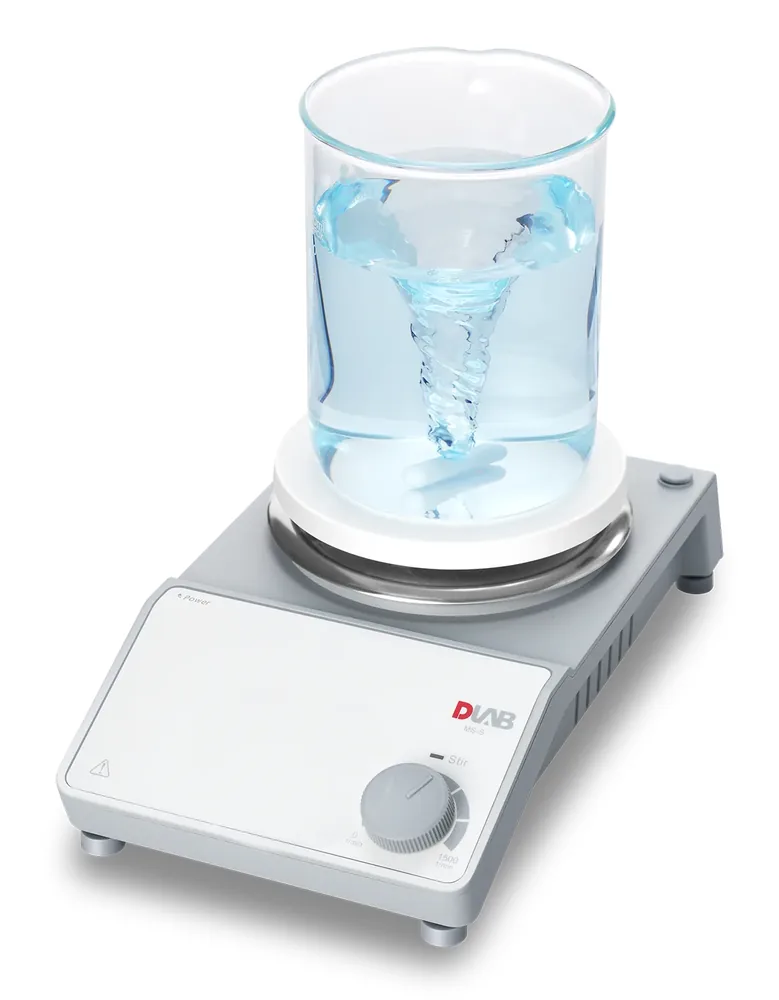
MS, FlatSpin and EcoStir Magnetic Stirrers
Non-heating DLAB magnetic stirrers, from the ultra-slim FlatSpin to the MS7-S with a 7-inch glass-ceramic plate.
Request a quote for this model
A suitable configuration and pricing are prepared based on sample type and workload.
Request a quote