

DLAB
MX Series Vortex Mixer and Microplate Mixer
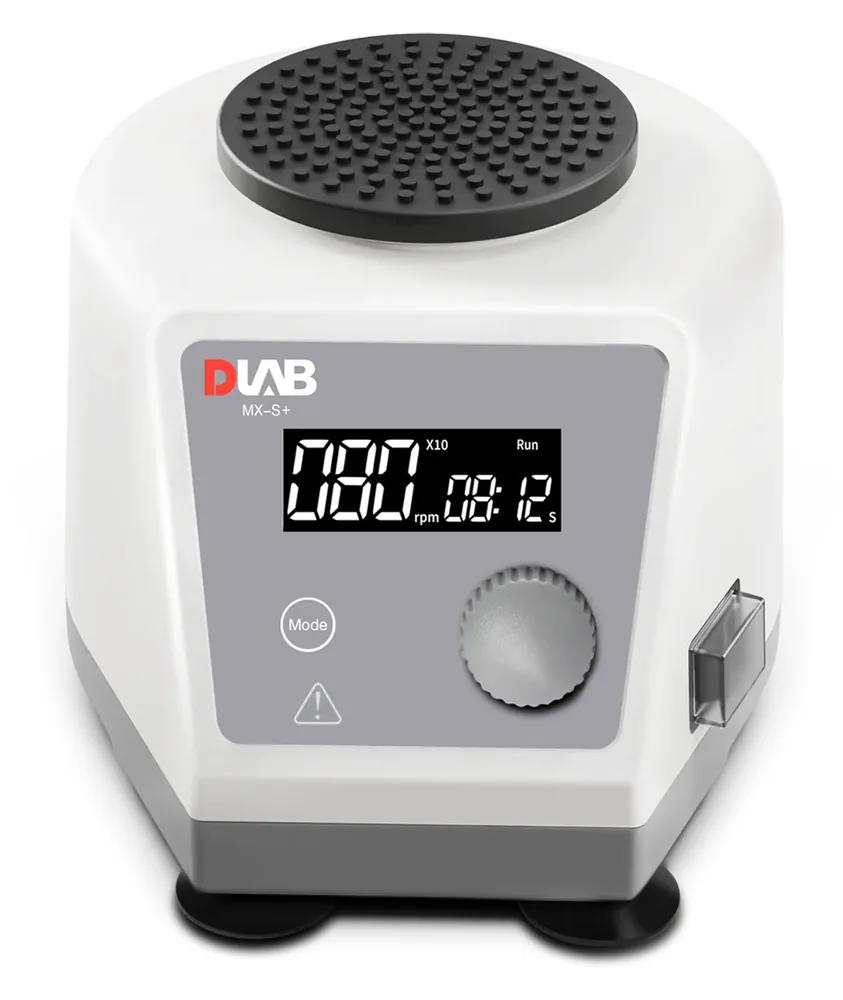
The MX series vortex mixer generates a circular motion of up to 3,000 rpm to mix samples in tubes and small vessels within seconds. The series ranges from the economical MX-E to the MX-S+ with LCD display and the MX-Pro with infrared sensing, and also covers the MX-C cell disruptor and the MX-M microplate mixer.
Request a quote| Speed | 3,000 rpm fixed or 0–3,000 rpm adjustable |
|---|---|
| Orbit diameter | 4–4.8 mm |
| Operating mode | Touch, continuous, infrared (MX-Pro) |
| Display | Scale or LCD (MX-S+, MX-Pro) |
| Microplate | MX-M: single plate 0–1,500 rpm |
Product description
A vortex mixer applies a small-diameter circular motion to the base of the tube, creating a vortex in the liquid and mixing the sample in a short time. Touch mode, which runs when the tube is pressed onto the head, is used for single tubes; continuous mode is used for multiple tubes with accessories.
The series is tiered for different needs. The MX-F and MX-E run at a fixed speed of 3,000 rpm; the MX-S and MX-SA are adjustable between 0 and 3,000 rpm. The MX-S+ and MX-Pro display the actual speed and time with a brushless DC motor and LCD display; the MX-Pro starts contact-free via an infrared sensor when a tube approaches. The MX-SA housing is coated with antimicrobial powder paint.
Model comparison
| Model | Speed | Operation | Display | Motor | Weight |
|---|---|---|---|---|---|
| MX-E | 3,000 rpm fixed | Touch | None | 12 V DC brushless | 0.6 kg |
| MX-F | 3,000 rpm fixed | Touch / continuous | None | Shaded pole | 2.0 kg |
| MX-S | 0–3,000 rpm | Touch / continuous | Scale | Shaded pole | 2.0 kg |
| MX-SA | 0–3,000 rpm | Touch / continuous | Scale | Shaded pole | 4.0 kg and above |
| MX-S+ | 100–3,000 rpm | Touch / continuous | LCD | Brushless DC | 3.4 kg |
| MX-Pro | 100–3,000 rpm | Infrared / continuous | LCD | Brushless DC | 3.9 kg |
| MX-C | 0–3,000 rpm | Vortex and oscillation | Scale | - | 2.0 kg |
| MX-M | 0–1,500 rpm (double plate 0–1,000 rpm) | Continuous | Scale | Brushless DC | 3 kg |
Applications
- Mixing buffers and reagents in molecular biology
- Dissolution and suspension in sample preparation
- Disruption of bacteria, yeast, fungi and algae cells using the bead method with the MX-C
- Mixing in microplates and homogenization before incubation with the MX-M
Correct use
The tube is pressed vertically onto the head, and its cap must be tightly closed; at high speed, open tubes cause the liquid to splash out. For sensitive samples, operation starts at low speed and the speed is increased if needed. For larger numbers of tubes, tube holder accessories are used instead of the head and the instrument is switched to continuous mode.
Suction-cup feet and the heavy cast housing prevent the instrument from sliding on the bench at high speed. The brushless-motor MX-S+ and MX-Pro models run quietly and maintenance-free. The housing and head are cleaned by wiping with a damp cloth; the instrument must not be immersed in liquid.
Vortex mixer selection criteria
For routine, single-tube work, the fixed-speed MX-E or MX-F is sufficient. If sensitive samples require moving from gentle to vigorous mixing, the adjustable-speed MX-S is preferred; if speed and time need to be recorded, the MX-S+ with LCD display is preferred. In work where contamination risk is important, the contact-free start of the MX-Pro is an advantage.
If the sample needs to be mixed slowly over a long period, a tube rotator is suitable instead of a vortex mixer; for temperature-controlled mixing, a thermomixer should be considered. For tube options, see the centrifuge tubes page. Other instruments are in the mixing and shaking category.
Technical specifications
| Motion type | Circular vortex (MX-C: vortex and oscillation) |
|---|---|
| Orbit diameter | 4–4.8 mm depending on model |
| Speed | 3,000 rpm fixed (MX-E, MX-F) · 0–3,000 rpm adjustable |
| Operating mode | Touch, continuous · MX-Pro: infrared |
| Display | Scale · MX-S+ and MX-Pro: LCD |
| Motor | Shaded pole or brushless DC (depending on model) |
| Standard head | Single tube or small vessel up to 30 mm diameter |
| MX-M load capacity | 0.5 kg (including platform) |
| Power | 12–60 W depending on model |
| Power supply | 100–120 V or 200–240 V, 50/60 Hz (100–240 V depending on model) |
| Protection class | IP20 or IP21 |
| Ambient conditions | 5–40 °C, 80% relative humidity |
Values are taken from the manufacturer's published technical documentation. They may vary by configuration and are confirmed against the current datasheet before quotation.
Frequently asked questions
What is the difference between touch and continuous mode?
In touch mode, the instrument runs only when a tube is pressed onto the head, which is practical for individual samples. In continuous mode, the instrument runs constantly and multiple tubes can be mixed simultaneously with accessories.
How does the MX-C differ from a standard vortex mixer?
The MX-C adds oscillation to the vortex motion and, when used with beads, performs cell disruption in up to eight microtubes. Its purpose is preparing cell lysates rather than mixing.
Can microplates be mixed on a vortex mixer?
The MX-M microplate mixer, designed for plates, is more suitable; it provides balanced motion up to 1,500 rpm with a single plate and up to 1,000 rpm with two plates.
From the same category
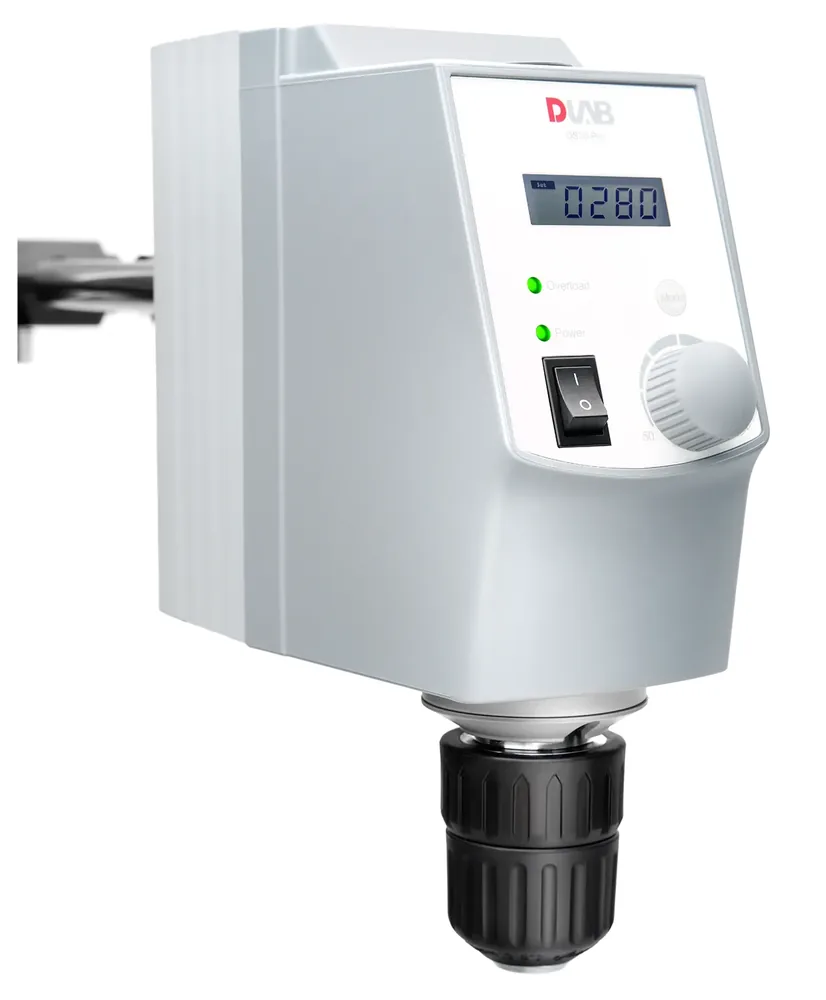
OS Series Mechanical (Overhead) Stirrer
OS series overhead stirrers with brushless motors for water-equivalent volumes of up to 20, 40 and 70 liters.
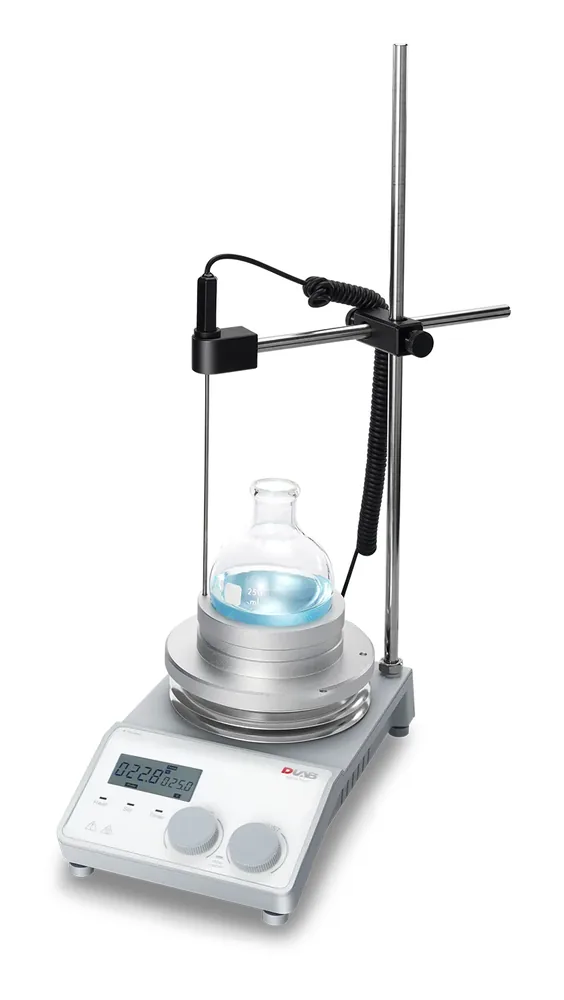
MS-H Series Hotplate Stirrer
MS-H series hotplate stirrers with a 5-inch plate, heating up to 340 °C and stirring up to 20 L of water.
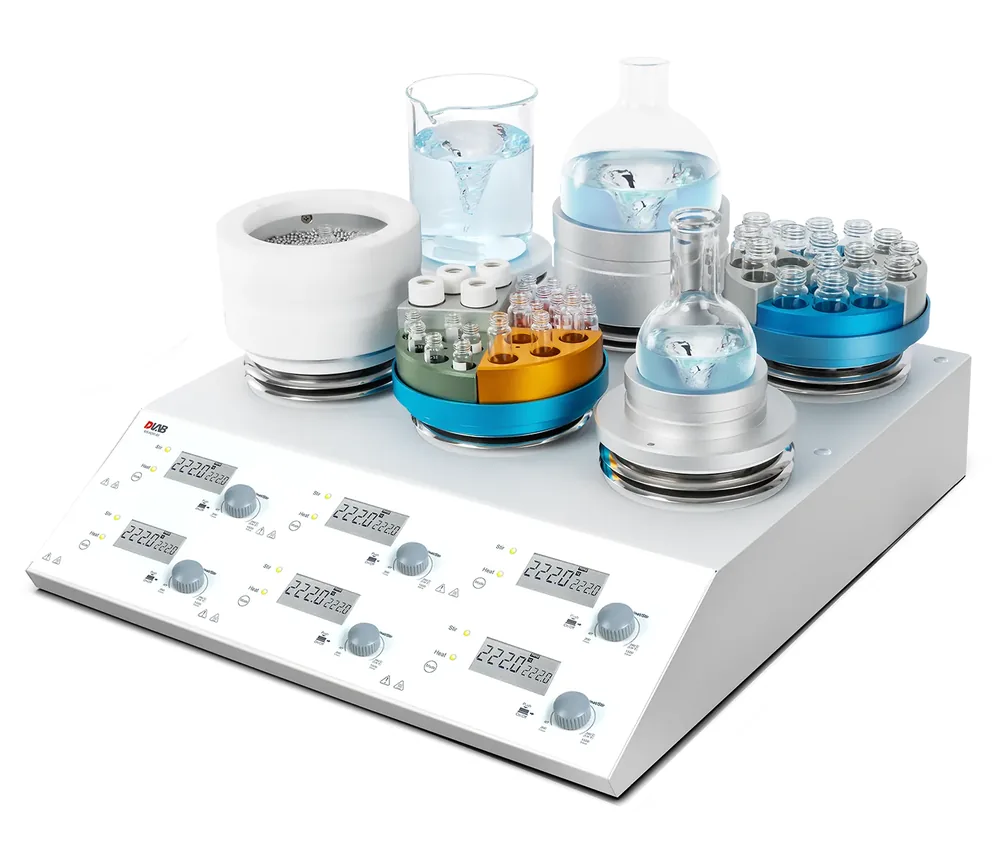
Multi-Position Magnetic Stirrers
Parallel sample preparation with 4-, 6-, 10- and 15-position DLAB magnetic stirrers, with or without heating.
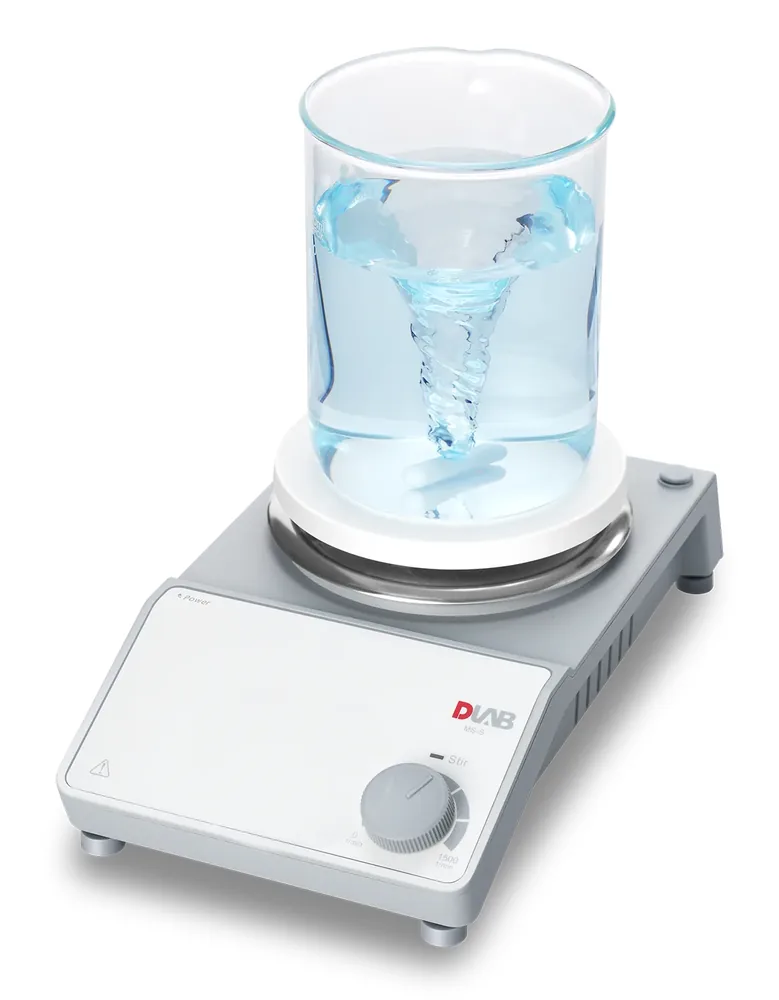
MS, FlatSpin and EcoStir Magnetic Stirrers
Non-heating DLAB magnetic stirrers, from the ultra-slim FlatSpin to the MS7-S with a 7-inch glass-ceramic plate.
Request a quote for this model
A suitable configuration and pricing are prepared based on sample type and workload.
Request a quote