

DLAB
MX-RD and MX-RL Tube Rotator
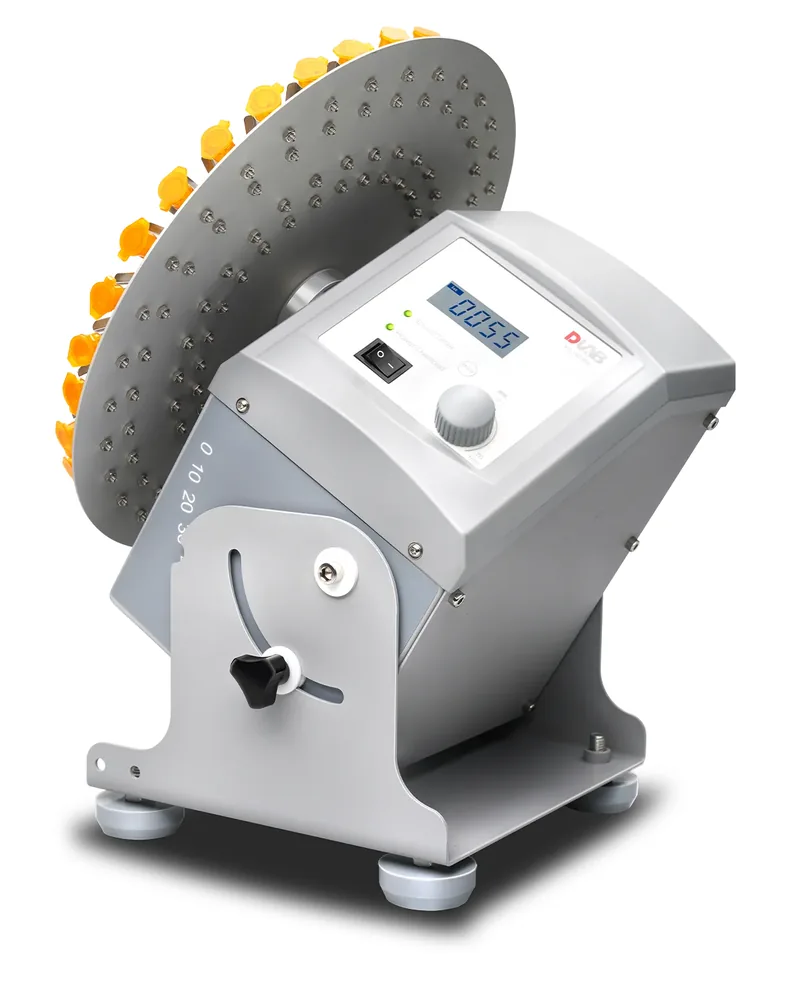
The MX-RD and MX-RL tube rotators turn tubes through 360° to mix sensitive samples such as blood, cell suspensions and magnetic beads without foaming. On the Pro models, speed and time are set on an LCD display, while the E models are economical options operated with a scale dial.
Request a quote| Speed range | 10–70 rpm (Pro) · 0–80 rpm (E) |
|---|---|
| Rotation | 360° |
| Tilt angle | 0–90° (Pro) |
| Timer | 1–1,199 min (Pro) |
| Tube | 1.5 mL, 15 mL, 50 mL |
Product description
A tube rotator turns tubes end over end, mixing the phases of the contents slowly and continuously. Unlike a vortex mixer, this motion does not create foam or shear, making it suitable for blood, cell suspensions and antibody-containing reagents.
The MX-RD models use a circular disc accessory, while the MX-RL models use a horizontal rotisserie accessory. Pro models feature a brushless DC motor, an LCD speed and time display, and a tilt angle adjustable between 0 and 90°; the Pro versions are offered with 50 mL and 1.5 mL tube holder options. The E models are economical DC-motor solutions adjusted with a scale dial.
Model comparison
| Model | Accessory type | Speed range | Display and timer | Power |
|---|---|---|---|---|
| MX-RD-Pro | Disc | 10–70 rpm | LCD, 1–1,199 min | 40 W |
| MX-RL-Pro | Horizontal rotisserie | 10–70 rpm | LCD, 1–1,199 min | 40 W |
| MX-RD-E | Disc | 0–80 rpm | Scale, continuous | 20 W |
| MX-RL-E | Horizontal rotisserie | 0–80 rpm | Scale, continuous | 20 W |
Applications
- Keeping blood samples and cell suspensions from settling
- Magnetic bead steps in nucleic acid extraction
- Antibody and sample incubation in immunological reactions
- Long-term mixing in a cold room or incubator
Correct use
Tubes are placed evenly on the disc or rotisserie accessory; a load concentrated on one side causes vibration during rotation. Tube caps must be closed tightly and checked for leaks. A low speed is selected for sensitive samples; the speed is increased only if the pellet disperses too slowly.
On Pro models, mixing intensity can be adjusted by changing the tilt angle: a steep angle produces full rotation of the tube, while a low angle produces a gentler motion. The timer helps keep incubation times standardized. After use in a cold room, condensation is allowed to dry before further use.
In magnetic bead extraction protocols, keeping the beads in suspension without settling directly affects binding efficiency. The continuous, low-speed motion of the tube rotator is suitable for this step. Similarly, in antibody incubations, slow rotation maintains contact between the sample and reagent without foaming and improves the reproducibility of results.
Tube rotator selection criteria
If a small number of tubes in different sizes is used, the disc type MX-RD is more efficient; for many long tubes of the same size, the horizontal rotisserie type MX-RL is more efficient. If the protocol requires standardized times or a change of tilt angle, the Pro models are preferred; if continuous mixing at a fixed speed is sufficient, the E models are preferred.
For mixing blood tubes in batches by rocking, the tube roller and rocking rotator series is suitable. For work requiring fast mixing, a vortex mixer is used. Compatible tubes are on the centrifuge tubes page, and other instruments are in the mixing and shaking category.
Technical specifications
| Motion type | 360° rotation |
|---|---|
| Speed range | Pro: 10–70 rpm · E: 0–80 rpm |
| Tilt angle | 0–90° (Pro models) |
| Speed and time display | Pro: LCD · E: scale |
| Timer | 1–1,199 min (Pro models) |
| Operating mode | Continuous or timed (Pro) · continuous (E) |
| Motor | Pro: brushless DC · E: DC |
| Accessory | MX-RD: disc · MX-RL: horizontal rotisserie; 1.5 / 15 / 50 mL |
| Power | Pro: 40 W · E: 20 W |
| Power supply | 100–240 V, 50/60 Hz |
| Protection class | IP21 |
| Ambient conditions | 5–40 °C, 80% relative humidity |
Values are taken from the manufacturer's published technical documentation. They may vary by configuration and are confirmed against the current datasheet before quotation.
Frequently asked questions
Can the tube rotator be used in a cold room?
Yes. The manufacturer states that the MX-RL series can be used in cold rooms and incubators; it is suitable for long-term mixing at low temperatures.
What is the difference between the disc and horizontal rotisserie accessories?
The disc accessory holds tubes of different sizes on a circular surface, and its tilt angle is adjustable. The horizontal rotisserie accessory lines tubes up along a horizontal axis and is suitable for many tubes of the same size.
Do the Pro and E models use the same accessories?
The manufacturer states that the disc and rotisserie accessories for the MX-RL-E and MX-RD-E are used with 50 mL, 15 mL and 1.5 mL tubes. The Pro models are offered with 50 mL and 1.5 mL tube holder options; compatibility is confirmed when ordering.
From the same category
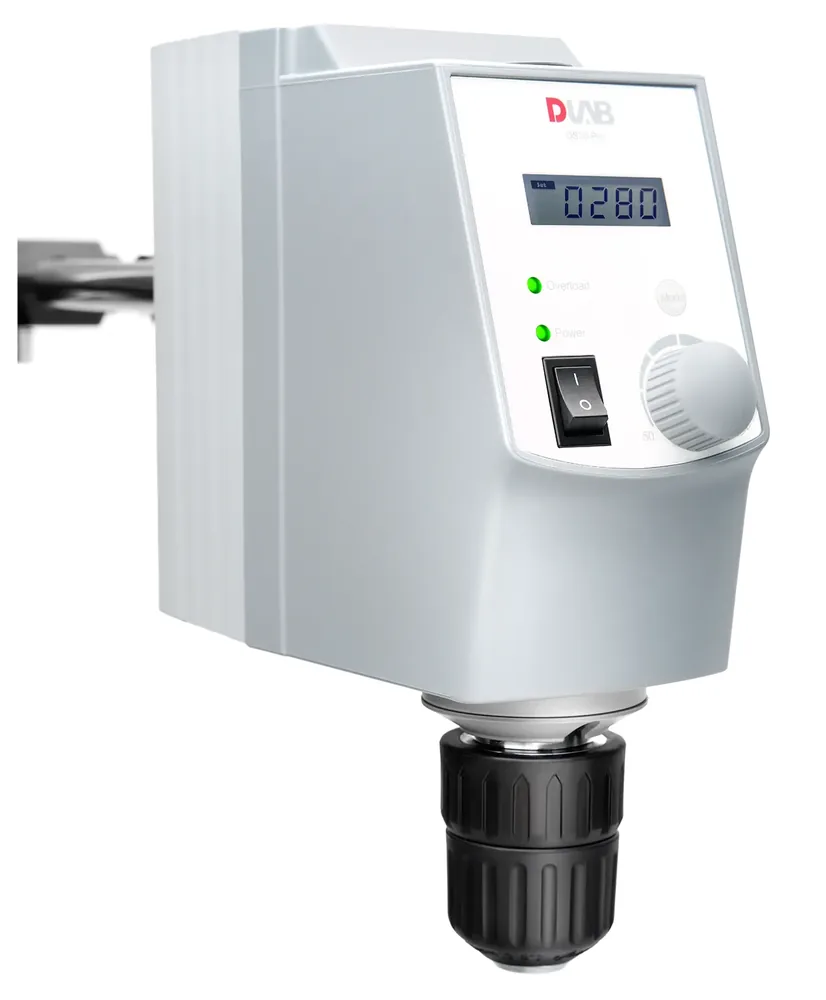
OS Series Mechanical (Overhead) Stirrer
OS series overhead stirrers with brushless motors for water-equivalent volumes of up to 20, 40 and 70 liters.
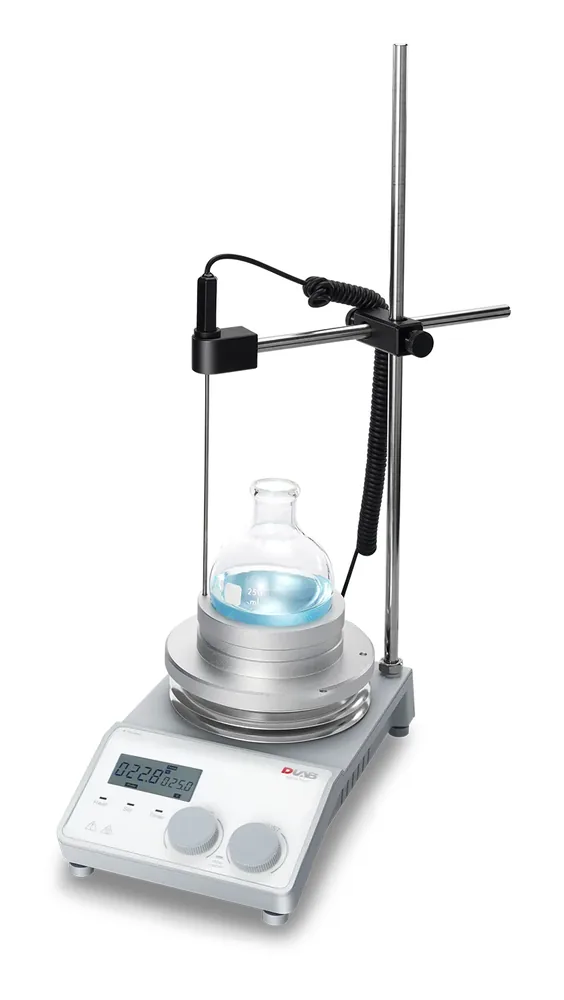
MS-H Series Hotplate Stirrer
MS-H series hotplate stirrers with a 5-inch plate, heating up to 340 °C and stirring up to 20 L of water.
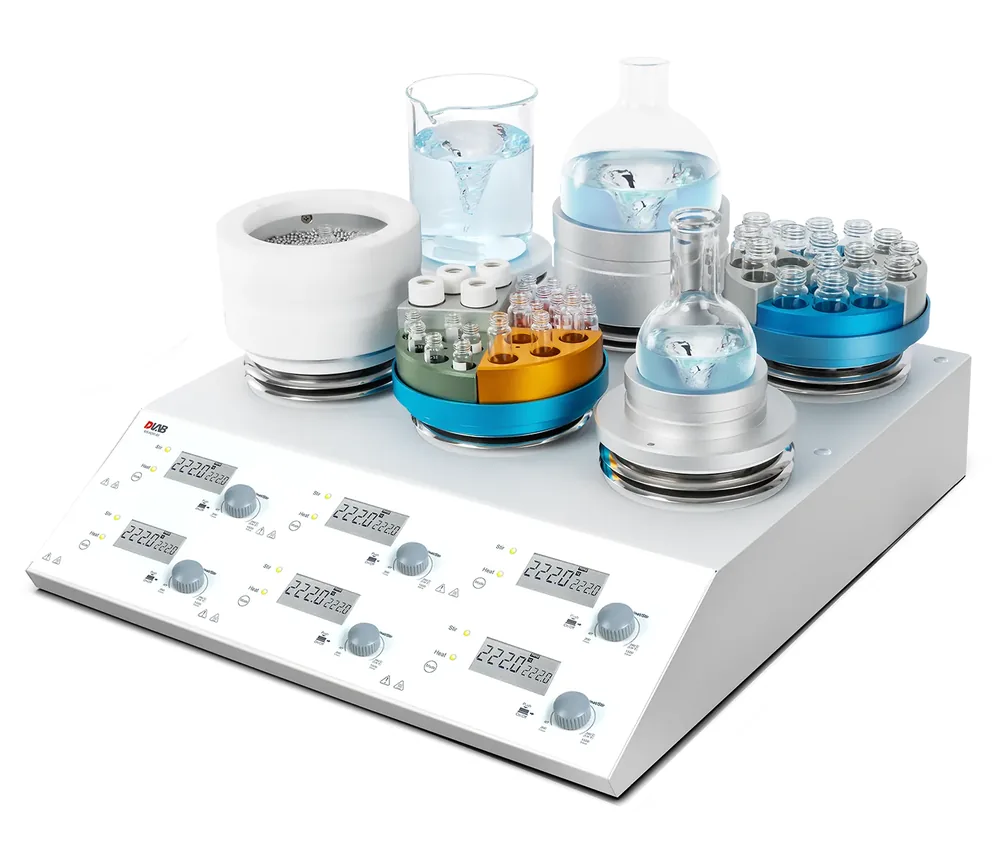
Multi-Position Magnetic Stirrers
Parallel sample preparation with 4-, 6-, 10- and 15-position DLAB magnetic stirrers, with or without heating.
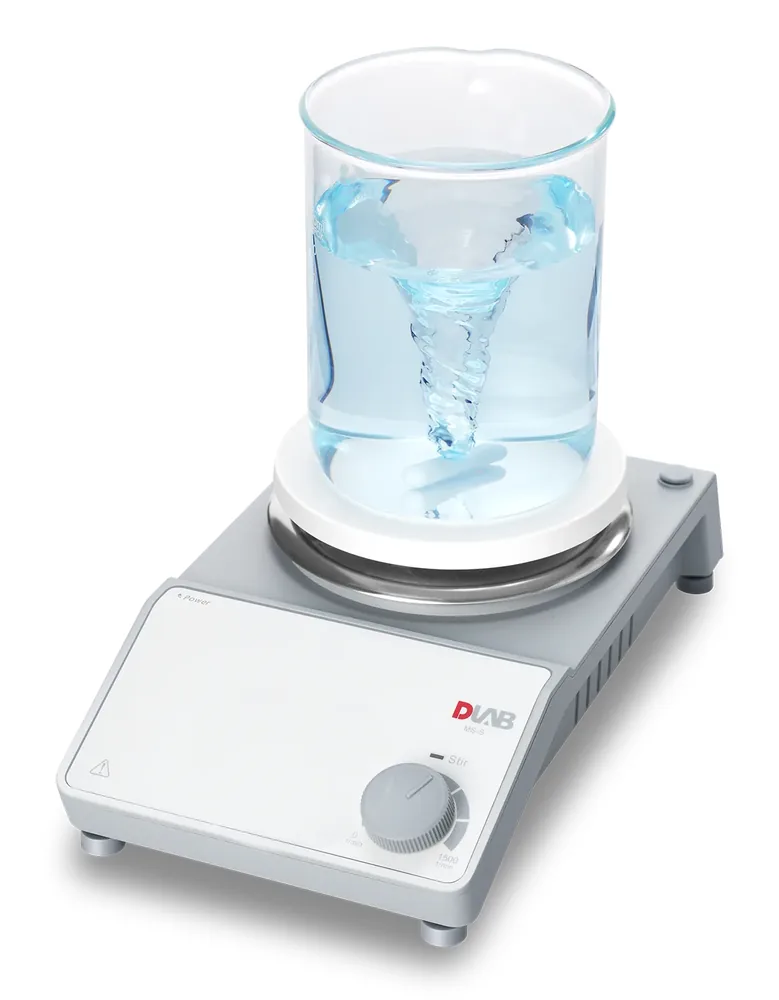
MS, FlatSpin and EcoStir Magnetic Stirrers
Non-heating DLAB magnetic stirrers, from the ultra-slim FlatSpin to the MS7-S with a 7-inch glass-ceramic plate.
Request a quote for this model
A suitable configuration and pricing are prepared based on sample type and workload.
Request a quote