

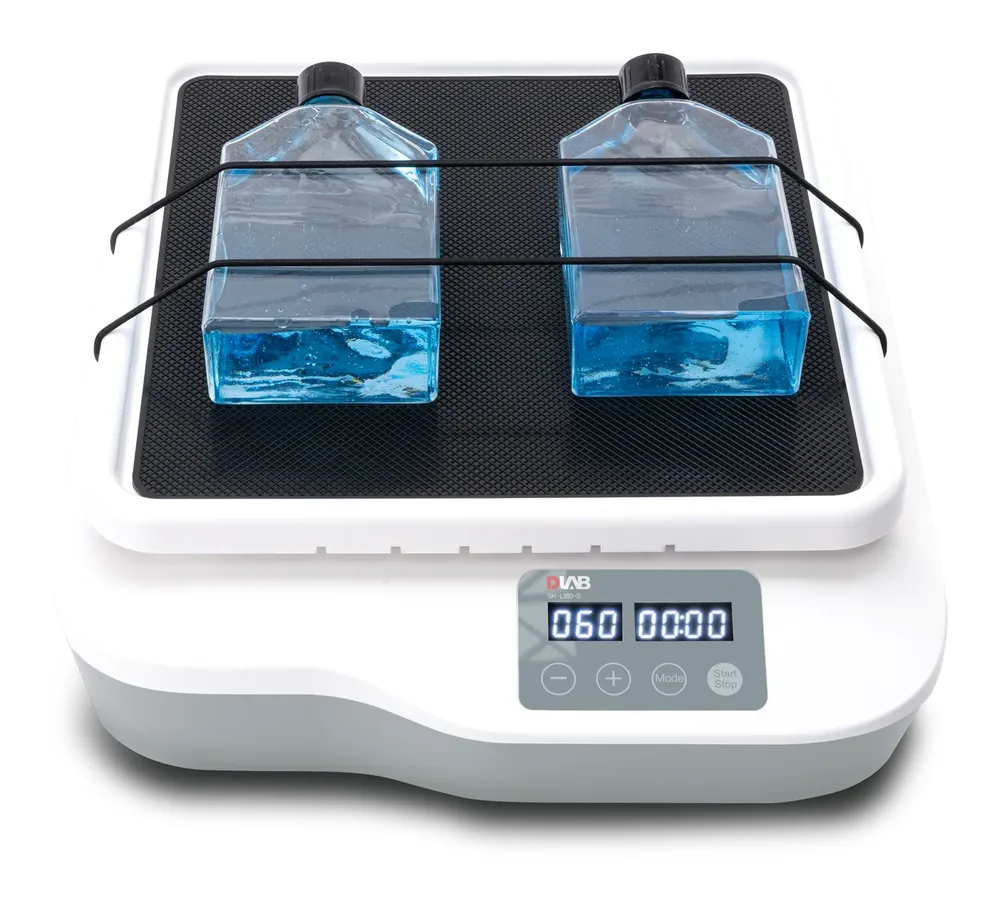
DLAB
SK-L, SK-R and SK-D Linear, Rocking and 3D Shaker
The linear, rocking and 3D shaker series offers three different motion types for applications where orbital motion is not suitable. SK-L models produce reciprocating linear motion, SK-R models rocking on a tilted plane, and SK-D models three-dimensional motion at a fixed tilt.
Request a quote| Motion | Linear, rocking, 3D |
|---|---|
| Speed range | 10–350 rpm (depending on model) |
| Max. load | 2–10 kg (including platform) |
| Tilt angle | 7°, 9°, 10° (SK-R and SK-D) |
| Timer | 1 min to 19 h 59 min or 99 h 59 min |
Product description
The type of shaking motion determines how the sample behaves inside the vessel. Linear motion carries the liquid from one end of the vessel to the other and provides effective extraction in long vessels. Rocking motion gently ripples the liquid on a tilted plane, ensuring even wetting of the surface in work such as gel staining and membrane transfer. Three-dimensional motion combines rocking with rotation and provides gentle mixing without foaming.
Pro models have LCD displays and S models have LED displays; speed and time are monitored on separate readouts. SK-L Pro models feature an RS232 connection. The non-slip silicone surface on SK-D models keeps vessels from shifting during motion, and these models can be used inside an incubator.
Model comparison
| Model | Motion | Speed range | Amplitude / tilt | Max. load | Display |
|---|---|---|---|---|---|
| SK-L180-S | Linear | 40–200 rpm | 20 mm | 2 kg | LED |
| SK-L180-Pro | Linear | 100–350 rpm | 4 mm | 2.5 kg | LCD, RS232 |
| SK-L330-Pro | Linear | 100–350 rpm | 10 mm | 7.5 kg | LCD, RS232 |
| SK-R1807-S | Rocking | 10–80 rpm | 7° | 2 kg | LED |
| SK-R330-Pro | Rocking | 10–70 rpm | 9° | 10 kg | LCD |
| SK-D1810-S | 3D | 10–80 rpm | 10° | 2 kg | LED |
| SK-D3309-Pro | 3D | 10–70 rpm | 9° | 5 kg | LCD |
Applications
- Gel staining, destaining and washing steps
- Membrane incubation and washing after Western blotting
- Linear extraction in separatory funnels and long vessels
- Mixing in culture vessels and flasks without foaming
Correct use
In gel staining, the liquid level in the tray should be high enough to cover the gel completely, and the speed should be kept at a level where the liquid does not spill out. On rocking and 3D models, a low speed is usually sufficient; high speed can cause the gel to slide inside the tray.
On linear models, vessels are placed parallel to the direction of motion; this arrangement increases end-to-end movement of the liquid. When the timer is used, washing and incubation steps are completed in the same time in every experiment. The platform and silicone surfaces are wiped with water and dried after use.
Choosing the shaker motion type
For work such as gels and membranes where the surface must be wetted evenly, the rocking SK-R or the 3D-motion SK-D models are suitable. For sensitive cultures and protein solutions that must not foam, 3D motion gives a gentler result. To increase phase contact and perform extractions in long vessels, the linear SK-L models are preferred; for heavy loads, the SK-L330-Pro with a 320 × 320 mm platform or the SK-R330-Pro with a 10 kg load should be considered.
For culture and dissolution work where circular motion is sufficient, see the SK-O orbital shaker series. For blood tubes, the tube roller and rocking rotator is more suitable. Tanks used in gel preparation are in the electrophoresis category, and other shakers are in the mixing and shaking category.
Technical specifications
| Motion type | SK-L: linear · SK-R: rocking · SK-D: 3D |
|---|---|
| Speed range | SK-L: 40–350 rpm · SK-R and SK-D: 10–80 rpm |
| Amplitude (SK-L) | 4 mm, 10 mm or 20 mm |
| Tilt angle | SK-R1807-S: 7° · SK-R330-Pro and SK-D3309-Pro: 9° · SK-D1810-S: 10° |
| Max. load (including platform) | 2–10 kg depending on model |
| Timer | Pro: 1 min to 19 h 59 min · S: 1 min to 99 h 59 min |
| Display | Pro: LCD · S: LED |
| Data connectivity | RS232 (SK-L Pro models) |
| Motor | Brushless DC or DC (depending on model) |
| Working plate | From 268 × 268 mm to 320 × 320 mm |
| Power | 20–50 W depending on model |
| Power supply | 100–240 V, 50/60 Hz |
| Ambient conditions | 5–40 °C, 80% relative humidity |
Values are taken from the manufacturer's published technical documentation. They may vary by configuration and are confirmed against the current datasheet before quotation.
Frequently asked questions
What is the difference between rocking and 3D motion?
Rocking motion tilts the platform in two directions about a single axis. 3D motion applies a fixed tilt around a rotating axis; the liquid ripples in a circular pattern inside the vessel and the entire surface is wetted more evenly.
In which vessels is a linear shaker more effective?
In vessels that extend along one axis, such as separatory funnels, long tubes and rectangular containers, end-to-end movement of the liquid increases phase contact; this is why linear motion is efficient in extraction work.
Can the 3D shaker be used in an incubator?
Yes. The manufacturer states that the SK-D1810-S is incubator compatible; the non-slip silicone surface keeps vessels stable during motion.
From the same category
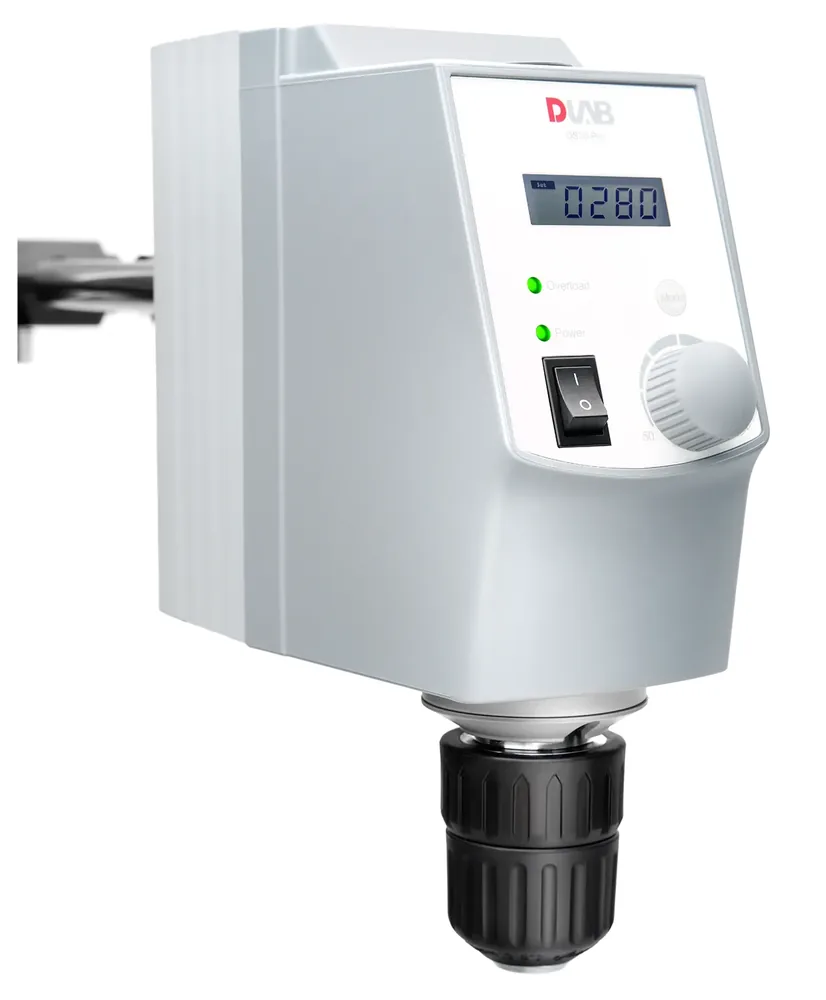
OS Series Mechanical (Overhead) Stirrer
OS series overhead stirrers with brushless motors for water-equivalent volumes of up to 20, 40 and 70 liters.
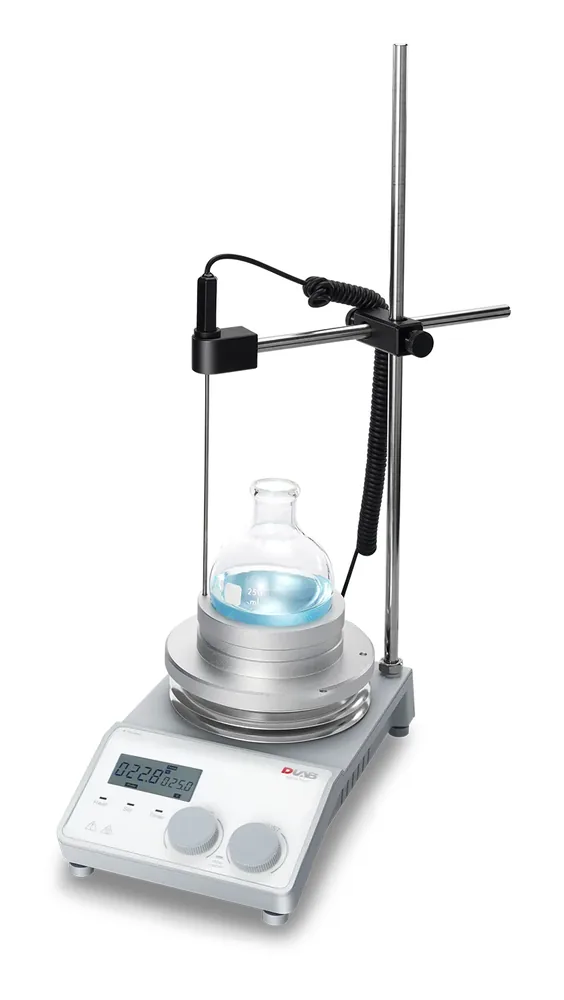
MS-H Series Hotplate Stirrer
MS-H series hotplate stirrers with a 5-inch plate, heating up to 340 °C and stirring up to 20 L of water.
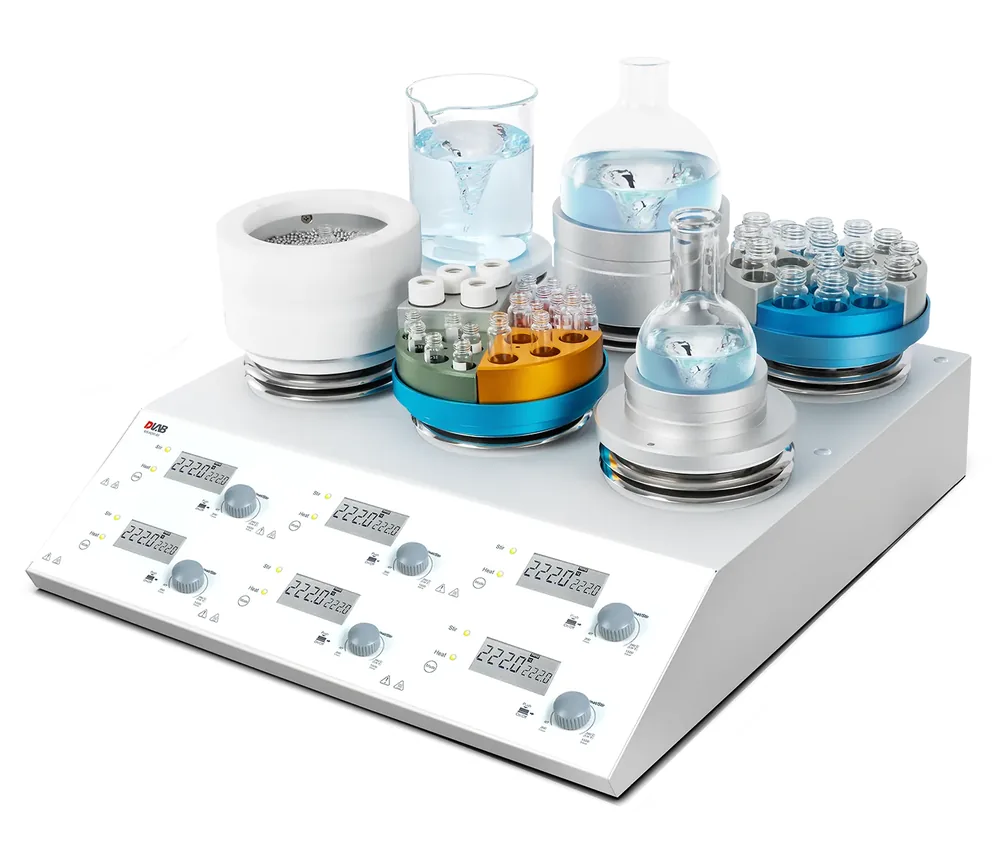
Multi-Position Magnetic Stirrers
Parallel sample preparation with 4-, 6-, 10- and 15-position DLAB magnetic stirrers, with or without heating.
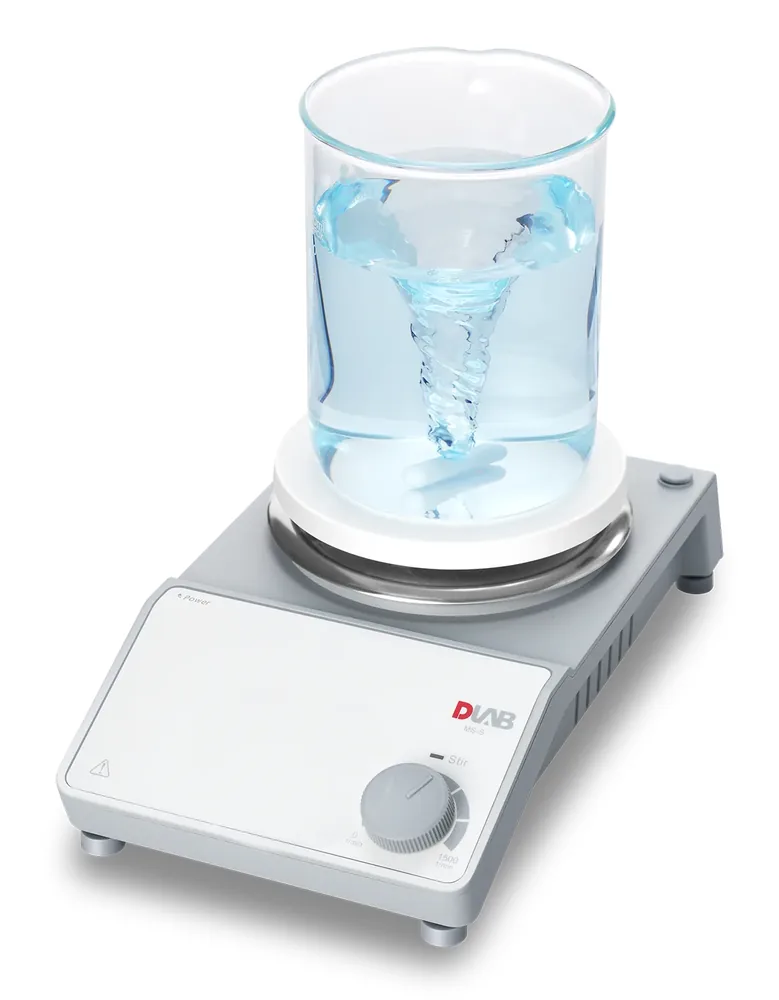
MS, FlatSpin and EcoStir Magnetic Stirrers
Non-heating DLAB magnetic stirrers, from the ultra-slim FlatSpin to the MS7-S with a 7-inch glass-ceramic plate.
Request a quote for this model
A suitable configuration and pricing are prepared based on sample type and workload.
Request a quote