

Heating and Water Baths
Ultrasonic Baths
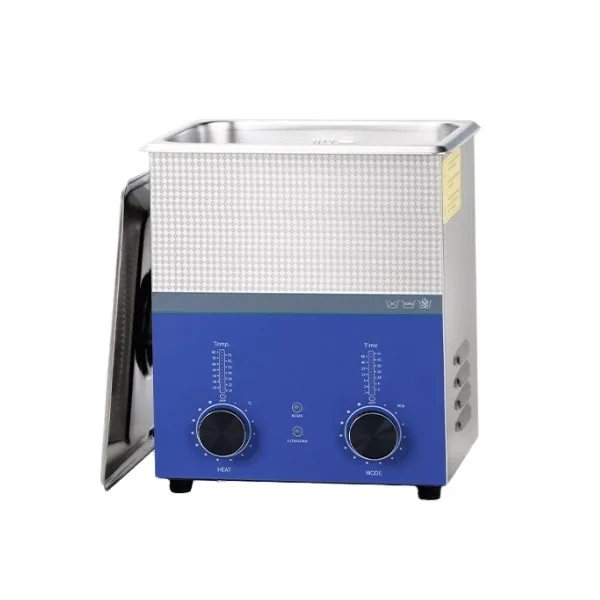
An ultrasonic bath is a laboratory instrument used for cleaning, degassing and dissolution work through the cavitation effect created by ultrasonic waves. It offers volumes from 3.2 liters up to 15 liters, a 40 kHz frequency, and digital time and temperature settings.
Request a quote| Volume | 3.2–15 liters |
|---|---|
| Frequency | 40 ± 2 kHz |
| Heating | 15–80 °C (depending on model) |
| Time | 1–60 minutes and continuous mode |
| Number of models | 4 |
Product description
An ultrasonic bath creates microscopic bubbles in the liquid, and the collapse of these bubbles produces a cleaning effect on surfaces. It removes dirt from places that cannot be reached by hand.
In the laboratory it is used for three tasks: cleaning glassware and parts, removing gas from solutions (degassing) and accelerating the dissolution of poorly soluble substances. Degassing HPLC mobile phase is one of the most common uses.
In heated models, temperature enhances the cleaning effect. However, heating is not used for heat-sensitive parts and with some solvents.
Ultrasonic bath selection criteria
- Size of the largest part to be cleaned: the internal tank dimensions are selected accordingly
- Whether there is a drain valve; draining large volumes by hand is difficult
- Whether heating is needed
- Whether a basket is included: parts should not be placed directly on the tank bottom
Placing parts directly in the tank damages the bottom where the transducers are located and reduces cleaning efficiency. A basket should be used.
Correct use
The tank should be filled with water or a suitable cleaning solution up to the level specified by the manufacturer. Operating with an empty or underfilled tank damages the transducers. During degassing, the solution should be kept in a beaker and the beaker placed on the basket.
For work that requires holding samples at a constant temperature with heating, a digital water bath should be used instead of an ultrasonic bath. Other options are in the heating and water baths category.
Maintenance and common mistakes
As the cleaning solution becomes contaminated, its effectiveness decreases; the solution should be renewed regularly and the tank rinsed at every change.
One common mistake is placing flammable solvents directly in the tank. Cavitation and heating accelerate the evaporation of these solvents; solvents should only be processed in an unsealed beaker placed in the water-filled tank.
Model options (4 models)
The models in the catalog and their key technical values are listed below. The full technical table and current pricing are provided in the quotation.
- Ultrasonic bath (option 1): AC 220 V/50 Hz or AC 110 V/60 Hz · 220 W · ultrasonic power 120 W
- Ultrasonic bath (option 2): 480 W · ultrasonic power 180 W · 40 ± 2 kHz
- Ultrasonic bath (option 3): 540 W · ultrasonic power 240 W · 40 ± 2 kHz
- Digital ultrasonic bath, 15 L
Technical assessment
Solvents should not be used directly as the cleaning solution; work should be carried out in a glass beaker, not in the tank itself.
Ultrasonic baths are noisy. For continuous use, it is recommended to position the instrument in a separate area.
Frequently asked questions
Is an ultrasonic bath suitable for degassing HPLC mobile phase?
Yes. Removing dissolved gases from the mobile phase is one of the most common laboratory uses of an ultrasonic bath. The solution is placed in the bath in an unsealed bottle or beaker.
Does heating improve the cleaning effect?
Heating improves the cleaning effect for most types of contamination. However, heating should not be used with heat-sensitive parts and volatile solvents.
Can parts be placed directly on the tank bottom?
No. Parts should be held in a basket; direct contact with the bottom damages the transducers and reduces cleaning efficiency.
From the same category
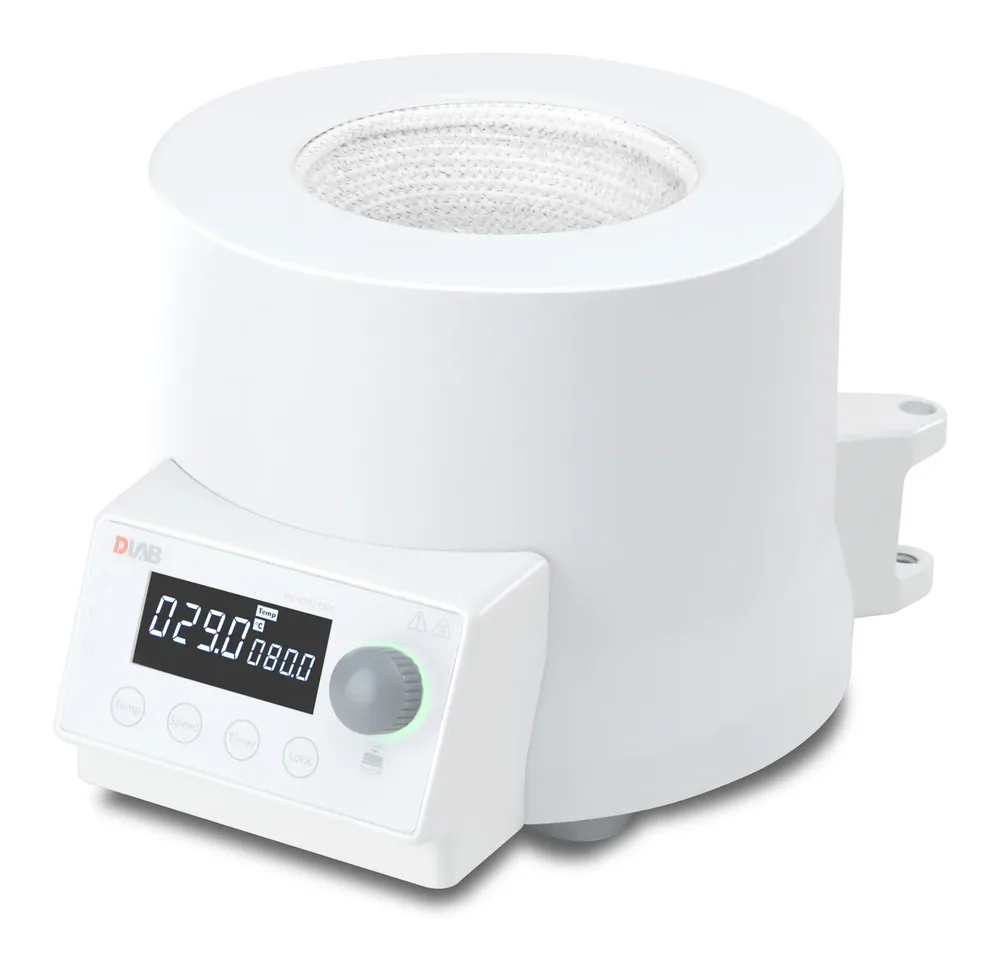
Stirring Heating Mantle
Digital heating mantles with magnetic stirring for 100–2,000 mL flasks, heating up to 280–380 °C.
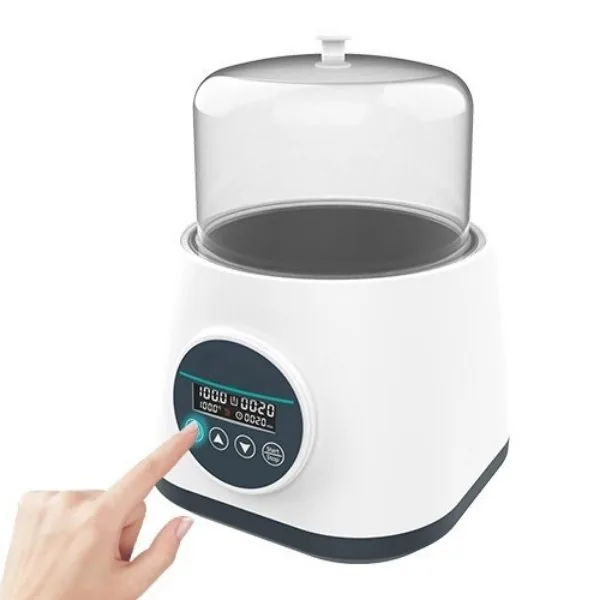
Water Baths
Digitally controlled water baths; single and multi-compartment models.
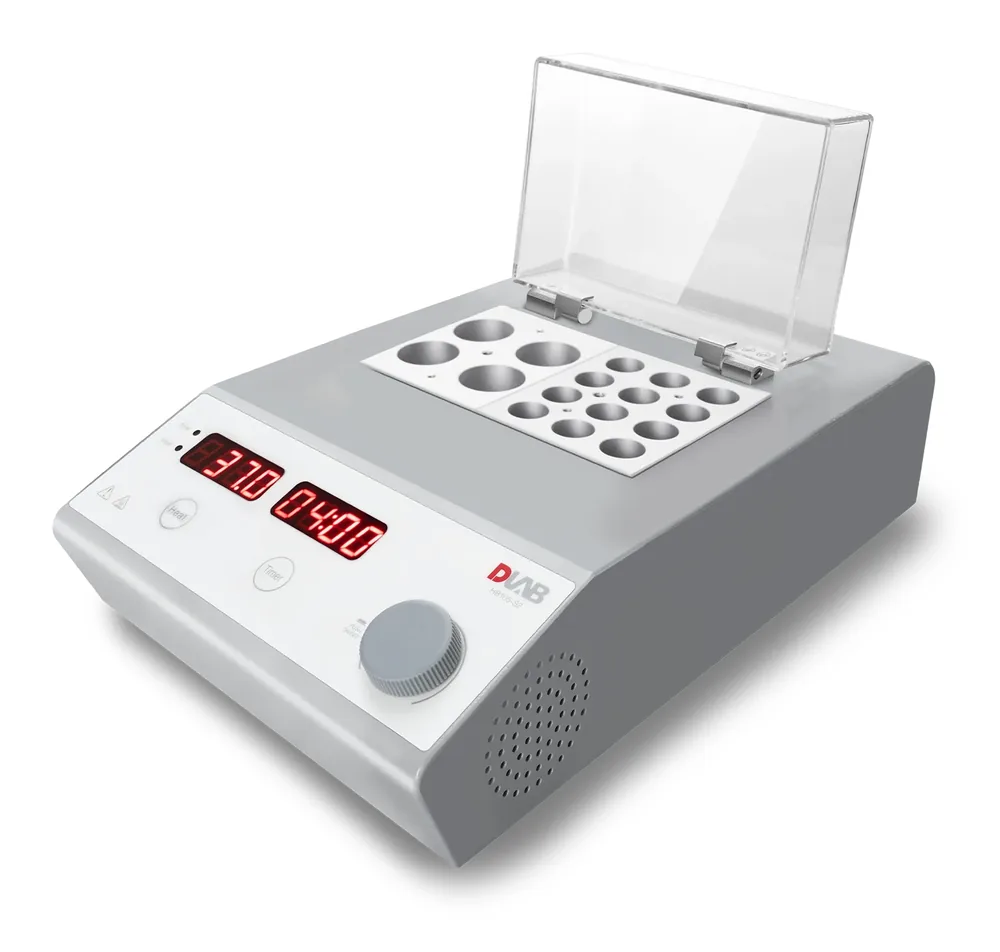
HB Series Dry Block Heater
Single or dual-module dry block heaters with LED display, operating from ambient +5 °C up to 150 °C.
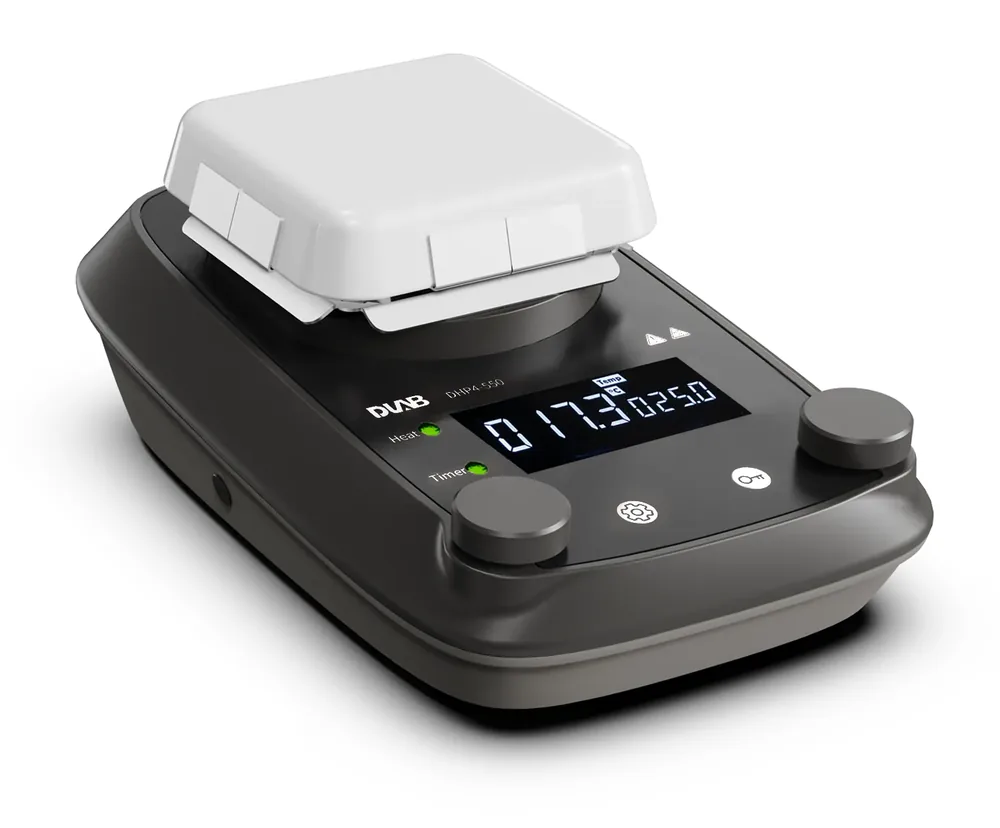
HP and DHP Series Hot Plate
4–10 inch laboratory hot plates with glass ceramic or ceramic-coated aluminum top plates, reaching 380–550 °C.
Request a quote for this model
A suitable configuration and pricing are prepared based on sample type and workload.
Request a quote