

DLAB
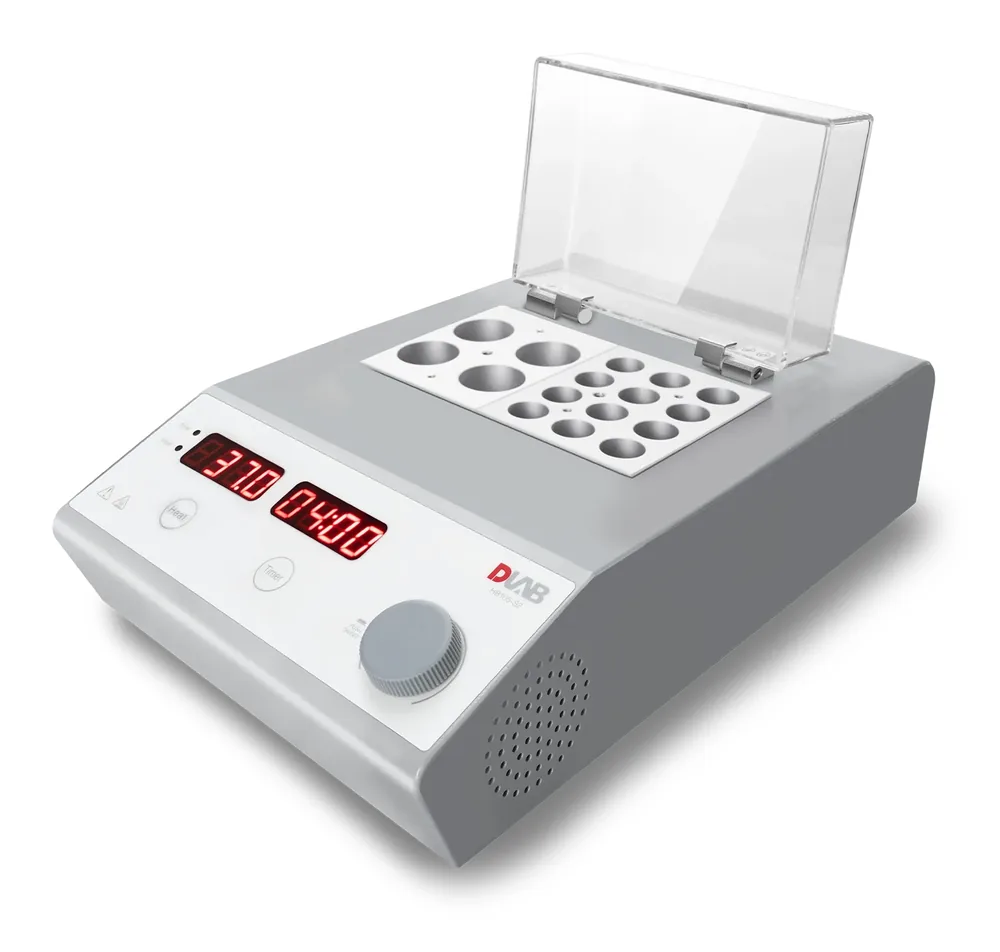
HB Series Dry Block Heater
The DLAB HB series dry block heater keeps samples in tubes at a constant temperature without water and operates from ambient +5 °C up to 60, 105, 120 or 150 °C depending on the model. With single and dual-module housings, an external temperature sensor and a lidded block design, it is used for DNA and protein denaturation, enzyme reactions and clinical incubation work.
Request a quote| Temperature range | Ambient +5 to 150 °C (depending on model) |
|---|---|
| Control accuracy | ±0.3 °C (25–90 °C, HB105 and HB150) |
| Module | Single or dual block |
| Timer | 0 min to 99 h 59 min |
| Display | LED |
Product description
A dry block heater is an instrument that heats with metal blocks instead of a water bath, holding the tube at a constant temperature by seating it directly in the block. Because there is no water evaporation, limescale or contamination risk, it is one of the most practical means of routine incubation in molecular biology and clinical laboratories.
The DLAB HB series offers this function with different upper temperature limits and module counts. The HB105 and HB150 models come with an external temperature sensor, an audible alarm and overheat protection; the lid on the block helps retain heat and shields the sample from the ambient environment. The HB120 offers flexible use with different block options, while the HB60-S is designed for clinical preheating work with five fixed temperature steps.
Model comparison
| Model | Temperature range | Control accuracy | Module | Power | Key feature |
|---|---|---|---|---|---|
| HB105-S1 | Ambient +5 to 105 °C | ±0.3 °C (25–90 °C) · ±0.6 °C (90–105 °C) | Single | 100 W | Temperature history via USB, external sensor |
| HB105-S1 (optional version) | Ambient +5 to 105 °C, setting 20–105 °C | ±0.3 °C (25–90 °C) · ±0.6 °C (90–105 °C) | Single | 100 W | USB interface, external sensor |
| HB105-S2 | Ambient +5 to 105 °C | ±0.3 °C (25–90 °C) · ±0.6 °C (90–105 °C) | Dual | 200 W | External sensor |
| HB150-S1 | Ambient +5 to 150 °C | ±0.3 °C (25–90 °C) · ±0.6 °C (90–150 °C) | Single | 100 W | External sensor |
| HB150-S2 | Ambient +5 to 150 °C | ±0.3 °C (25–90 °C) · ±0.6 °C (90–150 °C) | Dual | 200 W | External sensor |
| HB120-S / HB120-SC | Ambient +5 to 120 °C | ±0.5 °C | Single | 170 W / 160 W | Interchangeable block options |
| HB60-S | Ambient +5 to 60 °C (steps of 25/30/37/45/60 °C) | ±0.5 °C | Single | 160 W | 5 mL × 30 + 10 mL × 8 dual-purpose block |
Temperature uniformity within the block at 37 °C is specified as ±0.2 °C for the HB105 and HB150 models, ±0.3 °C for the HB60-S and ±0.5 °C for the HB120 models. On all models, the temperature display has a resolution of 0.1 °C.
Applications
- DNA, RNA and protein denaturation
- Restriction digestion, ligation and proteinase K digestion
- Cell lysis and preheating of reagents
- Constant-temperature incubation in immunological assays
- Preheating of blood samples and collection tubes (HB60-S)
- Serum clotting pretreatment and heating of coagulation reagents (HB60-S)
Single-block models are suitable for small batches. Dual-block models are preferred to increase throughput or to use two different tube formats at the same time.
Dry block heater selection criteria
- Upper temperature: For denaturation and heat treatment above 100 °C, the HB150 is suitable; for routine molecular work, the HB105 is sufficient.
- Capacity: If two different tube sizes will be used at the same time, the dual-module S2 models should be considered.
- Logging requirement: If temperature history needs to be monitored, the HB105-S1 with USB interface stands out.
- Mixing and cooling: If shaking is required during heating, the HM100-Pro and HCM100-Pro thermomixers are more suitable; if sub-ambient temperatures are required, the HC110-Pro thermo control block is more suitable.
For field work and laboratories with limited bench space, the MiniH series mini dry block heaters can be considered. For brief spin-down after tube preparation, the D1008 mini centrifuge is used in the same workflow; other options are among the heating and temperature control instruments.
Technical specifications
| Temperature range | Ambient +5 °C to 60, 105, 120 or 150 °C (depending on model) |
|---|---|
| Temperature setting range | 25–150 °C (HB60-S: steps of 25/30/37/45/60 °C) |
| Control accuracy | ±0.3 to ±0.6 °C (HB105, HB150) · ±0.5 °C (HB120, HB60-S) |
| Uniformity (37 °C) | ±0.2 °C (HB105, HB150) · ±0.3 °C (HB60-S) · ±0.5 °C (HB120) |
| Display resolution | 0.1 °C |
| Timer | 0 min to 99 h 59 min |
| External sensor | On HB105 and HB150 models |
| Display | LED |
| Power | 100–200 W (depending on model) |
| Power supply | 110/220 V, 50/60 Hz |
| Dimensions (W × D × H) | 290 × 210 × 120 mm (HB105, HB150) · 175 × 290 × 85 mm (HB120, HB60-S) |
| Weight | 2.5–3.2 kg |
| Operating environment | 10–40 °C, below 80% RH |
Values are taken from the manufacturer's published technical documentation. They may vary by configuration and are confirmed against the current datasheet before quotation.
Frequently asked questions
Can a dry block heater replace a water bath?
For incubation and denaturation work in tubes, largely yes. Because a dry block does not require water, it eliminates the risk of evaporation, limescale and contamination; for bottles or irregularly shaped vessels, a water bath is more suitable.
What is the difference between the HB105 and the HB150?
The two models share the same housing and control accuracy; the HB150 raises the upper temperature to 150 °C. If heat treatment or denaturation above 100 °C is required, the HB150 is selected.
How to choose between single and dual-module models?
If the daily sample count is low, a single module is sufficient. The dual-module S2 models increase capacity by using two blocks simultaneously and allow parallel work with two different tube sizes.
What work is the HB60-S designed for?
The HB60-S operates at five fixed steps: 25, 30, 37, 45 and 60 °C. It is designed for routine clinical work such as preheating blood collection tubes, serum preparation and heating coagulation reagents.
From the same category
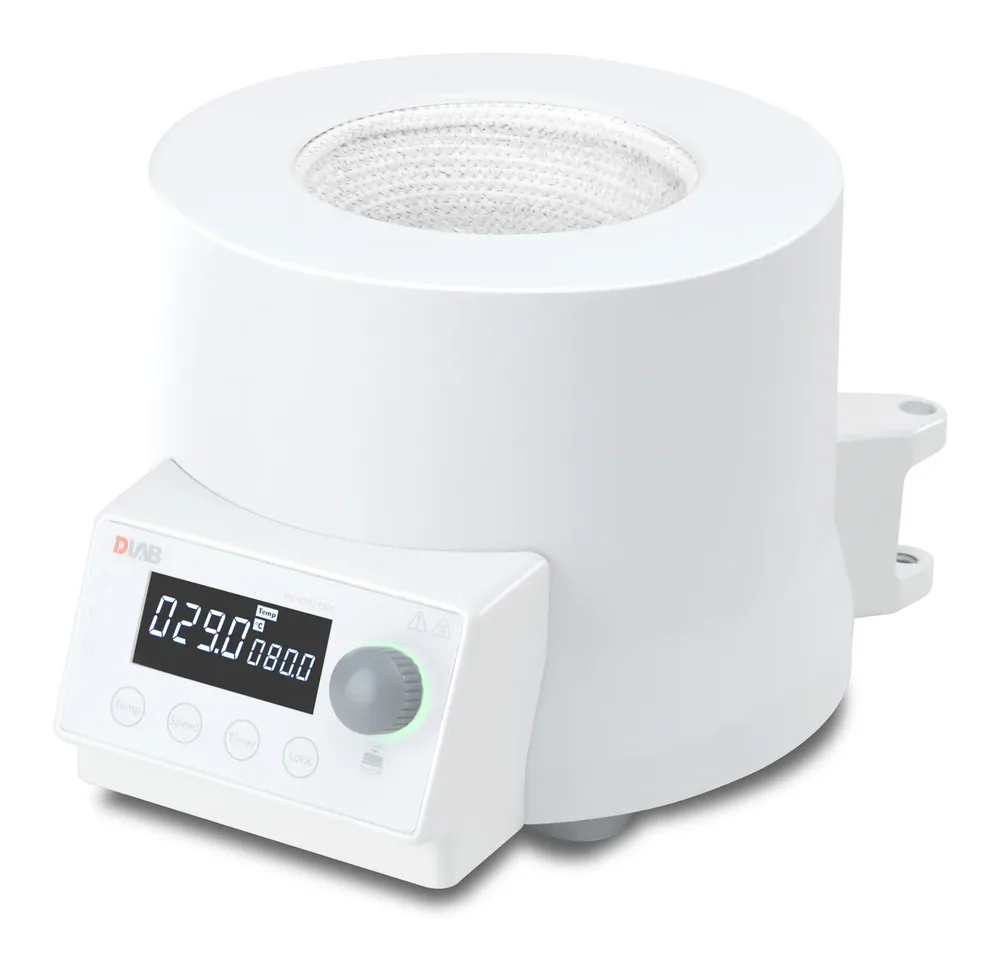
Stirring Heating Mantle
Digital heating mantles with magnetic stirring for 100–2,000 mL flasks, heating up to 280–380 °C.
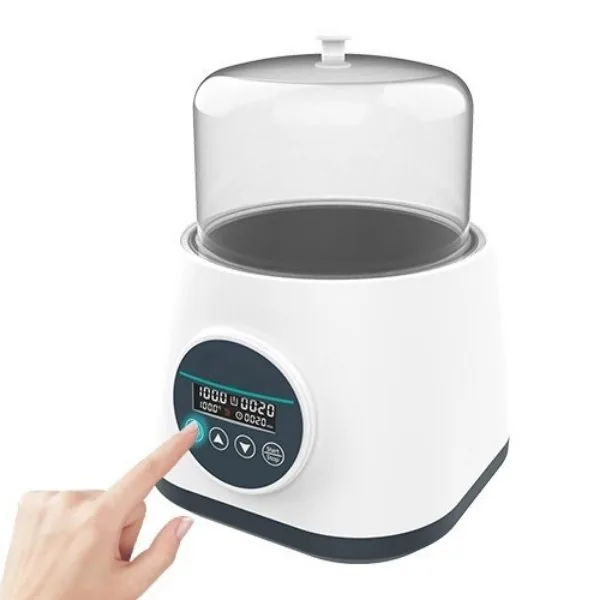
Water Baths
Digitally controlled water baths; single and multi-compartment models.
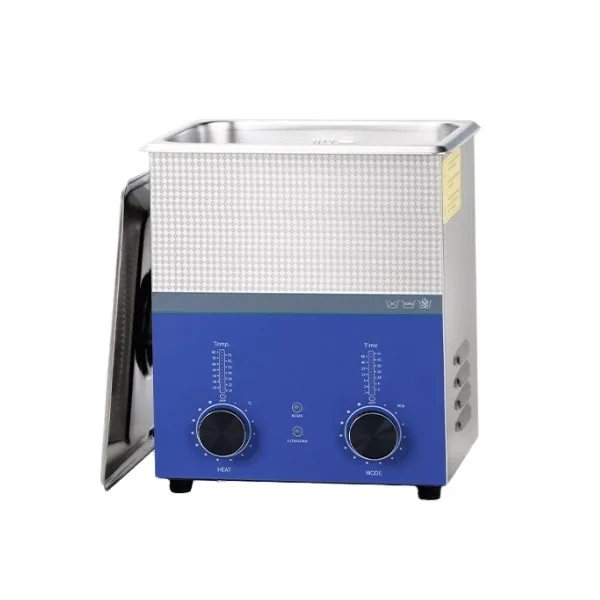
Ultrasonic Baths
3–15 liter ultrasonic baths for cleaning, degassing and dissolution.
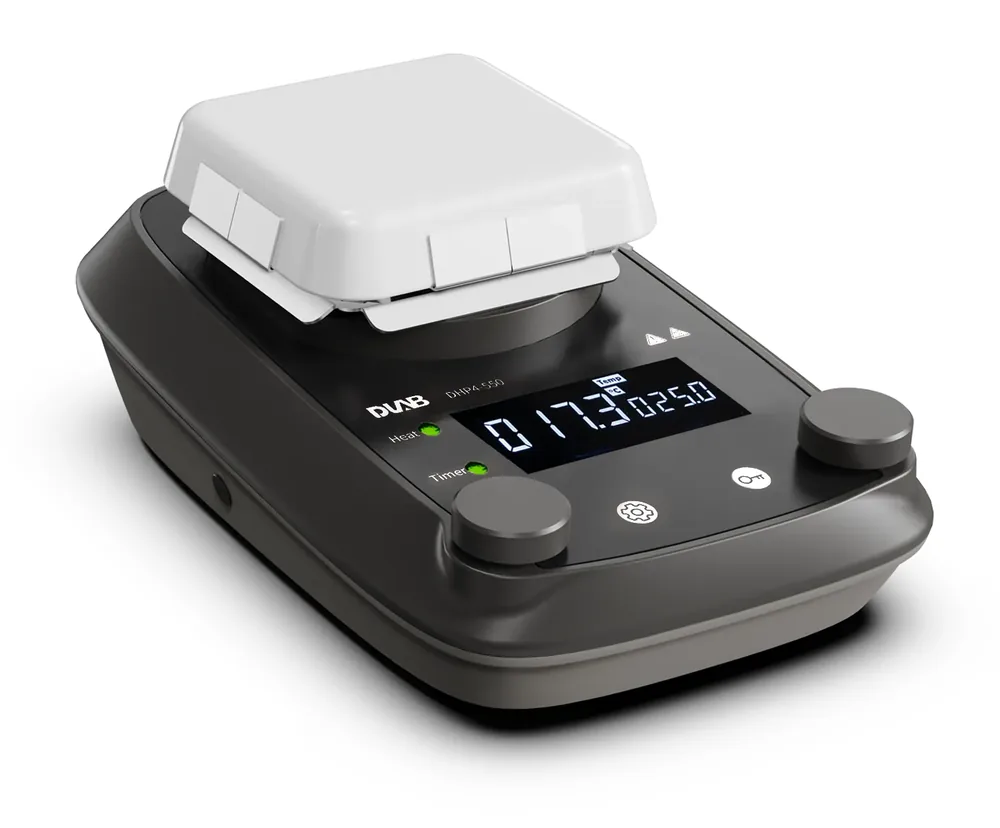
HP and DHP Series Hot Plate
4–10 inch laboratory hot plates with glass ceramic or ceramic-coated aluminum top plates, reaching 380–550 °C.
Request a quote for this model
A suitable configuration and pricing are prepared based on sample type and workload.
Request a quote