Why is laboratory water classified?
Tap water contains dissolved salts, organic compounds, particles, microorganisms and gases. Each of these impurities causes a different problem in analysis: ions disturb conductivity and ion chromatography results, organic matter creates ghost peaks in HPLC, and particles clog the column. For this reason, laboratory water is divided into grades according to its impurity level.
Two standards are commonly used. ISO 3696 defines analytical laboratory water in three grades (grade 1, 2 and 3). ASTM D1193 classifies reagent water as Type I, II, III and IV. In the industry, the terms "Type 1" and "Type 2" are mostly used with reference to these two standards; in practice, Type 1 refers to ultrapure water and Type 2 to general-purpose pure water.
This classification also includes a lower tier. Type 3 water is usually produced by reverse osmosis and has most of its ions removed; however, it is not pure enough for analytical work. It is used to feed equipment such as glassware washers, autoclaves and climatic chambers, and as feed water for further purification stages.
The water type is selected according to the sensitivity of the application, not the sample. It is common for the same laboratory to use Type 2 water for buffer preparation and Type 1 water for LC-MS mobile phase.
What is Type 1 ultrapure water?
Type 1 water is ultrapure water with ion and organic content reduced to the lowest level. Its quality is usually expressed as resistivity; 18.2 MΩ·cm at 25 °C is the theoretical upper limit that pure water can reach. Total organic carbon (TOC) is also monitored at ppb level.
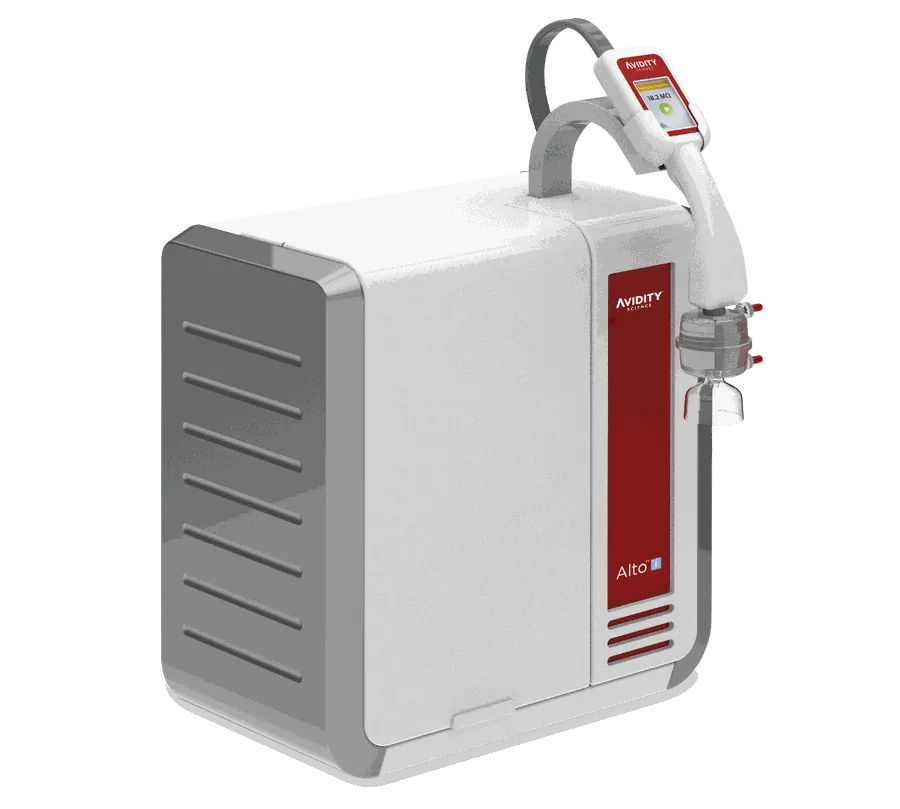
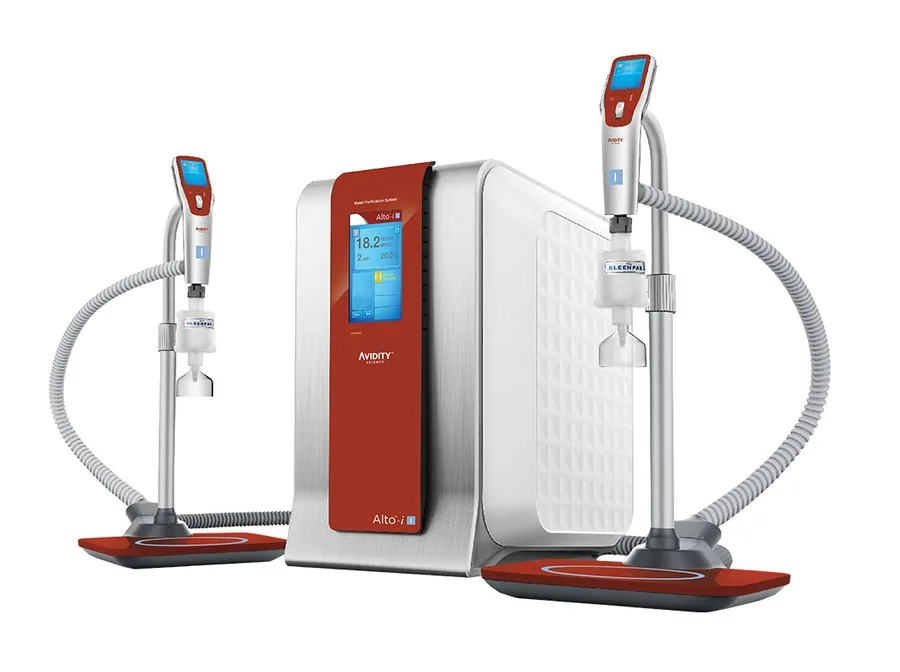
Type 1 systems are mostly fed with pretreated water; reverse osmosis or Type 2 water is made ultrapure by passing it through ion exchange resin, UV oxidation and a final filter. For example, the Alto I Type 1 ultrapure water system delivers water with 18.2 MΩ·cm resistivity and TOC below 5 ppb. Laboratories that require continuous TOC monitoring prefer the Alto-i with TOC monitoring.
Applications requiring Type 1 water
- HPLC, UHPLC and LC-MS mobile phase and sample dilution
- Trace element analysis by ICP-MS, ICP-OES and AAS
- Ion chromatography and TOC analysis
- Cell culture media and molecular biology applications (with additional filtration)
- Preparation of standard and calibration solutions
What is Type 2 pure water?
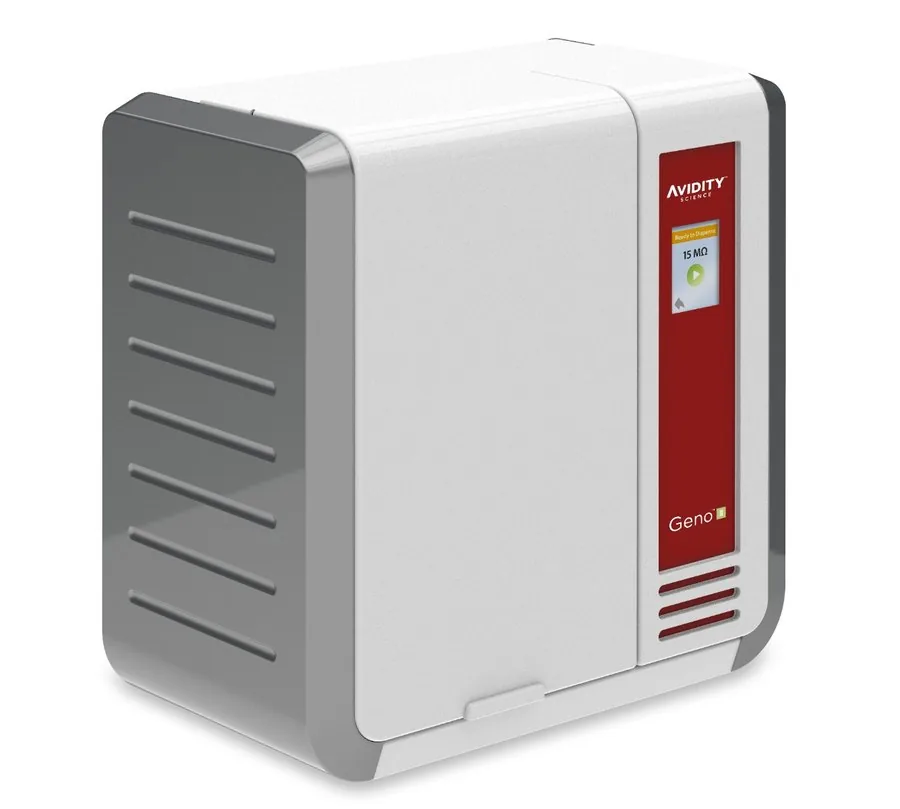
Type 2 water is deionized water from which most ions have been removed, but which has not been purified as far as ultrapure water. Its resistivity is generally 1 MΩ·cm or higher. The Geno II Type 2 pure water system combines reverse osmosis and deionization in a single unit, producing water of 1–15 MΩ·cm quality and storing it in a reservoir.
The most important advantage of Type 2 water is volume. Most of a laboratory's daily water consumption goes to preparing buffers, reagents and general solutions; these tasks do not require Type 1 quality. Type 2 water is also used as feed water for Type 1 systems and extends their cartridge life.
Tasks using Type 2 water
- Preparation of buffers, reagents and general chemical solutions
- Preparation of microbiological culture media
- Feeding clinical analyzers and automated instruments
- Final rinsing of glassware
- Feeding Type 1 ultrapure water systems
Type 1 vs Type 2 pure water: comparison
The difference between the two water types cannot be reduced to a single parameter. Resistivity indicates ionic content; TOC indicates organic contamination; particle and microorganism control indicates the effectiveness of final filtration.
- Resistivity: 18.2 MΩ·cm is targeted for Type 1 water; 1 MΩ·cm or higher is considered sufficient for Type 2 water.
- Organic content: In Type 1 water, TOC is continuously monitored at ppb level; Type 2 water is generally not routinely monitored.
- Storage: Type 1 water is produced at the point of use and is not stored; Type 2 water can be kept in a reservoir.
- Volume: Type 1 water is consumed at the liter level, Type 2 water at tens of liters per day.
The storage difference is particularly important. As soon as ultrapure water is transferred into a container or reservoir, it begins to dissolve carbon dioxide from the air and impurities from the container surface; its resistivity drops within minutes. For this reason, Type 1 water is always drawn fresh from the dispensing point.
Storing Type 1 water in a bottle for later use cancels out the value of the investment in an ultrapure water system.
How is water quality monitored and verified?
The quality of water produced by a pure water system should not be limited to the instantaneous value on the system display. In laboratories with a quality system, water quality is expected to be recorded and verified at defined intervals.
- Resistivity or conductivity: Monitored continuously with a built-in sensor; values are reported compensated to 25 °C.
- TOC: Tracked in Type 1 systems with a built-in TOC monitor or by periodic laboratory analysis.
- Microorganisms and endotoxin: Tested at defined intervals in cell culture and molecular biology applications.
- Sensor calibration: The accuracy of the system's conductivity cell is periodically confirmed by an independent measurement.
Recording measurement data makes it possible to prove the water quality on a given date if an analytical result is questioned. For this reason, data logging and printable reports are important criteria when selecting a system for regulated laboratories.
Additional requirements for biological applications
Resistivity and TOC values give no information about the biological purity of water. In cell culture, PCR and protein work, it is also important that the water is free of endotoxin, RNase and DNase. This requirement is met with an ultrafiltration module or a sterile final filter added to the outlet of the Type 1 system.
When selecting a system for biological applications, the availability of an ultrafiltration option, the replacement interval of the final filter and sanitization of the dispensing point are evaluated together. If the dispensing tip is not kept clean, high-quality water becomes contaminated at the last moment.
How to set up the right system for the laboratory
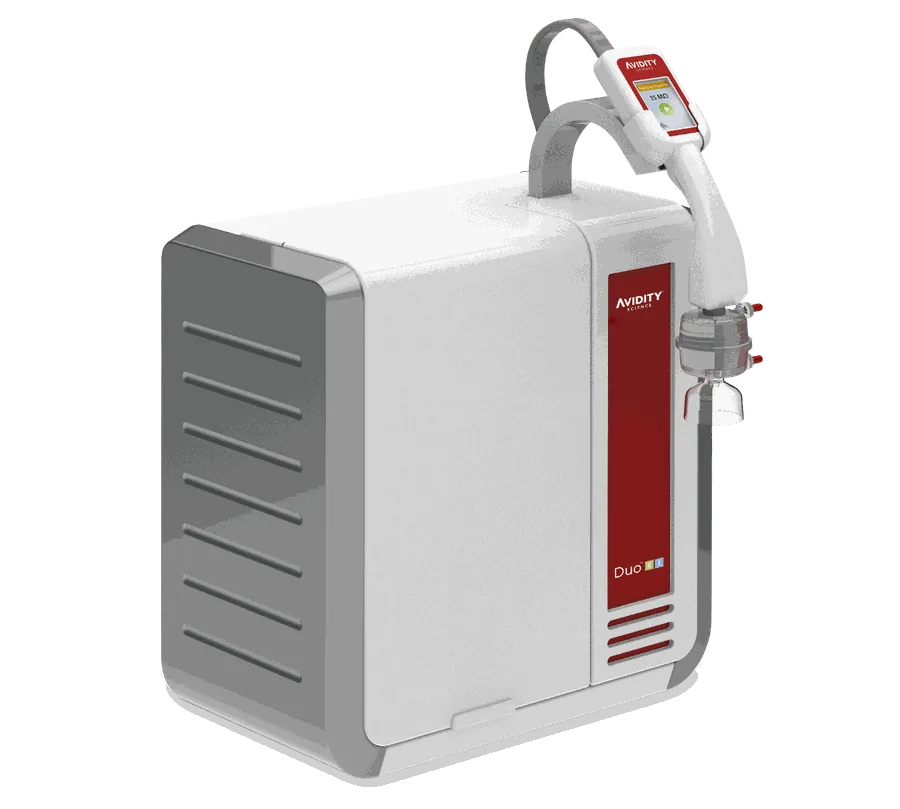
System selection is based on daily consumption, feed water quality and the highest water grade required. For a laboratory that only prepares buffers and general solutions, a Type 2 system is sufficient. If both general work and sensitive analysis are performed, there are two approaches: installing separate Type 2 and Type 1 systems, or using a combined Type 1 and Type 2 pure water system.
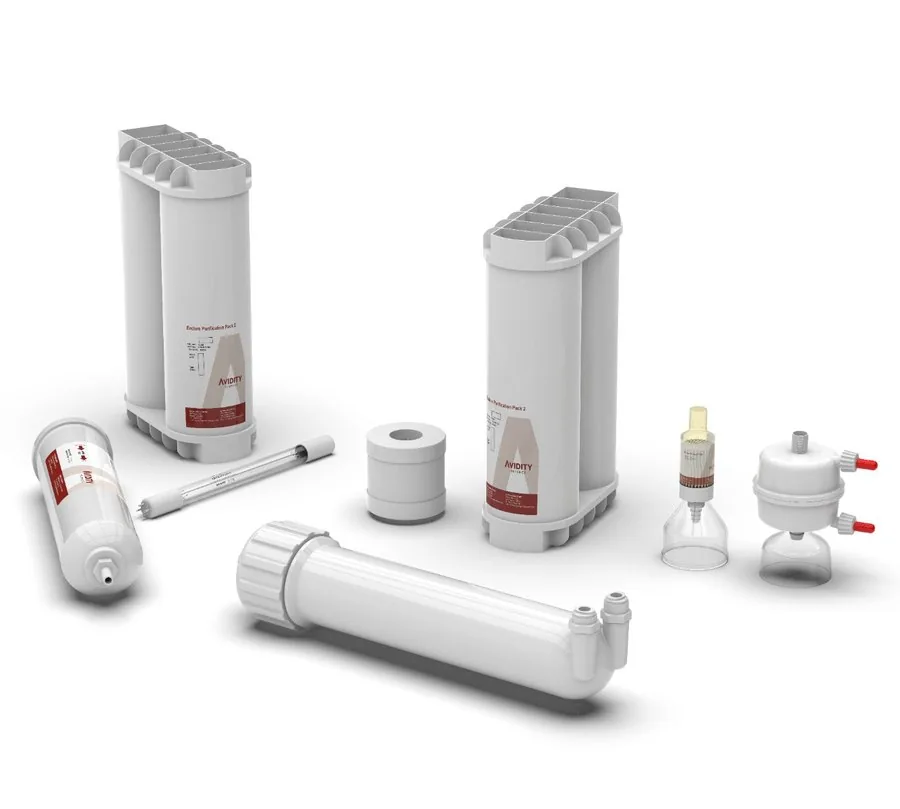
If the tap water is very hard or chlorinated, first producing Type 3 water with a reverse osmosis water system significantly extends the consumable life of the subsequent stages. Cartridge and filter options are listed on the pure water cartridges and filters page.
For options by category, see Type 1 ultrapure water systems and Type 2 pure water systems. A general overview of water purification technologies can be found on the laboratory technologies page.
Common mistakes
- Letting Type 1 water stand or carrying it in a plastic bottle
- Reading resistivity without temperature compensation
- Replacing cartridges only by calendar without monitoring water quality data
- Feeding a Type 1 system directly with hard tap water
- Measuring the conductivity of ultrapure water in an open vessel; correct measurement is made with a closed flow cell and a benchtop conductivity meter
Frequently asked questions
Why is 18.2 MΩ·cm considered the upper limit?
Water molecules self-ionize, if only to a very small extent. At 25 °C, this natural ionization limits the resistivity of water to 18.2 MΩ·cm; a higher value indicates a temperature or measurement error.
Can Type 2 water be used in HPLC?
It is not recommended. Organic residues in Type 2 water can cause baseline drift and ghost peaks in gradient analyses; Type 1 water is used for HPLC mobile phase.
Can distilled water replace Type 2 water?
Distillation removes some of the ions and organic matter, but quality varies with the source and storage. For work requiring measurable, continuously controlled quality, a purification system gives more reliable results.
Why is TOC monitored?
Resistivity only indicates ionic impurity; most organic molecules do not change conductivity. TOC measurement verifies the suitability of water for analyses sensitive to organic contamination, such as HPLC and LC-MS.