

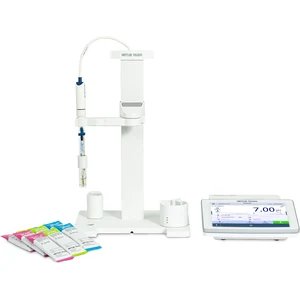
pH and Electrochemistry
Benchtop Conductivity Meters
The benchtop conductivity meter measures the electrical conductivity of aqueous samples and calculates total dissolved solids (TDS), salinity and resistivity values from the result. The instrument works with a two-pole or four-pole conductivity cell selected according to the measuring range; cell options are available from 0.001 µS/cm to 1,000 mS/cm.
Request a quote| Measuring range | 0.001 µS/cm–1,000 mS/cm (depending on cell) |
|---|---|
| Cell constant | 0.105 · 0.57 · 0.80 · 1.0 cm⁻¹ |
| Pole design | 2-pole or 4-pole |
| Electrode material | Graphite, platinum, stainless steel, titanium |
| Operating temperature | 0–100 °C |
Product description
The benchtop conductivity meter is an analytical instrument that operates stationary on the laboratory bench and converts the signal from the measuring cell into a conductivity value. It has a wide range of uses, from verifying pure water quality to monitoring the concentration of process solutions.
Measurement accuracy depends on the cell as much as on the instrument. For this reason, the system is evaluated as a whole: the instrument, a cell suited to the conductivity range of the sample, a temperature probe and an electrode stand. The instrument also calculates TDS, salinity and resistivity values from the measured conductivity and converts the result to the reference temperature using temperature compensation.
In laboratories that also require pH measurement, the benchtop pH and conductivity meter kits, which measure both quantities in a single housing, are a more practical option.
Cell selection for the benchtop conductivity meter
In conductivity measurement, selecting the right cell directly determines the measuring range. A single cell cannot cover the entire range from pure water to concentrated salt solutions.
Cell constant
The cell constant is a geometric quantity derived from the ratio of the distance between the electrodes to their surface area and is expressed in cm⁻¹. A low cell constant is suitable for measuring low conductivity, and a high cell constant for measuring high conductivity.
- 0.105 cm⁻¹: Ultrapure water and low conductivity; 0.001–500 µS/cm range.
- 0.57 cm⁻¹: General purpose; 0.01–1,000 mS/cm range.
- 0.80 cm⁻¹ and 1.0 cm⁻¹: Medium and high conductivity, industrial samples.
Two-pole and four-pole cells
Two-pole cells provide high accuracy in the low conductivity region and are preferred for pure water and dilute solutions. Four-pole cells eliminate the polarization effect and therefore give linear measurement over a wide range; they are selected for concentrated solutions and applications covering a wide range.
Once the expected conductivity range of the sample is provided, the appropriate cell constant and pole design are determined.
Electrode materials
- Graphite: Common in four-pole cells; high chemical resistance, linear over a wide range.
- Platinum: Gives the most accurate results in low conductivity measurement; standard for pure water applications.
- Stainless steel: A durable choice for industrial applications and those subject to mechanical stress.
- Titanium: High corrosion resistance in aggressive media containing chloride.
The body material is glass, epoxy or stainless steel. A glass body has high chemical resistance; an epoxy body reduces the risk of breakage and is preferred for field use.
Factors affecting measurement accuracy
Temperature
Conductivity depends strongly on temperature; in most aqueous solutions, each 1 °C increase raises conductivity by approximately 2%. For this reason, results are reported after conversion to a reference temperature. The cells have an integrated temperature probe for automatic temperature compensation.
Contact with air
When measuring pure water, carbon dioxide from the air dissolving in the water rapidly increases conductivity. Ultrapure water measurements are therefore performed in a flow cell or a closed system; a reading taken in an open beaker comes out higher than the true value.
Calibration
The cell constant changes over time; contamination and wear of the electrode surface are the source of this change. Regular calibration should be performed with a standard solution of known conductivity. The standard solution is selected at a value close to the measuring range.
Air bubbles
Air bubbles trapped in the cell lower the measured conductivity. After the cell is immersed in the sample, it should be moved gently to dislodge the bubbles.
Calibration and data logging
The instrument verifies the cell constant with standard solutions of known conductivity. Selecting a standard close to the measuring range makes the result more reliable; a low-value standard is used for low-conductivity samples, and a high-value standard for concentrated solutions.
- Periodic checking of the cell constant with a standard solution
- Setting the reference temperature and temperature coefficient according to sample type
- Recording results together with sample ID, date and calibration status
- Exporting data via USB or PC connection (depending on model)
In regulated laboratories, calibration history is expected to be traceable; for this reason, data logging and user management functions are also considered when selecting a model.
Applications
- Pure water systems: Verification of product water quality; resistivity and conductivity monitoring.
- Pharmaceutical manufacturing: Conductivity measurement within the scope of pharmacopoeia water quality requirements.
- Boiler and cooling water: Monitoring salt buildup and making blowdown decisions.
- Wastewater: Monitoring total dissolved solids for discharge control.
- Food and beverage: Control of wash water and product conductivity.
- Chemical processes: Indirect monitoring of solution concentration.
In addition to conductivity, the instruments also calculate total dissolved solids (TDS), salinity and resistivity values. In pure water applications, resistivity is reported in MΩ·cm.
The cells are used together with the benchtop pH and conductivity meter kits; other sensors are in the pH and electrochemistry category. The method for measuring the electrical conductivity of water is defined in ISO 7888.
Benchtop conductivity meter selection criteria
- Measuring range: Whether ultrapure water, tap and process water or concentrated solutions will be measured; the cell constant is determined accordingly.
- Calculated quantities: If TDS, salinity or resistivity are to be reported, the instrument must offer these functions.
- Additional parameter: If pH is also to be measured, a dual-channel kit is preferred.
- Data requirements: GLP and audit requirements determine the logging and export functions.
If the instrument will be used to verify the product water quality of pure water systems, the measurement should be performed in a closed flow cell; in Type 1 ultrapure water systems, the resistivity value is monitored in MΩ·cm. Suitable cells and accessories are among the pH and electrochemistry products.
Technical specifications
| Measuring range | 0.001–500 µS/cm (low constant) · 0.01–1,000 mS/cm (general purpose) |
|---|---|
| Cell constant | 0.105 · 0.57 · 0.80 · 1.0 cm⁻¹ |
| Pole design | 2-pole (platinum, steel, titanium) · 4-pole (graphite, platinum) |
| Electrode material | Graphite, platinum, stainless steel, titanium |
| Body material | Glass, epoxy, stainless steel |
| Operating temperature | 0–100 °C |
| Temperature probe | Integrated (depending on model) |
| Calculated quantities | Conductivity, TDS, salinity, resistivity |
| Versions | Immersion, flow cell, micro volume |
Values are taken from the manufacturer's published technical documentation. They may vary by configuration and are confirmed against the current datasheet before quotation.
Frequently asked questions
What is the difference between a benchtop conductivity meter and a conductivity cell?
The cell is the measuring element that is immersed in the sample and generates the electrical signal; the benchtop conductivity meter processes this signal, applies temperature compensation and displays the result as conductivity, TDS, salinity or resistivity. For accurate results, the two are selected together.
Which cell constant should be selected?
It is selected according to the expected conductivity range. 0.105 cm⁻¹ is suitable for ultrapure water and low conductivity, 0.57 cm⁻¹ for general laboratory use, and 0.80 or 1.0 cm⁻¹ for high-conductivity samples.
What is the difference between a two-pole and a four-pole cell?
A two-pole cell gives more accurate results in the low conductivity region. A four-pole cell eliminates the polarization effect and provides linear measurement over a wide range; it is preferred in laboratories working with different concentrations.
Why does the value keep rising when measuring pure water?
Carbon dioxide from the air dissolves in the water and increases conductivity. In a measurement made in an open beaker, the value keeps rising. Ultrapure water should be measured in a flow cell or a closed system.
How does temperature compensation work?
In most aqueous solutions, conductivity increases by approximately 2% for every 1 °C rise. The integrated temperature probe reads the measurement temperature and the instrument converts the result to the reference temperature. Without compensation, results taken at different temperatures cannot be compared.
How often should calibration be performed?
It depends on the intensity of use. Common practice is weekly or daily calibration with a standard solution close to the measuring range. The cell constant changes over time due to contamination and wear.
How is the TDS value calculated?
Total dissolved solids are calculated from the measured conductivity using a conversion factor. The factor depends on the ionic composition of the solution; the factor defined in the instrument must be suited to the sample type.
From the same category
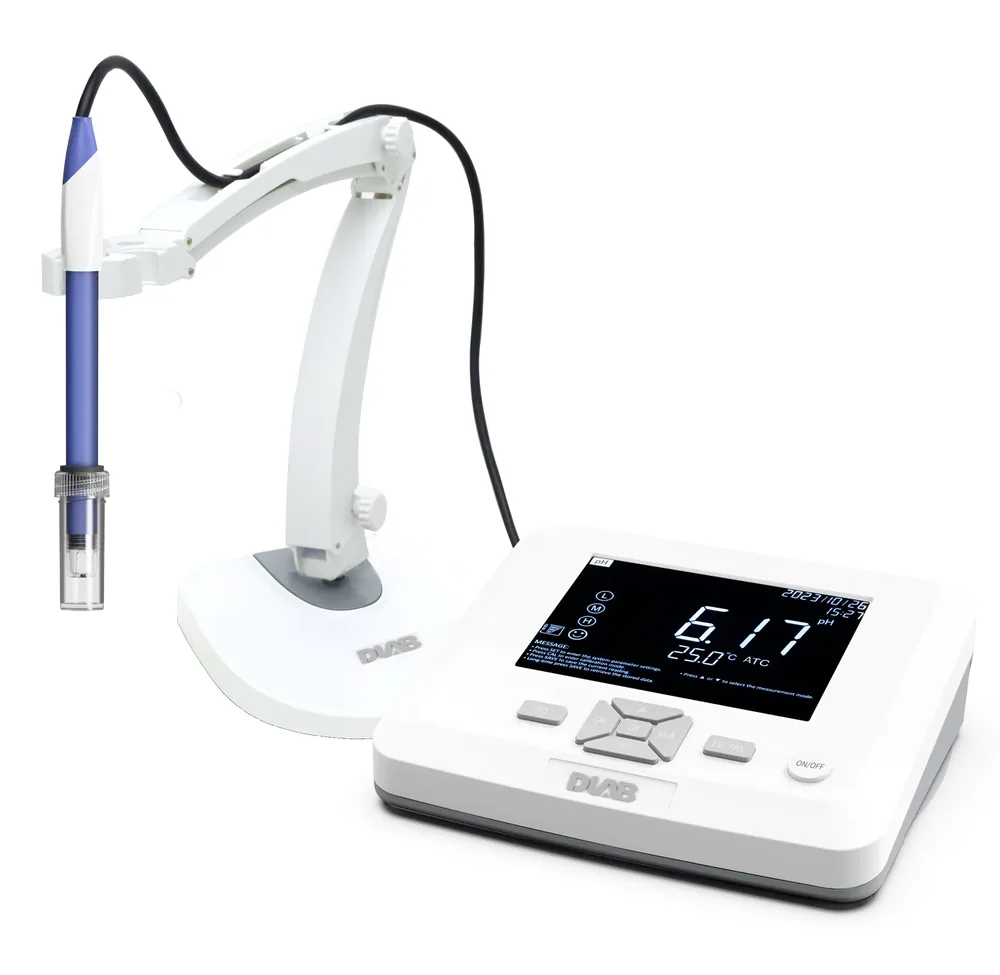
BENCHTOP Single-Parameter Benchtop pH Meter
Classic and touchscreen BENCHTOP meters; single-parameter models for pH, conductivity or dissolved oxygen.
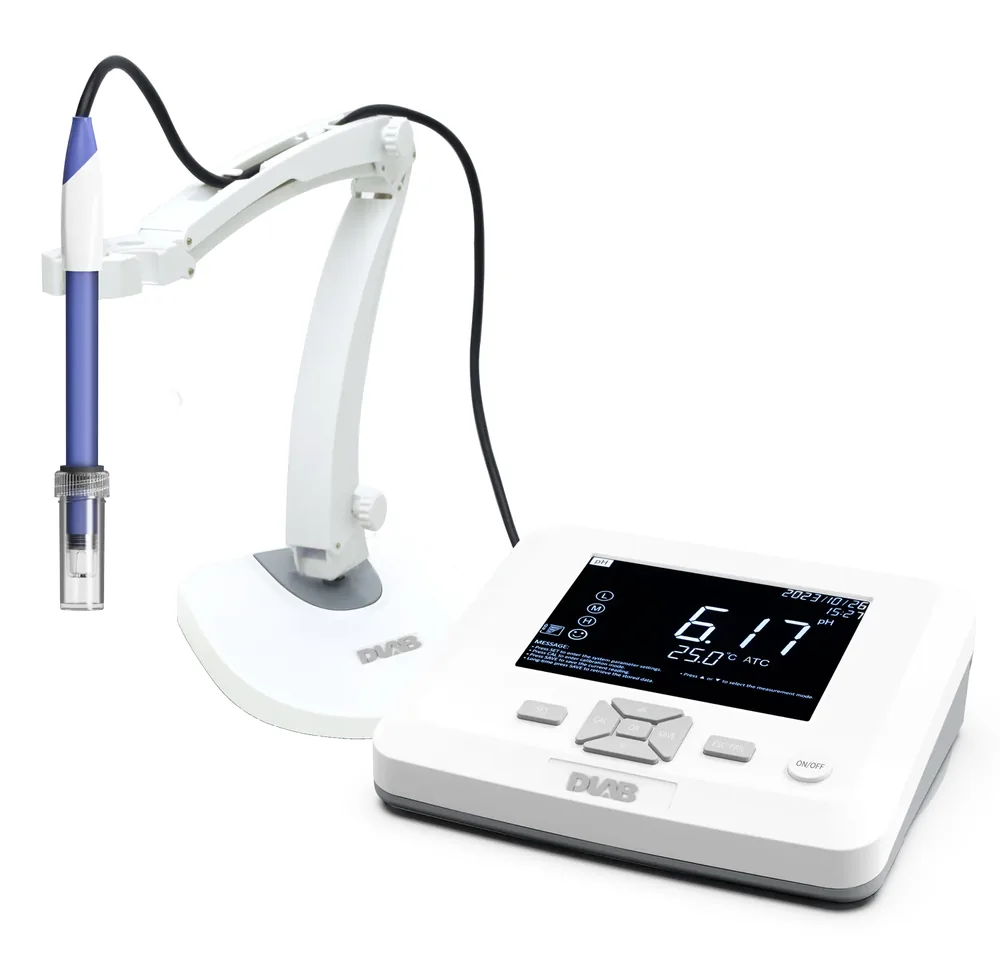
BENCHTOP Multi-Parameter Benchtop Meter
Classic and touchscreen BENCHTOP meters that measure pH, conductivity and dissolved oxygen in a single instrument.
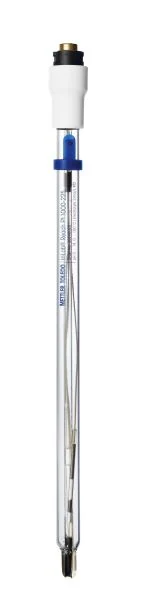
Reference and ORP Electrodes
Reference electrodes for half-cell measurements; ORP electrodes with platinum, gold and silver rings.
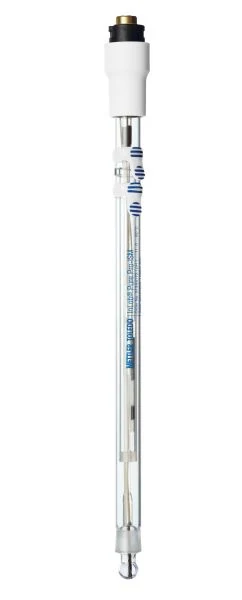
pH Electrodes
Glass- and plastic-body pH electrodes selected according to sample type; more than 40 models.
Request a quote for this model
A suitable configuration and pricing are prepared based on sample type and workload.
Request a quote