

Konica Minolta
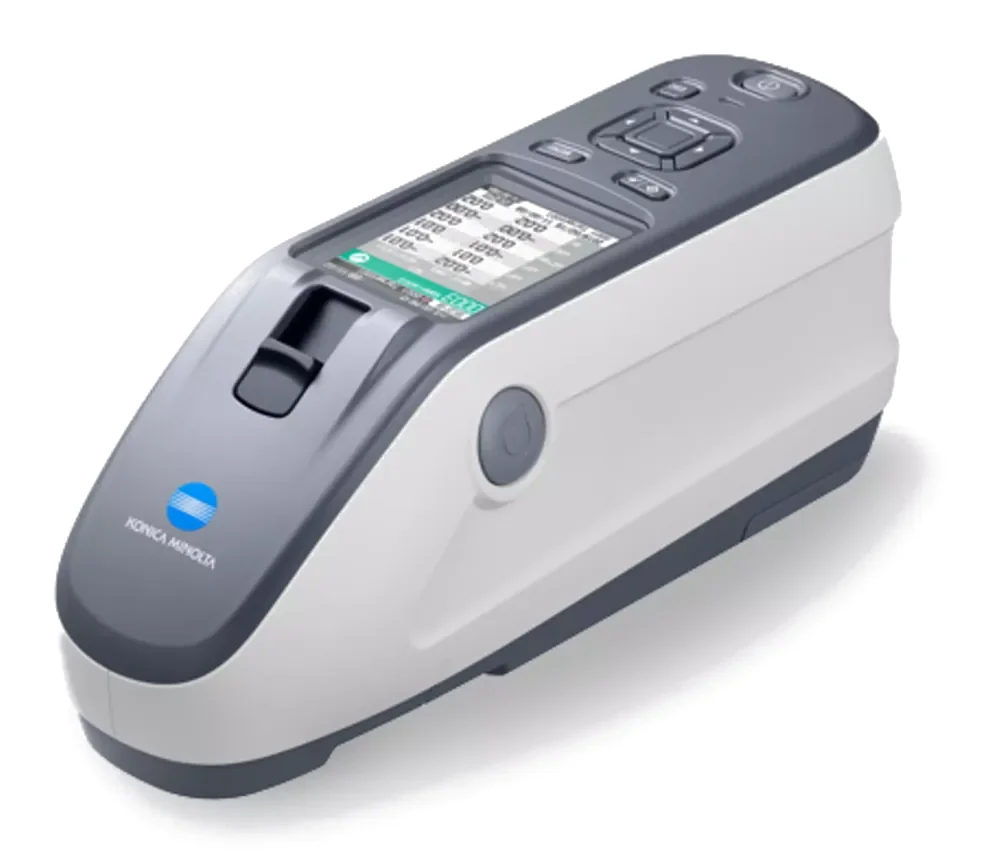
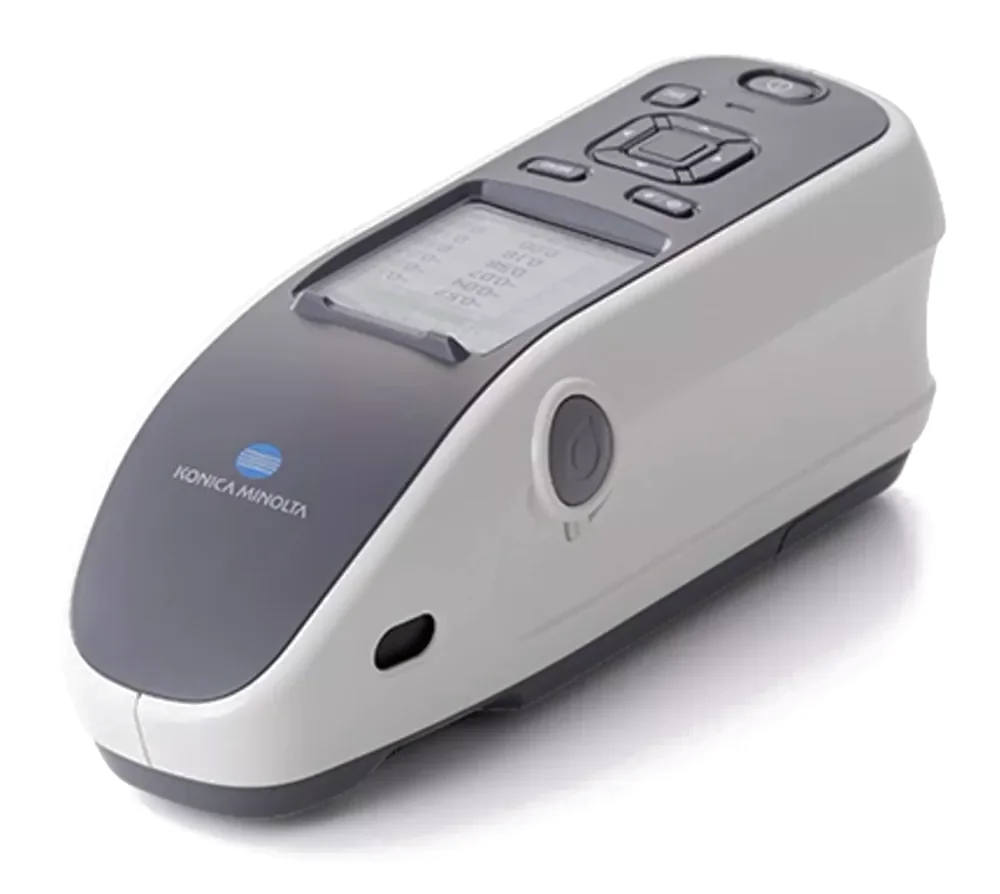
CM-23d Portable Spectrophotometer
CM-23d is an entry-level portable spectrophotometer that provides SCI and SCE values in the same measurement in d:8° geometry. With a 400–700 nm range, a Ø8 mm measurement aperture and a weight of 620 g, it is intended for routine color approval.
Request a quote| Optical geometry | d:8°, SCI and SCE |
|---|---|
| Spectral range | 400–700 nm |
| Measurement aperture | MAV Ø8 mm |
| Repeatability | ΔE*ab 0.08 |
| Memory | 1,000 standards, 1,700 samples |
Product description
CM-23d is a portable spectrophotometer positioned for quality control departments that want to begin color measurement with a spectral instrument. SCI and SCE values are captured together in d:8° geometry; measurement is performed in the 400–700 nm range.
The instrument operates with a pulsed xenon lamp and a UV cut filter. The Ø8 mm measurement aperture is suitable for batch approval on flat, homogeneous surfaces. The housing measures 81 × 93 × 229 mm and weighs approximately 620 g.
CM-23d is the model replacing the CM-2300d. With its built-in color display and rechargeable battery, it is suitable for fast, simple measurements.
Applications
- Color control of plastic parts and granules
- Comparison of paint samples with a standard sample
- Batch-to-batch color consistency in building materials
- Laboratories moving from a colorimeter to a spectrophotometer
- Routine color control of ceramic, wood and mineral samples
Technical assessment of the entry-level spectrophotometer
Repeatability is ΔE*ab 0.08 (30 measurements at 5 second intervals), and inter-instrument agreement is ΔE*ab 0.4. Measurement time is 0.7 seconds and the minimum measurement interval is 1.5 seconds.
Color data are calculated as L*a*b*, L*C*h, Yxy, XYZ and Munsell (C); color difference is calculated with the CMC, CIE94 and CIE00 formulas. Metamerism index, whiteness, yellowness and opacity indices are also available. Connectivity is via USB 2.0, and Bluetooth is optional.
A white and zero calibration box and a Ø8 mm target mask are included in delivery; a hard carrying case, Bluetooth module and SpectraMagic NX2 software are optional.
For a laboratory moving from a colorimeter to spectral measurement, the most important gain is the ability to detect metamerism. Even if two samples look the same under one illuminant, they diverge under another light if their spectral curves differ. CM-23d shows this difference in the reflectance curve, so supplier approval does not rely on a single ΔE*ab value alone. For example, results can be recalculated and compared for different illuminants.
Selection criteria
In multi-site supply chains where inter-instrument agreement is critical, the CM-25d with an agreement value of ΔE*ab 0.20 is more suitable. If a small measurement aperture or gloss measurement is required, the CM-26dG should be reviewed. For simple color control that does not require spectral data, the CR-10 Plus may be sufficient.
Different geometry and aperture options can be compared in the color and gloss measuring instruments catalog. Color values are calculated according to the illuminant and observer conditions defined by the CIE colorimetry principles.
Technical specifications
| Illumination / viewing | d:8°, SCI and SCE |
|---|---|
| Standards | DIN 5033-7, JIS Z 8722 c, ISO 7724/1, CIE No.15 |
| Integrating sphere | Ø54 mm |
| Detector | Dual 32-element silicon photodiode array |
| Spectral range | 400–700 nm, 10 nm pitch |
| Reflectance range | 0–175% |
| Light source | Pulsed xenon lamp with UV cut filter |
| Measurement / illumination area | MAV Ø8 mm / Ø12 mm |
| Measurement time | 0.7 s; minimum interval 1.5 s |
| Repeatability | ΔE*ab 0.08 (30 measurements at 5 s intervals) |
| Inter-instrument agreement | ΔE*ab 0.4 |
| Observer / illuminant | 2° and 10°; A, C, D50, D65, F2–F12, ID50, ID65 |
| Color data | L*a*b*, L*C*h, Yxy, XYZ, Munsell (C), MI, WI, YI, opacity |
| Memory | 1,000 standards, 1,700 samples |
| Connectivity | USB 2.0; Bluetooth optional |
| Power | Li-ion battery, USB or AC adapter |
| Dimensions / weight | 81 × 93 × 229 mm; approx. 620 g |
Values are taken from the manufacturer's published technical documentation. They may vary by configuration and are confirmed against the current datasheet before quotation.
Frequently asked questions
What is the difference between CM-23d and a colorimeter?
Colorimeters give color coordinates directly using a three-filter sensor. CM-23d measures reflectance at each wavelength; this spectral data enables metamerism evaluation and calculation under different illuminants.
Which color difference formulas does CM-23d support?
In addition to ΔE*ab, the CMC, CIE94 and CIE00 formulas are supported.
What is the operating temperature of the instrument?
The instrument operates at 5–40 °C and below 80% relative humidity; the storage range is 0–45 °C.
Which model replaced the CM-2300d?
The CM-2300d has been replaced by the CM-23d. It is positioned for routine quality control work that requires spectral measurement but for which a single measurement aperture is sufficient.
From the same category
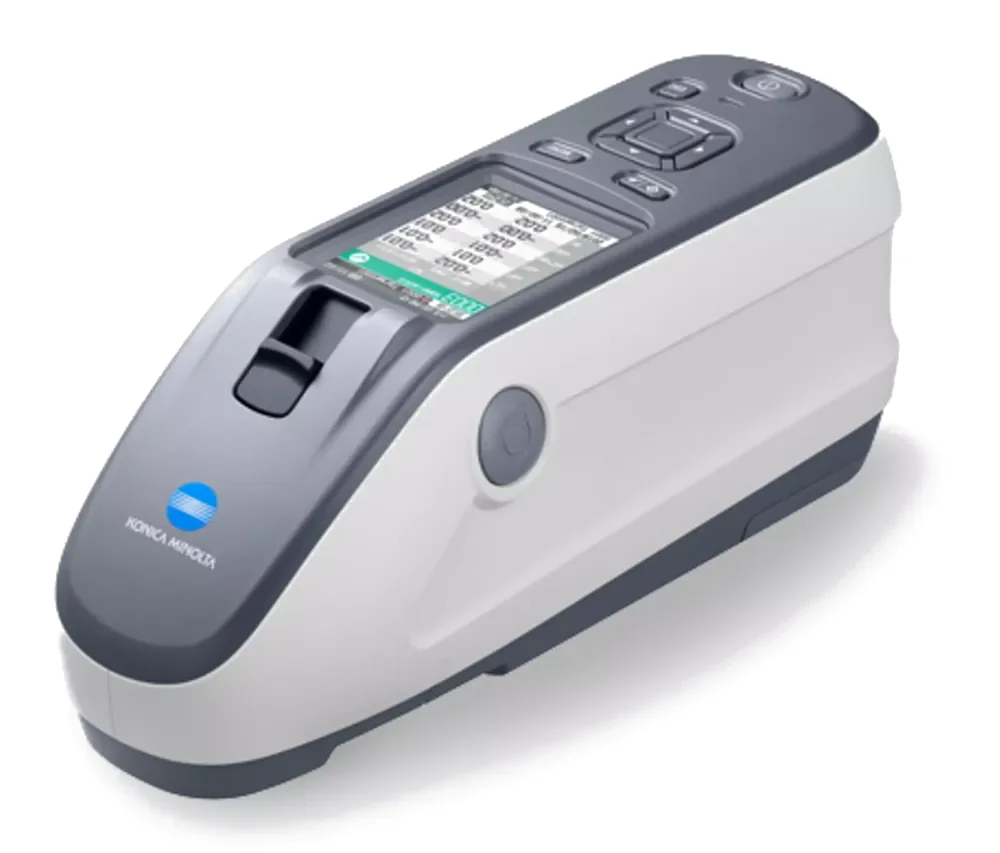
CM-26dG / CM-26d Portable Spectrophotometer
Portable spectrophotometer that captures color and 60° gloss in a single measurement and measures SCI and SCE simultaneously.
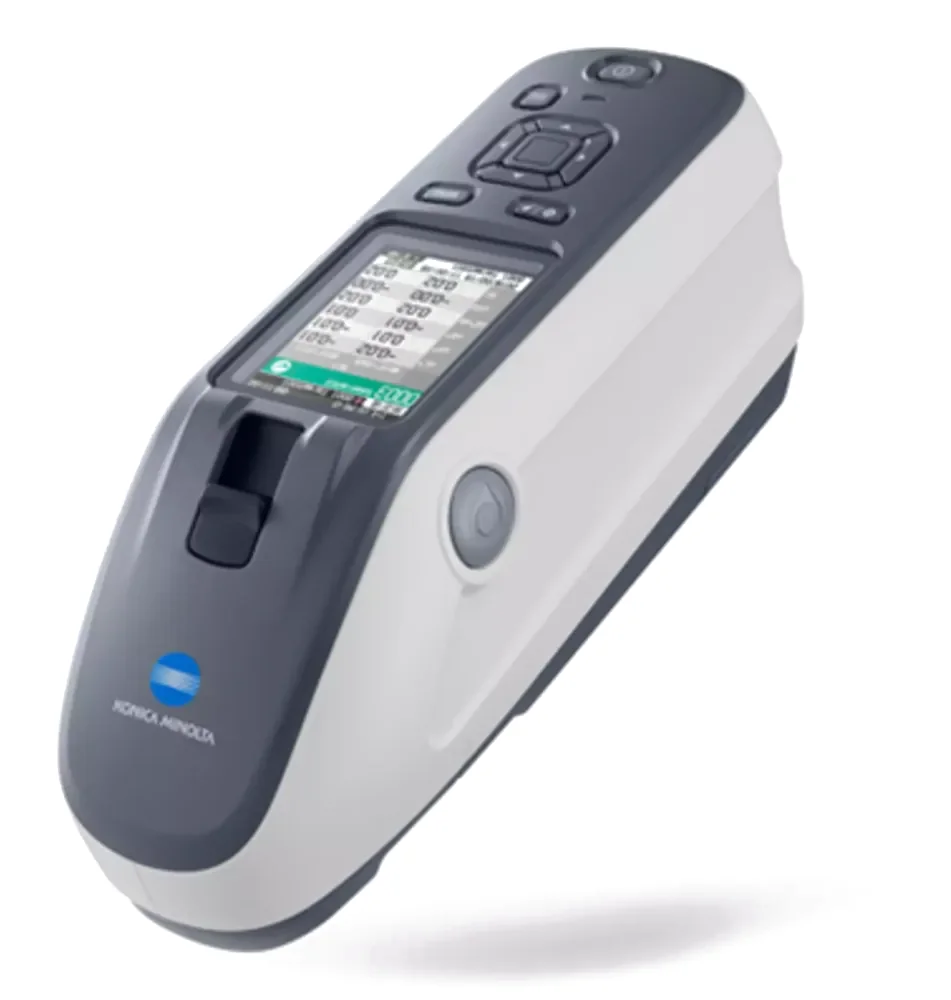
CM-25d Portable Spectrophotometer
Single-aperture portable spectrophotometer that measures SCI and SCE simultaneously and operates in the 400–700 nm range.
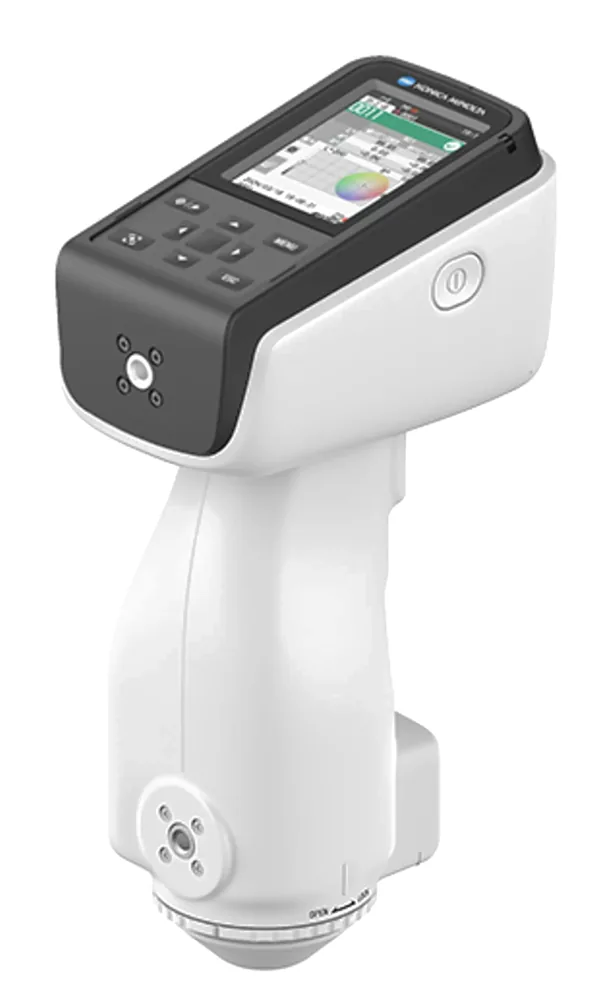
CM-17d / CM-16d Portable Spectrophotometer
Next-generation portable spectrophotometer with vertical body, camera viewfinder and interchangeable apertures.
CM-25cG Color and Gloss Spectrophotometer
Portable spectrophotometer that captures color in 45°c:0° geometry and 60° gloss in a single measurement.
Request a quote for this model
A suitable configuration and pricing are prepared based on sample type and workload.
Request a quote