

Konica Minolta
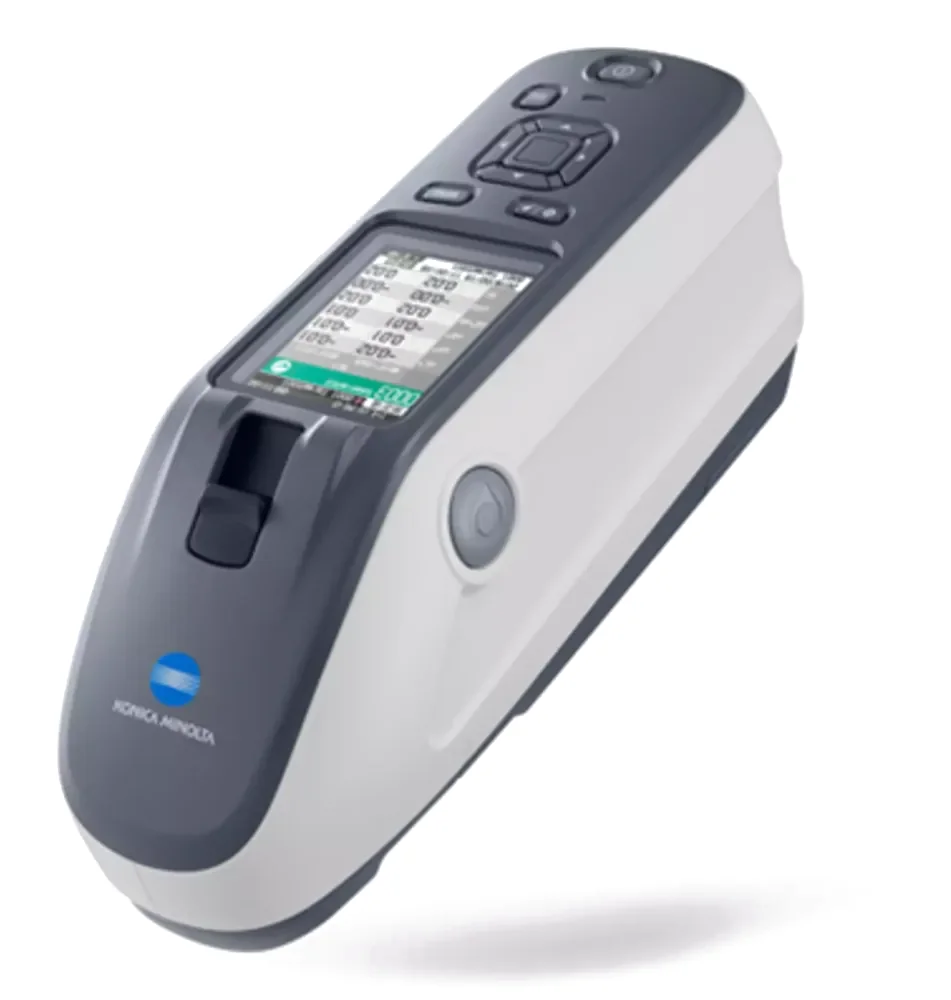
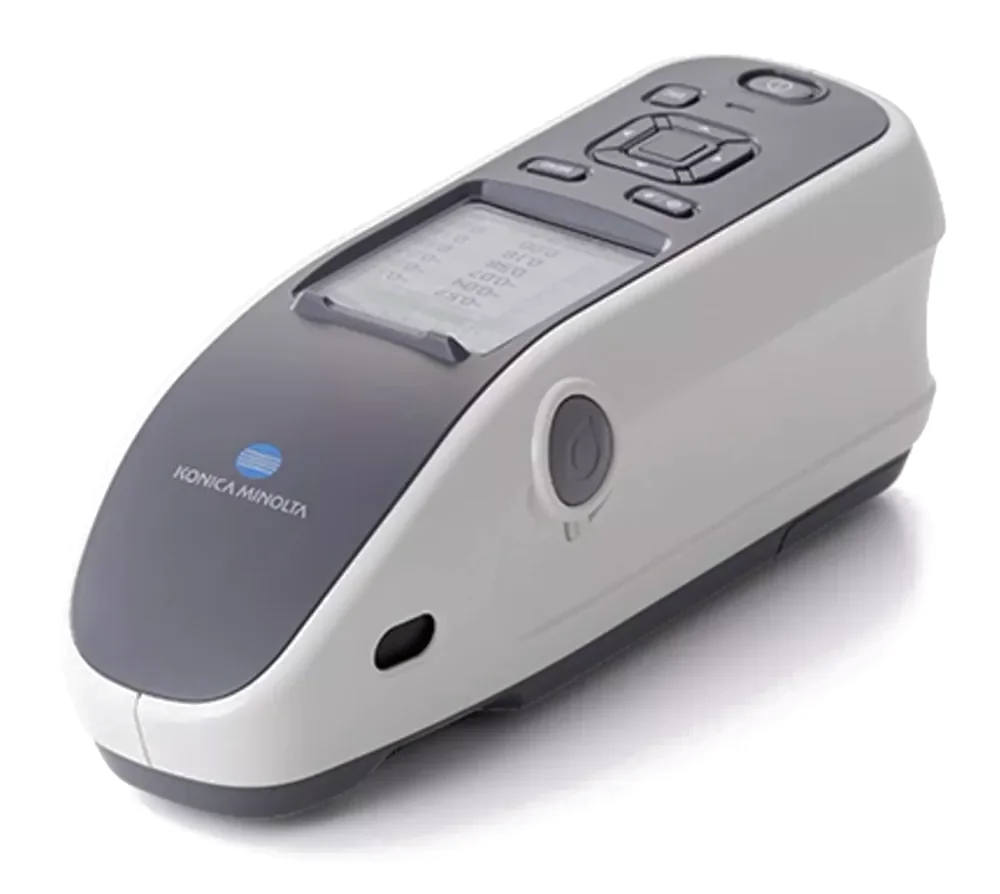
CM-25d Portable Spectrophotometer
CM-25d is a portable spectrophotometer with a Ø8 mm measurement aperture that provides SCI and SCE values in the same measurement in d:8° geometry. With ΔE*ab 0.04 repeatability and ΔE*ab 0.20 inter-instrument agreement, it is intended for production and incoming quality control.
Request a quote| Optical geometry | d:8°, SCI and SCE simultaneous |
|---|---|
| Spectral range | 400–700 nm, 10 nm pitch |
| Measurement aperture | MAV Ø8 mm |
| Repeatability | ΔE*ab 0.04 |
| Weight | Approx. 620 g |
Product description
CM-25d is a portable spectrophotometer designed for color measurement on the production line and in the quality control laboratory. SCI and SCE values are captured simultaneously in d:8° geometry, so both the color of the material and the effect of surface texture on appearance are evaluated in a single measurement.
The instrument works with a single measurement aperture (MAV Ø8 mm). The illumination area is Ø12 mm. Spectral measurement is performed in the 400–700 nm range at 10 nm pitch; this range is sufficient for color evaluation in the visible region.
CM-25d is the current model replacing the CM-2500d. With its redesigned housing, rechargeable battery and USB connectivity, it is equally convenient to use in the field and in the laboratory.
Applications
The manufacturer positions it for plastics, building materials, textiles and paint applications.
- Batch-based color approval of plastic parts
- Comparison of paint and coating samples with a reference standard
- Monitoring color consistency in building materials
- Supplier incoming inspection for textile products
- Color shade control of ceramic, porcelain and wood products
Technical assessment of the portable spectrophotometer
Repeatability is ΔE*ab 0.04 and inter-instrument agreement is ΔE*ab 0.20 (MAV, SCI). A measurement takes approximately 0.7 seconds, and the minimum interval between two measurements is 1.5 seconds. A pulsed xenon lamp is used; measurements are taken under the UV-excluded (UV 0%) condition.
The instrument stores 1,000 standards and 5,000 samples and has a 2.7 inch color display. A USB 2.0 connection is standard; the optional CM-A300 module is used for wireless LAN and Bluetooth. Approximately 3,000 measurements can be taken on a single charge of the replaceable Li-ion battery.
Observer angles of 2° and 10° are available, and the illuminant list covers a wide set including LED illuminants. Color difference can be calculated with the ΔE*ab, ΔE94, ΔE00, CMC and Hunter formulas.
In daily use, measurement accuracy depends largely on the calibration routine. White and zero calibration are therefore repeated at the start of each shift, and the measurement aperture and white calibration plate are kept clean. The sample surface must also fully cover the measurement aperture; otherwise ambient light and edge effects shift the result. For textured or non-homogeneous surfaces, the average of measurements taken at several points is used.
Selection criteria
If a second aperture for measuring small parts, a 360–740 nm range or gloss measurement is required, the CM-26dG / CM-26d should be considered. If a more economical entry-level model for basic quality control is sought, the CM-23d is suitable. If only color difference checks are to be performed, the CR-400 colorimeter can be reviewed as an alternative.
Recording, tolerance evaluation and reporting of measurement data can be performed with SpectraMagic NX2.
Different geometry and aperture options can be compared in the color and gloss measuring instruments catalog. Color difference is expressed as ΔE*ab in the CIE 1976 L*a*b* color space.
Technical specifications
| Illumination / viewing | d:8°, SCI and SCE simultaneous |
|---|---|
| Standards | ISO 7724/1, CIE No.15, ASTM E1164, DIN 5033-7, JIS Z 8722 c |
| Integrating sphere | Ø54 mm |
| Detector | Dual 32-element silicon photodiode array |
| Spectral range | 400–700 nm, 10 nm pitch |
| Reflectance range | 0–175% |
| Light source | Pulsed xenon lamp |
| UV condition | UV excluded (UV 0%) |
| Measurement / illumination area | MAV Ø8 mm / Ø12 mm |
| Measurement time | Approx. 0.7 s; minimum interval 1.5 s |
| Repeatability | ΔE*ab 0.04 |
| Inter-instrument agreement | ΔE*ab 0.20 (MAV, SCI) |
| Observer | 2° and 10° |
| Memory | 1,000 standards, 5,000 samples |
| Display | 2.7 inch TFT color |
| Connectivity | USB 2.0; WLAN and Bluetooth with optional CM-A300 |
| Power | Li-ion battery (approx. 3,000 measurements), USB or AC adapter |
| Weight | Approx. 620 g |
Values are taken from the manufacturer's published technical documentation. They may vary by configuration and are confirmed against the current datasheet before quotation.
Frequently asked questions
Which measurement geometry does CM-25d use?
d:8° geometry is used; with diffuse illumination and an 8° viewing angle, SCI and SCE values are captured in the same measurement.
Can small samples be measured?
The instrument has only a Ø8 mm measurement aperture. For parts smaller than the measurement area, the CM-26dG or CM-26d with a Ø3 mm aperture should be preferred.
How long does the instrument run on a charge?
Approximately 3,000 measurements can be taken with the replaceable Li-ion battery; with Bluetooth in use, this number drops to approximately 1,000. The instrument can also be powered by USB or an AC adapter.
Which model replaced the CM-2500d?
The CM-2500d has been replaced by the CM-25d. Retaining the same d:8° measurement geometry, the model is intended for daily quality control work with its renewed electronics and battery design.
From the same category
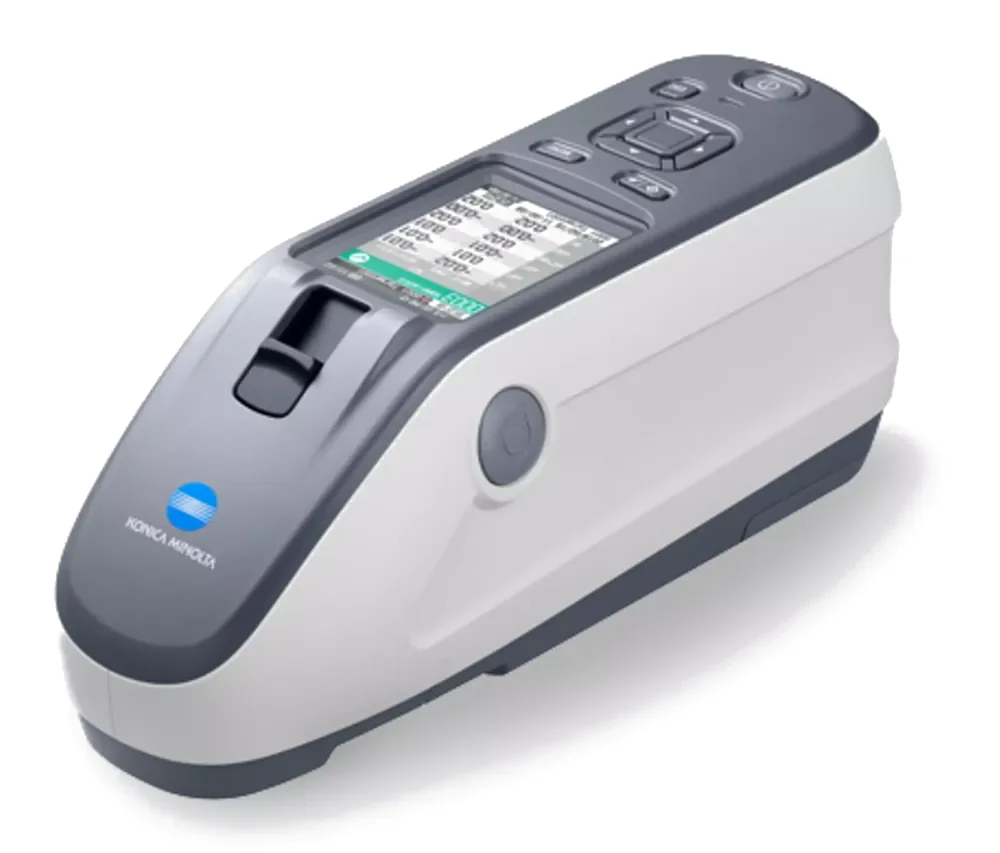
CM-26dG / CM-26d Portable Spectrophotometer
Portable spectrophotometer that captures color and 60° gloss in a single measurement and measures SCI and SCE simultaneously.
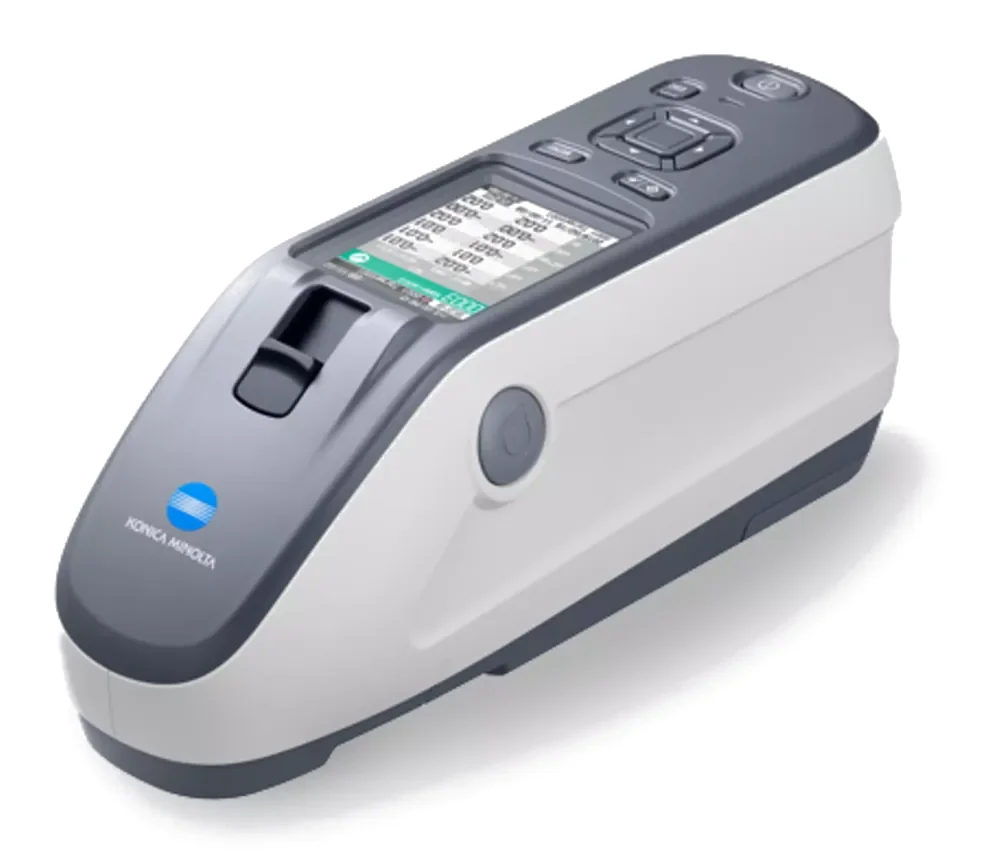
CM-23d Portable Spectrophotometer
Entry-level portable spectrophotometer that measures SCI and SCE values together for basic color quality control.
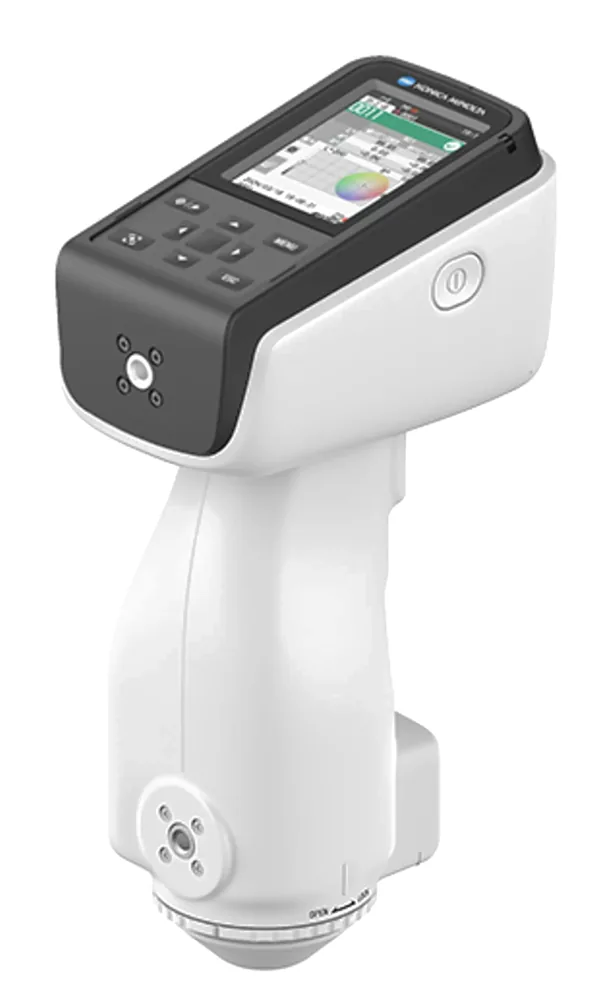
CM-17d / CM-16d Portable Spectrophotometer
Next-generation portable spectrophotometer with vertical body, camera viewfinder and interchangeable apertures.
CM-25cG Color and Gloss Spectrophotometer
Portable spectrophotometer that captures color in 45°c:0° geometry and 60° gloss in a single measurement.
Request a quote for this model
A suitable configuration and pricing are prepared based on sample type and workload.
Request a quote