

DLAB
DL-ZY Transfer (Blotting) Electrophoresis Tank
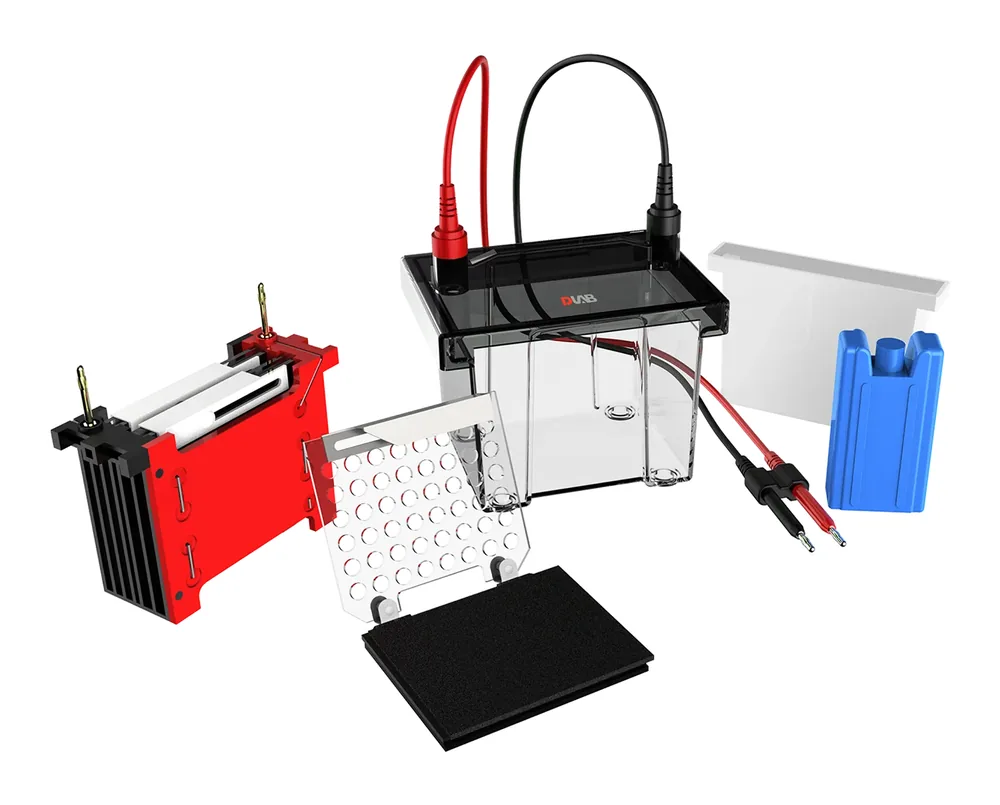
The DL-ZY transfer electrophoresis tank is a wet (tank-type) transfer system that transfers proteins separated in polyacrylamide gels to a membrane for Western blotting. The DL-ZY02 and DL-ZY03 transfer two and the DL-ZY04 four 83 × 73 mm gels at the same time; the effective transfer area is 110 × 90 mm.
Request a quote| Application | Western blotting, protein transfer |
|---|---|
| Gel capacity | 2 gels (DL-ZY02, ZY03), 4 gels (DL-ZY04) |
| Gel size | 83 × 73 mm |
| Transfer area | 110 × 90 mm |
| Electrode distance | 4 cm (ZY02, ZY03), 5.5 cm (ZY04) |
Product description
In the Western blot method, proteins are first separated in a gel, then transferred to a nitrocellulose or PVDF membrane with the aid of an electric field and detected with antibodies. The transfer electrophoresis tank is used in this second step: the gel and membrane are placed in a cassette as a sandwich with sponges and filter paper, and an electric current is applied in the buffer-filled tank.
In the DL-ZY series, the tank body is made of one-piece injection-molded transparent polycarbonate; this design provides leak-tightness and impact resistance. The electrodes are 99.99% pure platinum. The short electrode distance creates a strong electric field and helps proteins pass efficiently to the membrane. The open-design gel cassette and dedicated bubble roller make it easier to remove air bubbles between membrane and gel.
Model comparison
| Model | Gels transferred simultaneously | Electrode distance | Cooling | Compatible vertical tank |
|---|---|---|---|---|
| DL-ZY02 | 2 × 83 × 73 mm | 4 cm | Ice box or blue cooling unit (optional) | DL-Mini01, DL-Mini04 |
| DL-ZY03 | 2 × 83 × 73 mm | 4 cm | Built-in blue cooling unit | DL-Mini04 |
| DL-ZY04 | 4 × 83 × 73 mm | 5.5 cm | Built-in blue cooling unit | DL-Mini04 |
All three models have an effective transfer area of 110 × 90 mm. The cooling unit rapidly absorbs the heat generated during transfer, limiting buffer heating and uneven transfer onto the membrane.
Applications
- Western blotting for target protein detection
- Membrane transfer in protein expression and purity studies
- Antibody-based investigation of modifications such as phosphorylation
- Routine immunoblotting in biotechnology and pharmaceutical R&D laboratories
- Academic molecular biology laboratories
After transfer, the membrane needs regular agitation during the blocking, antibody incubation and washing steps; SK-O orbital shakers and linear and 3D shakers are suitable for these steps.
Correct use
The transfer sandwich consists, in order, of sponge, filter paper, gel, membrane, filter paper and sponge; the membrane must be on the positive electrode side. All layers must be wetted with buffer, and air bubbles between them must be removed with the roller; no protein is transferred in areas where bubbles remain. If the transfer buffer is pre-chilled and the cooling unit is used, the temperature is easier to keep constant during long runs. After use, the cassette, sponges and tank should be rinsed with pure water.
Western blot transfer tank selection criteria
- Number of gels: If two gels are transferred at a time, the DL-ZY02 or DL-ZY03 is preferred; if four gels are required, the DL-ZY04 is preferred.
- Heat management: For long or high-current transfers, the DL-ZY03 and DL-ZY04 with built-in cooling units make temperature control easier.
- Vertical system compatibility: If the gels are prepared in DL-Mini vertical electrophoresis tanks, the cassette size is selected accordingly.
- Power supply: Wet transfer draws high current; DEP series power supplies capable of operating in constant current mode are suitable, and HC models should be considered for high-current applications.
All electrophoresis products are listed in the electrophoresis category.
Technical specifications
| Transfer method | Wet (tank-type) transfer |
|---|---|
| Gel size | 83 × 73 mm |
| Gel capacity | DL-ZY02 and ZY03: 2 · DL-ZY04: 4 |
| Effective transfer area | 110 × 90 mm |
| Electrode distance | 4 cm (DL-ZY02, ZY03), 5.5 cm (DL-ZY04) |
| Electrode | 99.99% pure platinum |
| Body | Transparent polycarbonate, one-piece injection-molded |
| Cooling | DL-ZY02: ice box or blue cooling unit (optional); DL-ZY03, ZY04: built-in blue cooling unit |
| Accessories | Open-design gel cassette, bubble roller |
Values are taken from the manufacturer's published technical documentation. They may vary by configuration and are confirmed against the current datasheet before quotation.
Frequently asked questions
What is the difference between wet transfer and semi-dry transfer?
In wet transfer, the gel and membrane remain fully immersed in buffer; transfer takes longer but generally gives more uniform results for high-molecular-weight proteins. The DL-ZY series is designed for wet transfer.
Why is a cooling unit needed?
During transfer, the current heats the buffer. Warming buffer changes conductivity and can cause uneven transfer onto the membrane; the cooling unit absorbs this heat and keeps conditions constant.
Which membranes can be used?
The cassette design is independent of membrane type; nitrocellulose and PVDF membranes are cut to size and placed in the sandwich. PVDF membranes must be wetted with methanol before use.
From the same category
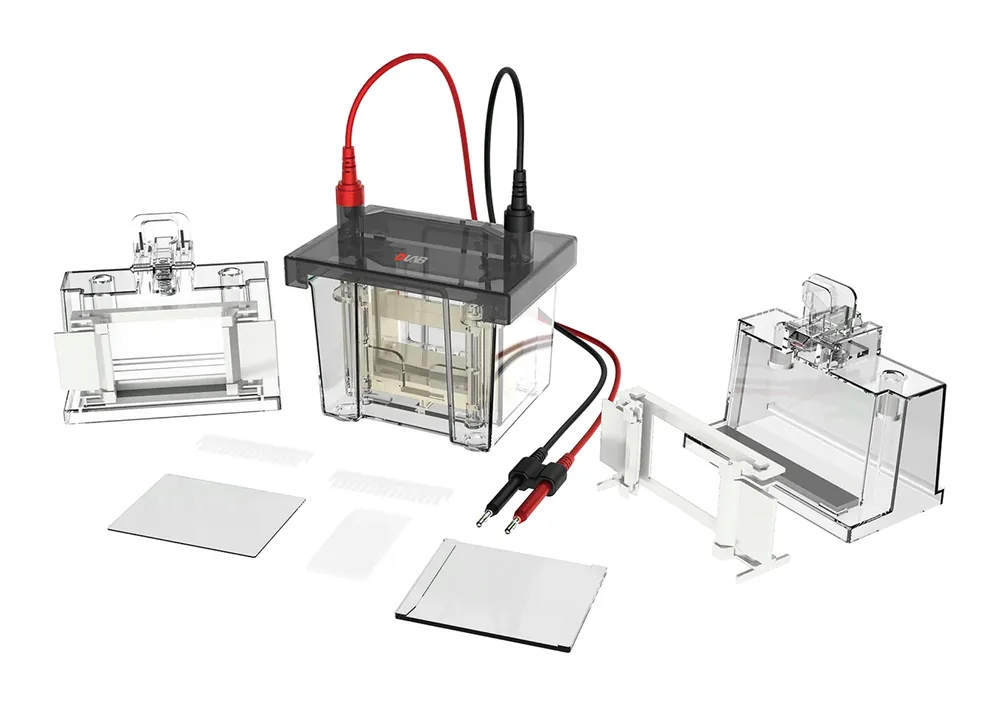
DL-Mini Vertical Electrophoresis Tank
Mini-format vertical electrophoresis tanks for separating protein and nucleic acid samples in polyacrylamide gels.
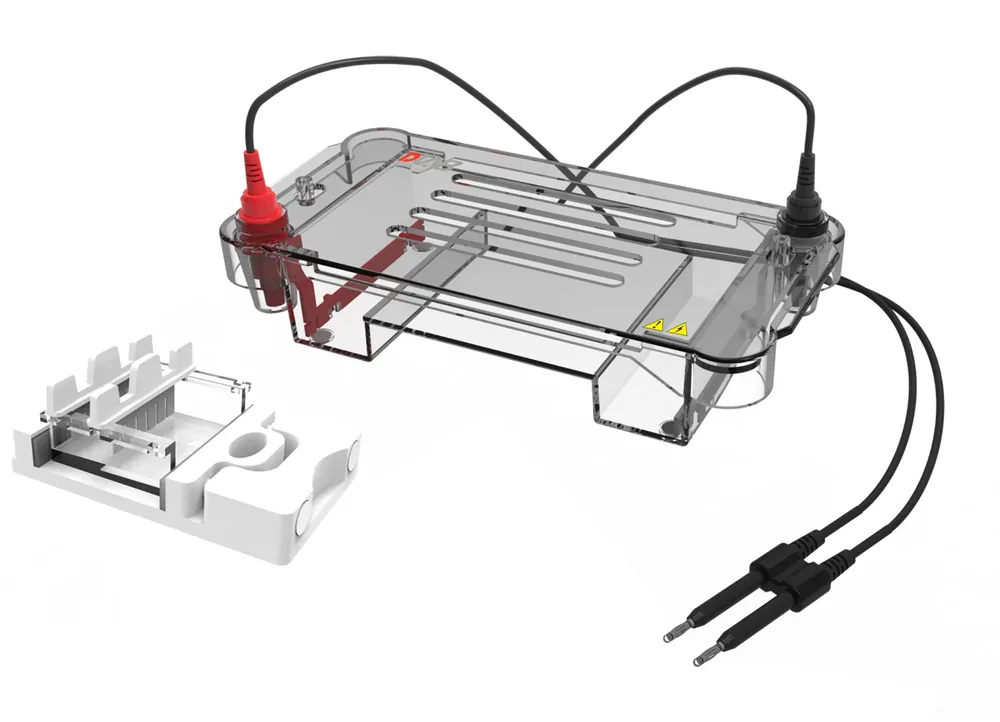
DL-SUB Horizontal Electrophoresis Tank
Horizontal electrophoresis tanks with platinum electrodes, working with agarose gels for DNA separation and molecular weight determination.
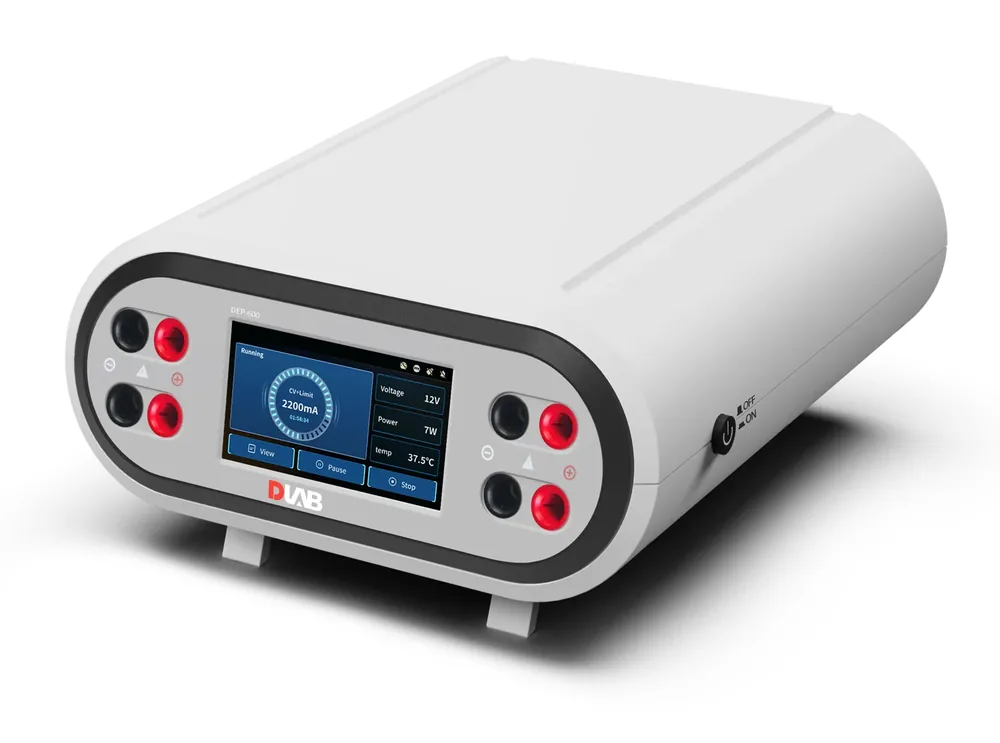
DEP Series Electrophoresis Power Supply
Electrophoresis power supplies with four outputs and a touchscreen, operating in constant voltage, current and power modes.
Request a quote for this model
A suitable configuration and pricing are prepared based on sample type and workload.
Request a quote