

Viscosity and Rheology
Gel Timer
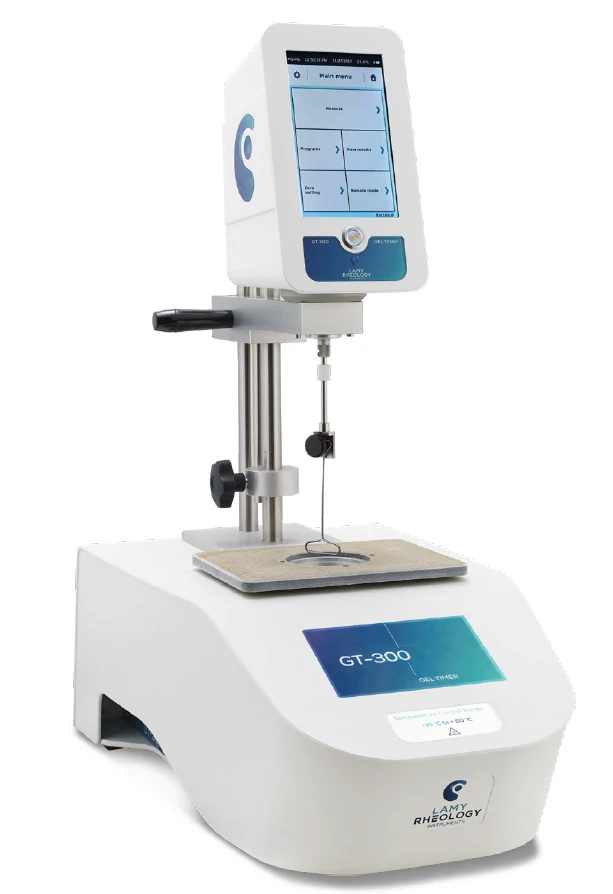
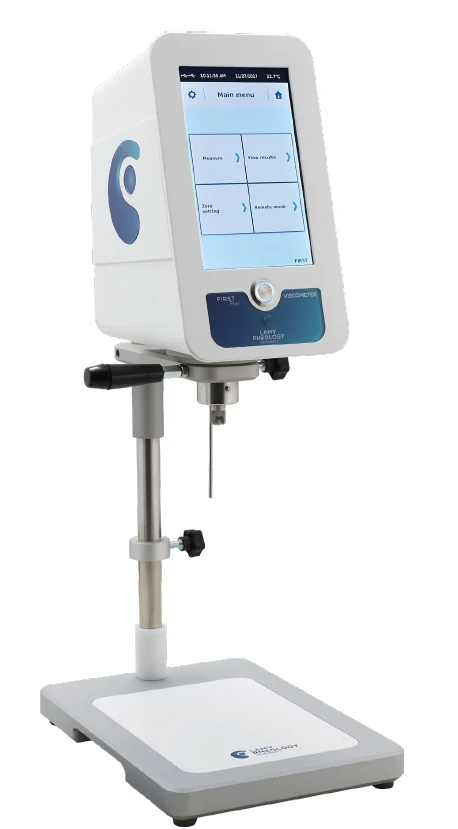
The gel timer measures gel time and cure time in resin, adhesive and composite systems. It offers 0.3–1,500 rpm, 0.05–30 mNm, temperature control units and consumables in the form of disposable aluminum cups and steel hooks.
Request a quote| Speed | 0.3–1,500 rpm, unlimited selection |
|---|---|
| Torque | 0.05–30 mNm |
| Temperature control | Room temperature to +300 °C (depending on unit) |
| Consumables | Disposable cup and hook |
| Weight | 14 kg (without temperature unit) · 22 kg (with unit) |
Product description
The gel timer determines the moment at which a curing system changes from liquid to solid. In resin, adhesive, filler and composite systems, this time is the basis of production planning and the application window.
The measuring principle is simple: the mixed resin is poured into a disposable cup, a hook is immersed in the sample and starts to rotate. As the reaction progresses, resistance increases; when the torque exceeds the defined threshold, the instrument records the time and ends the measurement.
A manual gel test relies on the operator stirring the sample with a rod and interpreting its consistency. This method varies from person to person and cannot be documented. Measurement with the instrument is numerical, repeatable and recorded in the report.
The curing reaction is highly sensitive to temperature. The instrument is used together with temperature control units; the measurement is performed at a defined, constant temperature. With programmer units, a temperature ramp can be applied and the change in cure behavior with temperature can be determined.
Temperature control options
- Room temperature: Basic configuration without a temperature unit; measurement at ambient temperature.
- Room temperature … +300 °C: Heated unit; for heat-curing systems.
- Room temperature … +300 °C, with programmer: A temperature ramp can be defined.
- Air Peltier, +15 °C … +60 °C: Precise control around room temperature.
- Air Peltier, 0 °C … +150 °C: Operation with cooling and a wide range.
A PT100 sensor reads the sample temperature between -50 °C and +300 °C. In addition, the internal sample temperature can be monitored directly with a breakable type K thermocouple; in exothermic reactions, the rise in internal temperature is recorded this way.
In exothermic systems, the temperature generated by the sample itself is higher than the set temperature of the unit. Using a thermocouple allows this difference to be seen and reported.
Consumables
The operating cost of the instrument is low; the cured sample is not cleaned but discarded together with the consumables.
- Disposable aluminum cups: Pack of 100; a new cup for each measurement.
- Disposable stainless steel hooks: Pack of 100; standard volume.
- Low-volume steel hooks: Pack of 100; for working with small sample quantities.
- Breakable type K thermocouple: Kit with connector; measurement of internal sample temperature.
Annual consumable usage is calculated based on the number of daily measurements and added to the quotation as a separate line item.
Applications of the gel timer
- Composite production: Determination of gel time in polyester and epoxy systems; planning of the mold filling window.
- Adhesive production: Measurement of open time and hardening time in two-component systems.
- Paint and coatings: Monitoring hardening behavior in curing coatings.
- Casting and molding: Calculation of flow time in resin transfer.
- Incoming raw material inspection: Verification of the effectiveness of hardener and accelerator batches.
Incoming raw material inspection is the application with the highest return. A deviation in a hardener batch is caught by gel time measurement before it enters production.
For viscosity monitoring of resin systems before curing, the cone and plate viscometer can be used; other options are among the viscosity and rheology instruments. Determination of gel time at ambient temperature for unsaturated polyester resins is defined in ISO 2535.
Technical specifications
| Speed range | 0.3–1,500 rpm, stepless |
|---|---|
| Torque | 0.05–30 mNm |
| Accuracy | 1% of full scale |
| Repeatability | 0.2% |
| Temperature measurement | PT100, -50 °C … +300 °C |
| Temperature control | Room temperature · room temperature…+300 °C · air Peltier +15…+60 °C · air Peltier 0…+150 °C; programmer versions |
| Thermocouple | Type K, breakable, kit with connector |
| Display | 7-inch color touchscreen |
| Data output | RS232, USB, Ethernet, 4–20 mA |
| Software | PC software included in delivery |
| Dimensions | Ø320 × H650 × W200 mm (without unit) · Ø610 × H700 × W340 mm (with unit) |
| Weight | 14 kg (without unit) · 22 kg (with unit) |
| Power supply | 90–240 VAC, 50/60 Hz |
Values are taken from the manufacturer's published technical documentation. They may vary by configuration and are confirmed against the current datasheet before quotation.
Frequently asked questions
How is gel time defined?
It is the time elapsed from the moment of mixing until the system reaches the defined torque threshold. The threshold value is defined in the method; measurements made with the same threshold are comparable.
How does it differ from a manual test?
In a manual test, consistency is interpreted by the operator; the result varies from person to person and cannot be documented. Measurement with the instrument is numerical, repeatable under the same conditions and recorded in the report.
Why is temperature so important?
The rate of the curing reaction increases exponentially with temperature. A difference of a few degrees changes the gel time significantly. For this reason, the measurement should be performed at a defined temperature with a temperature control unit.
What is a temperature ramp used for?
With a programmer unit, the temperature is increased gradually. How cure behavior changes with temperature is determined in a single run; this is used to define the processing window for heat-curing systems.
Can exothermic heating be measured?
Yes. A breakable type K thermocouple is placed in the sample and the internal temperature is recorded directly. In exothermic reactions, the temperature generated by the sample itself rises above the set temperature of the unit.
How is cleaning done?
The cured sample is not cleaned. The disposable aluminum cup and steel hook are discarded together; no residue remains on the instrument. This reduces operating cost and waiting time between measurements.
What is the measurement accuracy?
An accuracy of 1% of full scale and a repeatability of 0.2% apply to all instruments. These values should be considered together with the selected measurement geometry; the geometry determines the measurable viscosity range.
Is a Turkish menu available?
Yes. The 7-inch color touchscreen offers a multilingual menu that includes Turkish. Users can be defined with an operator name and a four-digit code; in protected mode, the measurement conditions are locked.
From the same category
Viscometers
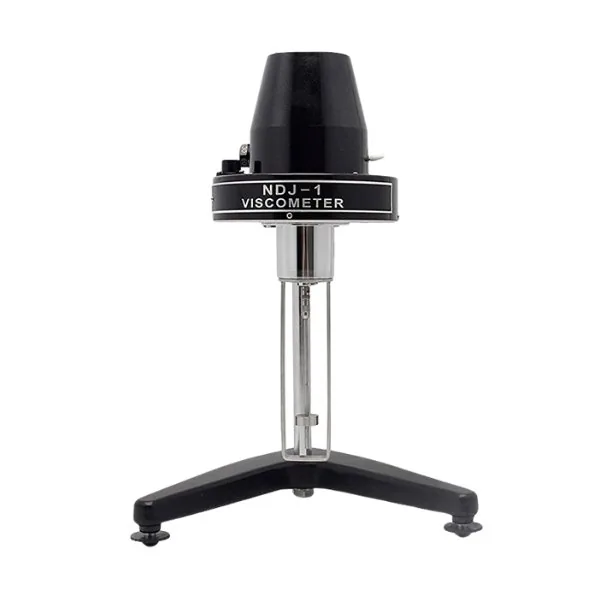
Rotational and KU viscometers; analog, digital and professional series.
Cone and Plate Viscometer
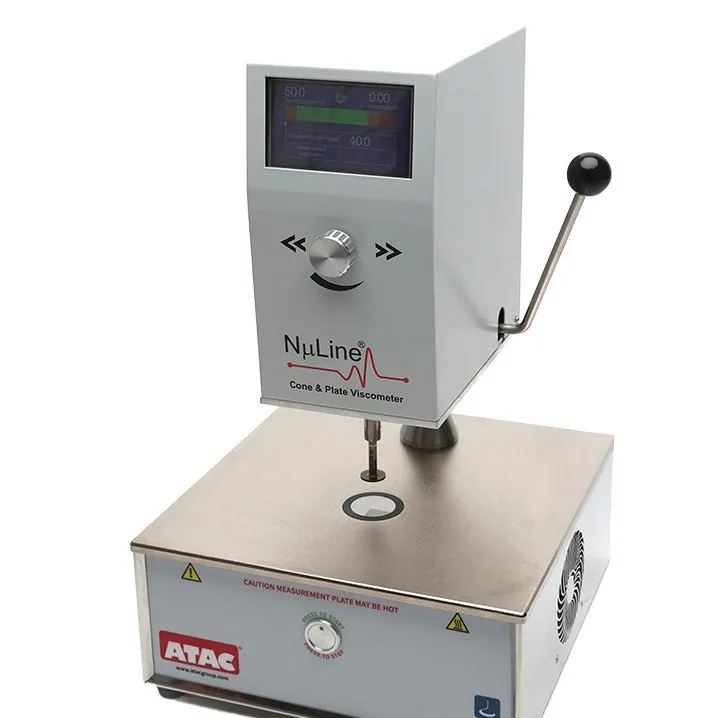
High shear rate viscosity measurement for polymers, resins, paints and adhesives; up to 250 °C.
Entry-Level Rotational Viscometer
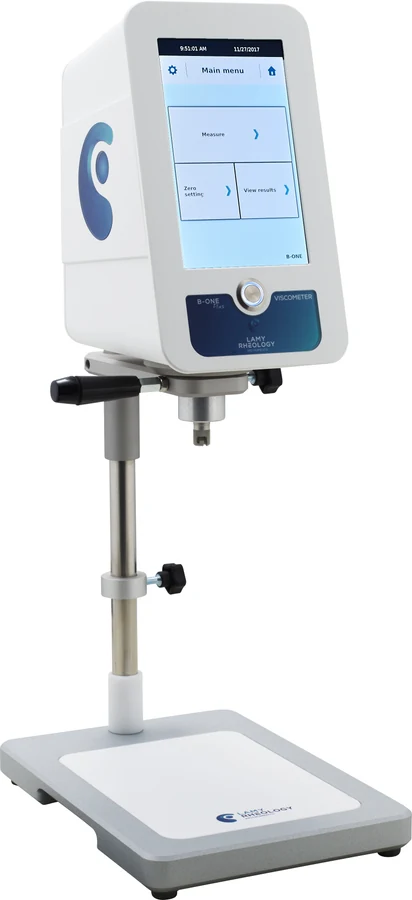
0.3–250 rpm, 0.05–13 mNm; springless measurement, 7-inch touchscreen, Turkish-language menu.
Laboratory-Class Rotational Viscometer
LIMS-compatible rotational viscometer with standard temperature probe and Ethernet connection.
Request a quote for this model
A suitable configuration and pricing are prepared based on sample type and workload.
Request a quote