

Viscosity and Rheology
Viscometers and rheometers cover a range from entry-level instruments to rheological analysis for measuring flow behavior in paint and coatings, cosmetics, food, polymer and adhesive laboratories.
Viscosity and Rheology: models
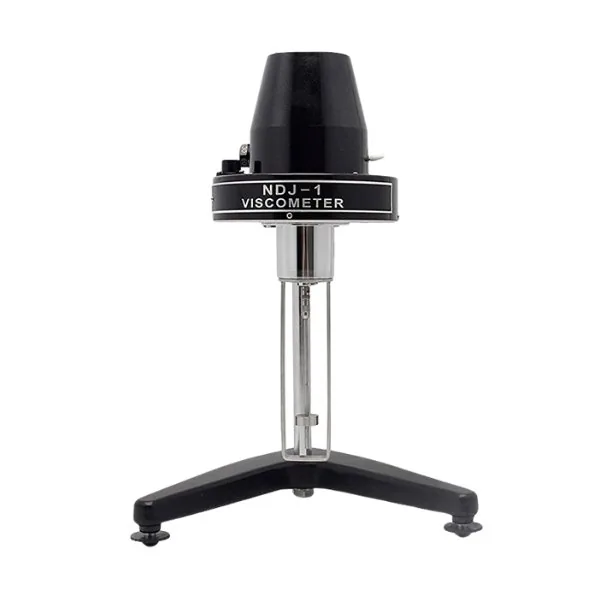
Viscometers
Rotational and KU viscometers; analog, digital and professional series.
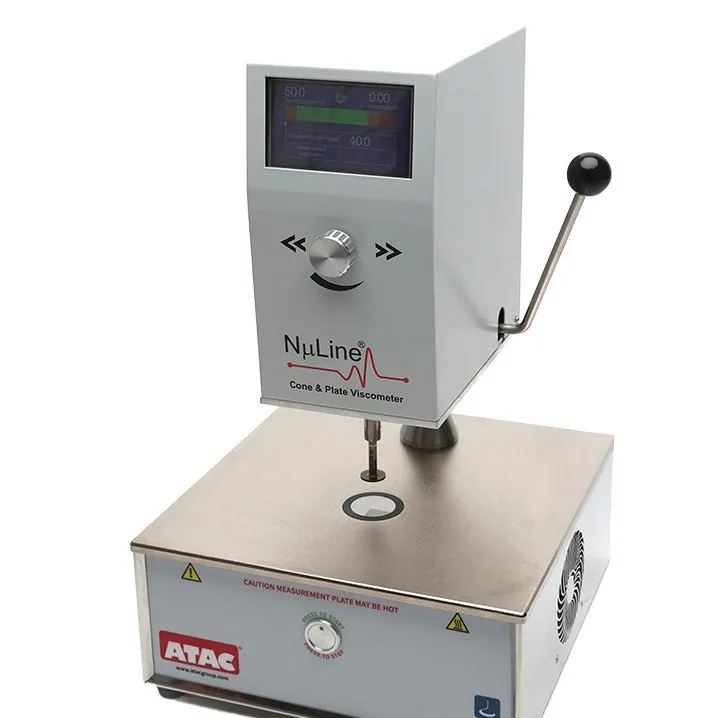
Cone and Plate Viscometer
High shear rate viscosity measurement for polymers, resins, paints and adhesives; up to 250 °C.
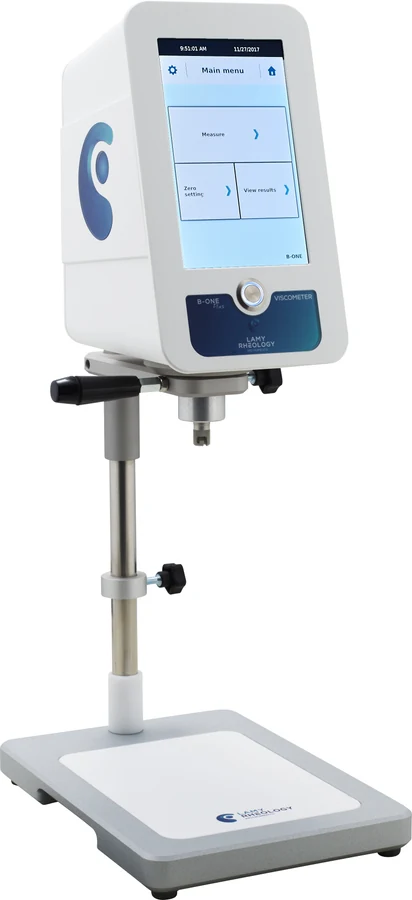
Entry-Level Rotational Viscometer
0.3–250 rpm, 0.05–13 mNm; springless measurement, 7-inch touchscreen, Turkish-language menu.
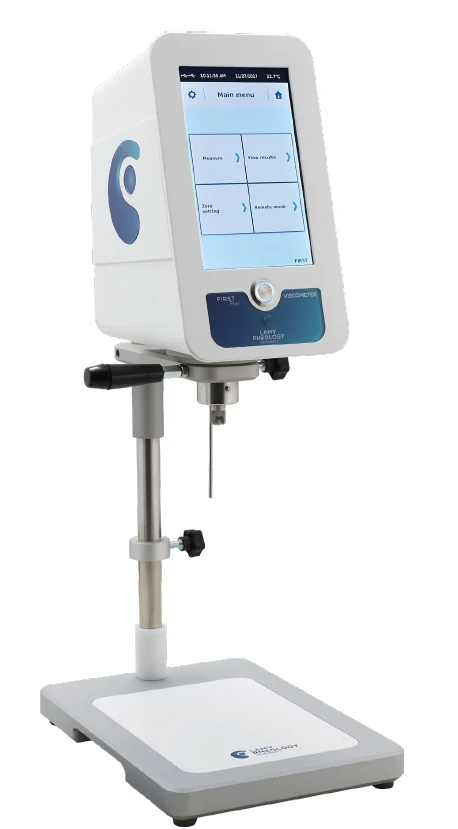
Laboratory-Class Rotational Viscometer
LIMS-compatible rotational viscometer with standard temperature probe and Ethernet connection.
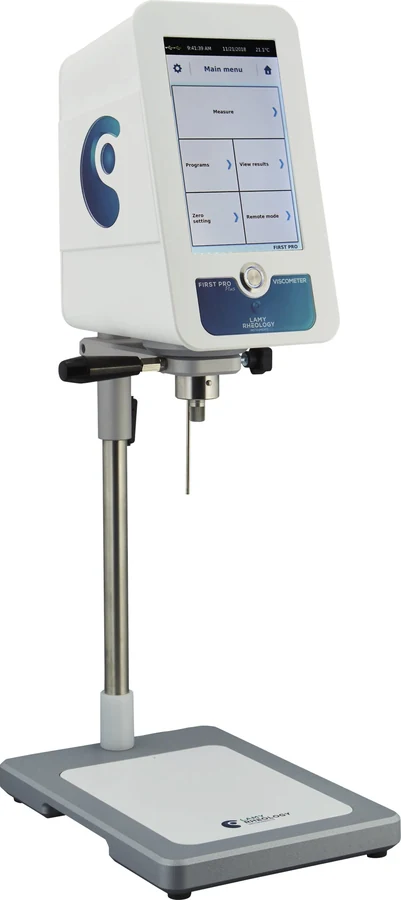
Programmable Rotational Viscometer
Multi-step method programming, quality control limits and direct control of the temperature unit.
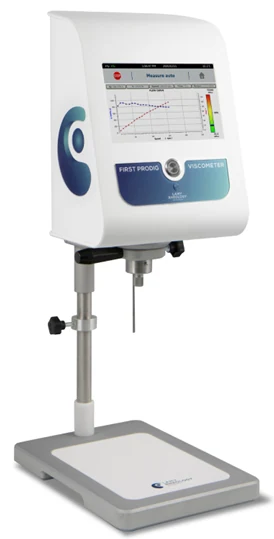
Real-Time Rotational Viscometer
Model that plots the measurement curve live on the display and performs regression and report editing on the instrument.
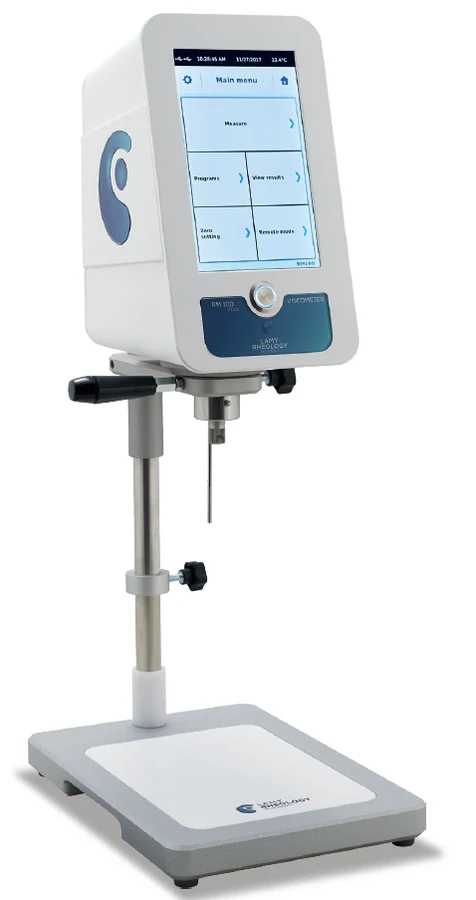
Wide-Range Rotational Viscometer
Measuring range extending to 1,500 rpm, 30 mNm and 780,000,000 mPa·s; high-temperature geometries.
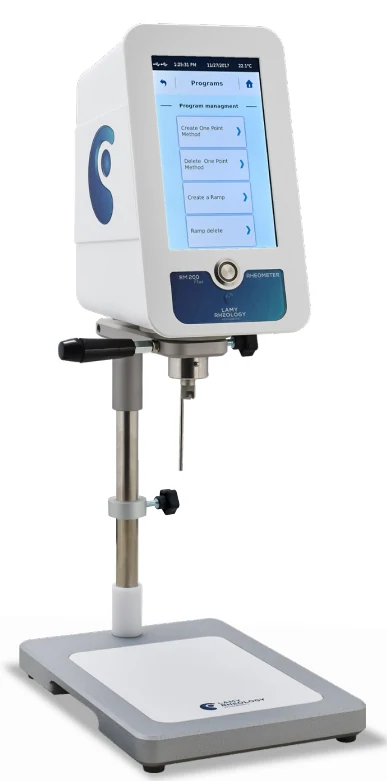
Rotational Rheometer
Flow curve, yield point and thixotropy calculation; Newton, Bingham, Casson and Ostwald model fitting.
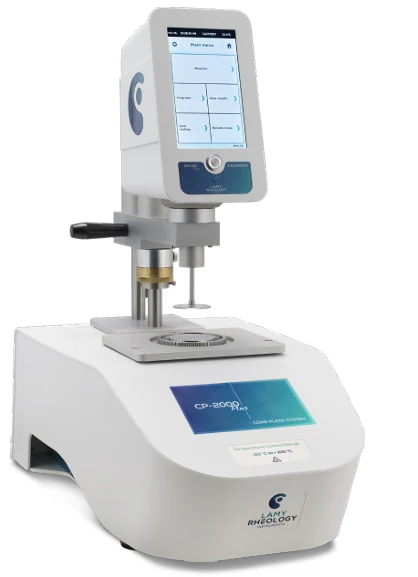
High-RPM Cone and Plate Viscometer
Shear rates up to 20,000 s⁻¹; sample volumes below 1 mL, Peltier temperature control.
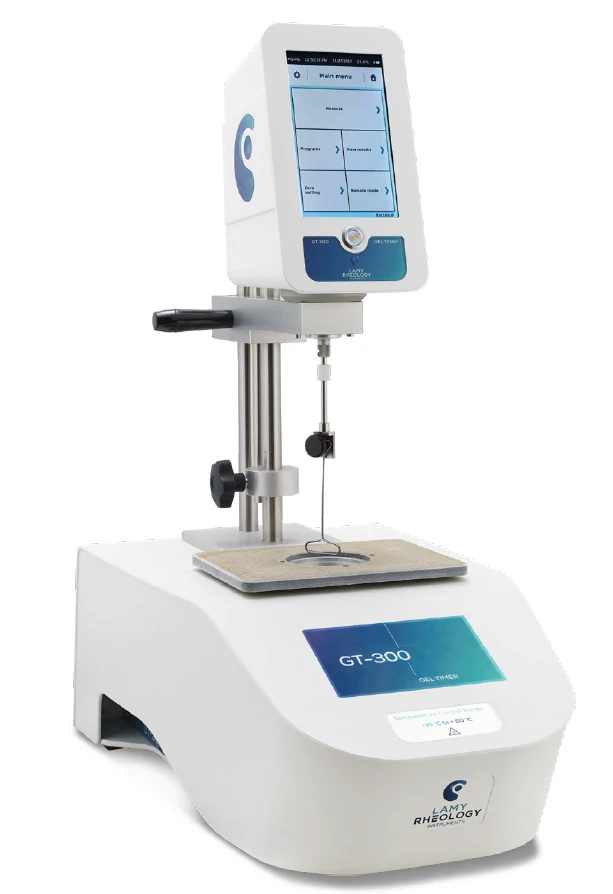
Gel Timer
Cure time measurement for resins and adhesives; with disposable cups and hooks.
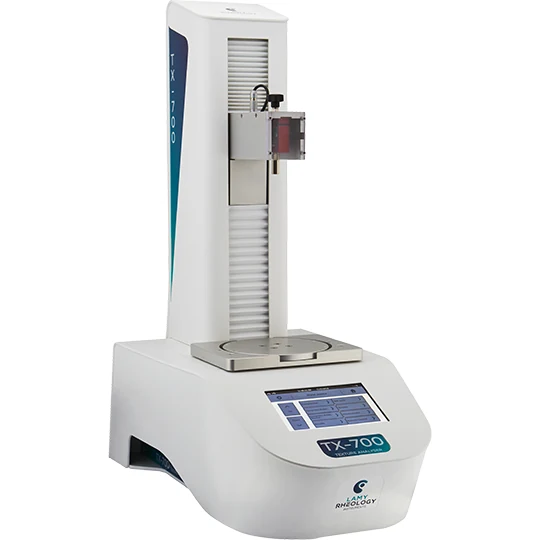
Texture Analyzer
Force measurement in compression and tension mode; load cells from 10 N to 500 N, TPA cycle.
What viscosity and rheology measurements show
Viscosity is a liquid's resistance to flow. For Newtonian liquids such as water, this value is independent of the stirring speed. In products such as paints, creams, sauces and polymer melts, however, viscosity changes with shear rate, so a single number may not describe the actual behavior of the product.
A rotational viscometer measures resistance at a given speed and is sufficient for routine quality control. A rheometer calculates the flow curve, yield point and thixotropy. This makes it possible to predict how a product will behave when poured from the can, applied by brush or pumped.
The decision on which instrument is needed is based on the conditions under which the product is used. For example, a paint shows different viscosities while resting in the can, while being stirred and while being brushed on; if this difference must be measured, a flow curve is recorded instead of a single-speed reading.
Viscometer and rheometer selection guide
Routine quality control
- Model family overview: A comparison of analog, digital and KU models is available on the viscometer models page.
- Entry level: For laboratories that take readings at one or a few speeds, a digital rotational viscometer is sufficient.
- Data integration: If results must be transferred to a laboratory information management system, a LIMS-compatible viscometer is preferred.
Methods and depth of analysis
- Multi-step methods: A programmable viscometer is used to save speed and time steps and run them again.
- On-screen analysis: The real-time model is suited to viewing the measurement curve on the instrument and editing reports.
- Very low and very high viscosity: When a wide torque and speed range is required, the wide-range viscometer stands out.
- Rheology: A rotational rheometer is selected for yield point and thixotropy calculations.
High shear rate and special measurements
- Small sample, high temperature: For polymers, resins and adhesives, a cone and plate viscometer works with a few grams of sample.
- Very high shear rate: A high-RPM cone and plate model is used to simulate spraying and coating conditions.
- Cure time: The curing time of resins and adhesives is monitored with a gel time tester.
- Solid and semi-solid products: A texture analyzer is required to measure hardness, adhesiveness and elasticity.
Applications
- Paint and coatings: filling consistency, sagging behavior and batch approval
- Cosmetics and personal care: consistency of creams and lotions
- Food: flow behavior of sauces, syrups and dairy products
- Polymers, resins and adhesives: viscosity at processing temperature and cure time
In paint laboratories, viscosity measurement is usually carried out together with film application and coating durability tests. A summary of measurement principles is available on the technologies page.
Sample preparation before measurement
A viscosity result depends as much on how the sample is prepared as on the instrument. No air bubbles should remain when the sample is placed in its container; bubbles create voids around the spindle and lower the reading. Products prone to foaming are therefore allowed to rest for a while or are degassed before measurement.
In thixotropic products, the sample's history directly affects the result. A stirred paint shows lower viscosity than the same paint at rest. For this reason, stirring time and resting time before measurement are written into the method, so that results obtained on different shifts or in different laboratories remain comparable.
- Measurement starts after the sample and spindle have reached the measuring temperature.
- Container diameter and sample height are kept identical to the values defined in the method.
- The reading is taken once the torque value has stabilized; the value from the first seconds is not recorded.
Factors that determine measurement repeatability
Viscosity is highly sensitive to temperature; a difference of a few degrees can change the result significantly. The measuring temperature is therefore kept constant and stated in the report. The spindle, speed and measuring time are also recorded with the result; otherwise the results of two laboratories cannot be compared.
The general framework for measurement with rotational viscometers is defined in the ASTM D2196 standard. Details of spindle and speed selection are explained in the viscometer spindle selection guide.
Frequently asked questions
Should a viscometer or a rheometer be chosen?
If the product's resistance at a single speed only needs to be compared with a quality control limit, a viscometer is sufficient. If yield point, thixotropy or behavior at different shear rates is being studied, a rheometer is required.
What is the difference between cone and plate and a rotational spindle?
In rotational spindle measurement, the spindle is immersed in the sample container and more sample is needed. With cone and plate geometry, a few grams of sample are placed between the cone and the plate; the shear rate is the same at every point of the sample and temperature control is easier.
Where is a KU viscometer used?
KU (Krebs unit) measurement is widely used in the paint industry to express consistency quickly and comparably; it is especially preferred for batch control before filling.
Can both low and high viscosity products be measured with a single instrument?
Yes, but a suitable spindle or geometry and speed must be selected for each product. If a very wide range is targeted, models with a wide torque and speed range are considered.
Related guides
Selecting the right model together
Based on sample type, measuring range and workload, a suitable model and configuration are recommended with a clear rationale.
Request a quote