

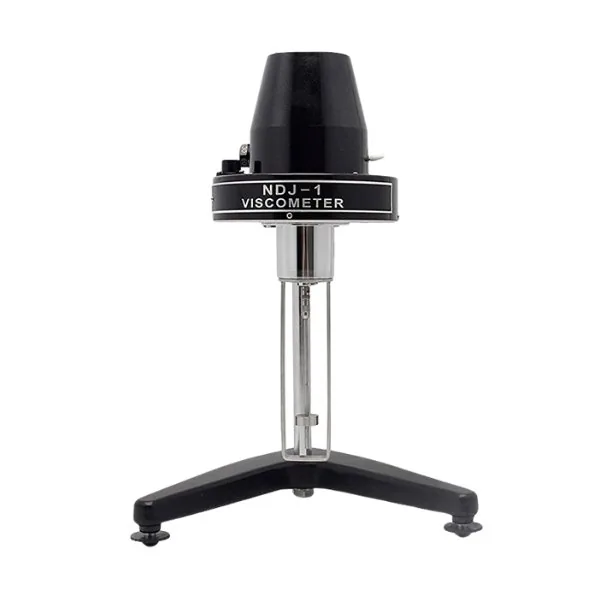
Viscosity and Rheology
Viscometers
Rotational and KU viscometer models measure the resistance of liquids to flow; KU options are also available for measurement in Krebs units in the paint and coatings industry. They offer a measuring range from 1 mPa·s to 4×10⁷ mPa·s, with analog and touchscreen options.
Request a quote| Measuring range | 1–4×10⁷ mPa·s (depending on model) |
|---|---|
| Types | Rotational, KU, stand |
| Display | Analog or TFT color |
| Accuracy | ±1% to ±5% (depending on model) |
| Temperature measurement | 0–60 °C (professional series) |
Product description
Viscosity is the resistance of a liquid to flow. This value determines whether brush marks remain in a paint, how a cream feels when spread, the consistency of honey and the processability of a polymer solution. A rotational viscometer rotates a spindle immersed in the liquid at constant speed and measures the resistance acting on the spindle.
The range covers three distinct needs. The analog model is adequate and economical for routine production control. The digital models display the reading on screen and perform timed measurements. The professional series, with temperature measurement, stepless speed adjustment and data transfer, is aimed at R&D.
KU viscometers form a separate category. The Krebs unit used in the paint and coatings industry is defined under ASTM D562; if the customer or the applied standard requires KU, a rotational model cannot be used in its place.
Selection criteria
Measuring range. The viscosity of the sample should fall in the middle of the instrument's range. Working at the extreme end of the range increases the margin of error.
- If the sample is non-Newtonian (paint, paste, gel), the speed setting and spindle selection change the result; they must be stated in the report
- Temperature directly affects viscosity; measurements without temperature control are not repeatable
- If the sample quantity is limited, the spindle and container volume should be checked from the outset
- If reports are produced according to a standard method (ASTM, ISO), the instrument type required by the method should be confirmed
Sample properties determine the suitable model. When the approximate viscosity range of the product and the measurement temperature are provided, the suitable model and spindle set are determined at the quotation stage.
Rotational and KU viscometer model options
The models in the range and their key technical values are listed below. The full technical table and current pricing are provided in the quotation.
- Rotational Viscometer: Voltage (V): AC 220 V ±10 V, 50 Hz ±10% · Measuring range (mPa·s): 1–1×10^5 · Power (W): 0.12 W
- Professional Viscometer: Voltage (V): AC 110–240 / 50–60 Hz · Display: TFT color LCD · Measuring range (mPa·s): 6–6×10^6: 40–4×10^7
- Digital Viscometer: Voltage (V): AC 100–240 / 50–60 Hz · Timing range: 40 s to 99 min 59 s / continuous operation · Power (W): 12
- Viscometer Stand: Ensures level positioning of the instrument with spirit level adjustment and offers ease of use
- KU Viscometer: Measuring range: 40.2 KU–141.0 KU (27–5,250 cP) · Accuracy: ±1.0% of full scale · Repeatability: ±0.5% of full scale
- KU+ Viscometer: Measuring range: 40.2 KU–141.0 KU (27–5,250 cP) · Accuracy: ±1.0% of full scale
Advanced viscometer and rheometer options
In addition to the basic models in the range, a rotational viscometer series with a spring-free measuring system is also supplied. The digital rotational viscometer can be selected for routine control, the LIMS-compatible viscometer for data integration and the programmable viscometer for multi-step methods. If on-screen curve analysis is required, the real-time viscometer is considered; if high torque is required, the wide-range viscometer.
For applications requiring yield point and thixotropy calculation, a rotational rheometer is suitable, and for measurement at high shear rate, a cone and plate viscometer. All options are listed under viscosity and rheology instruments.
Technical assessment
Spindle sets and the stand are separate items; the quotation states in writing which spindles are included.
A certified viscosity standard is required for calibration. Supplying it together with the instrument is recommended, and a plan is also prepared for annual verification.
Determination of apparent viscosity of resins and dispersions with a single-cylinder rotational viscometer is defined in the ISO 2555 standard.
Frequently asked questions
What is the difference between a rotational viscometer and a KU viscometer?
A rotational viscometer reports results in mPa·s and measures over a wide range with different spindles and speeds. A KU viscometer measures in Krebs units, specific to the paint and coatings industry, under the fixed conditions defined in ASTM D562; there is no direct, exact conversion between the two results.
How is the spindle selected?
The spindle and speed are selected so that the torque reading falls in the middle of the instrument's range. A large spindle is used for low-viscosity samples and a small spindle for high-viscosity samples; for non-Newtonian samples, the spindle and speed must be stated in the report.
How often should a viscometer be verified?
Verification with a certified viscosity standard is planned according to usage intensity and quality system requirements. Common practice is a full verification at least once a year and periodic check measurements during routine use.
From the same category
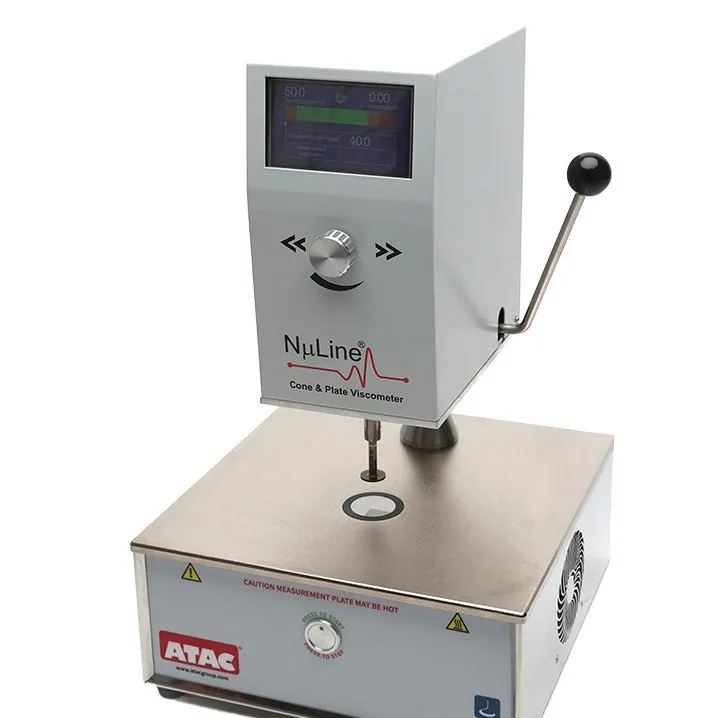
Cone and Plate Viscometer
High shear rate viscosity measurement for polymers, resins, paints and adhesives; up to 250 °C.
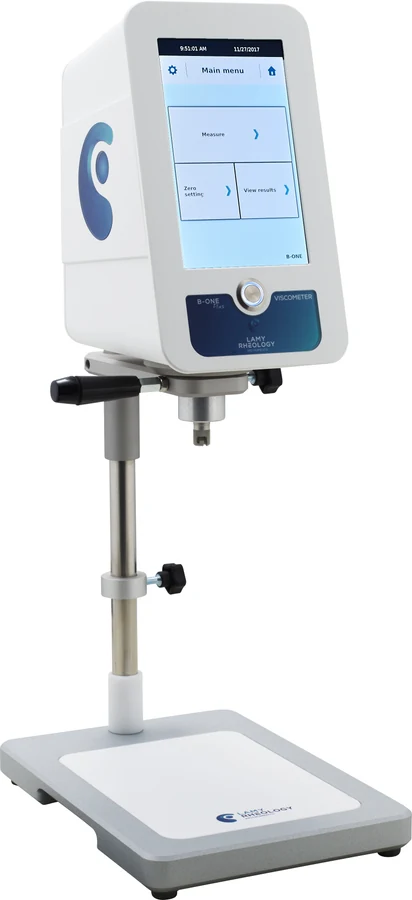
Entry-Level Rotational Viscometer
0.3–250 rpm, 0.05–13 mNm; springless measurement, 7-inch touchscreen, Turkish-language menu.
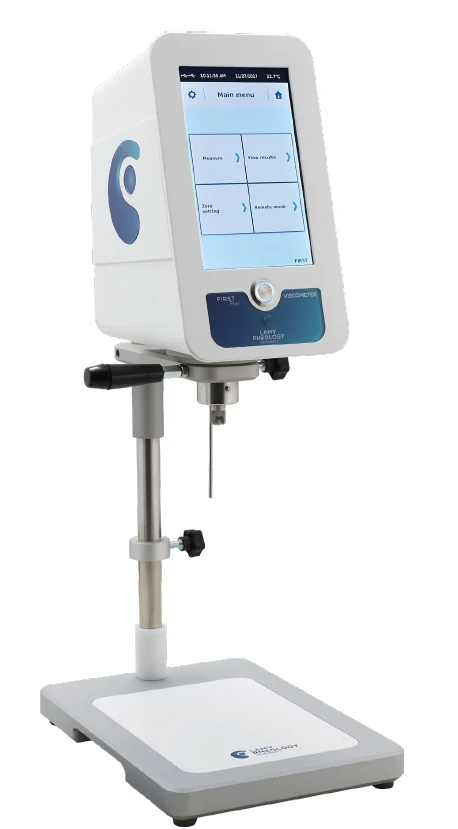
Laboratory-Class Rotational Viscometer
LIMS-compatible rotational viscometer with standard temperature probe and Ethernet connection.
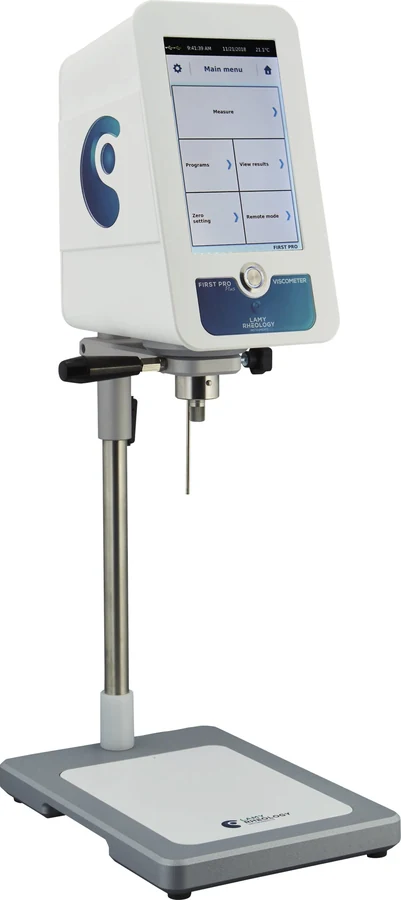
Programmable Rotational Viscometer
Multi-step method programming, quality control limits and direct control of the temperature unit.
Request a quote for this model
A suitable configuration and pricing are prepared based on sample type and workload.
Request a quote