

Viscosity and Rheology
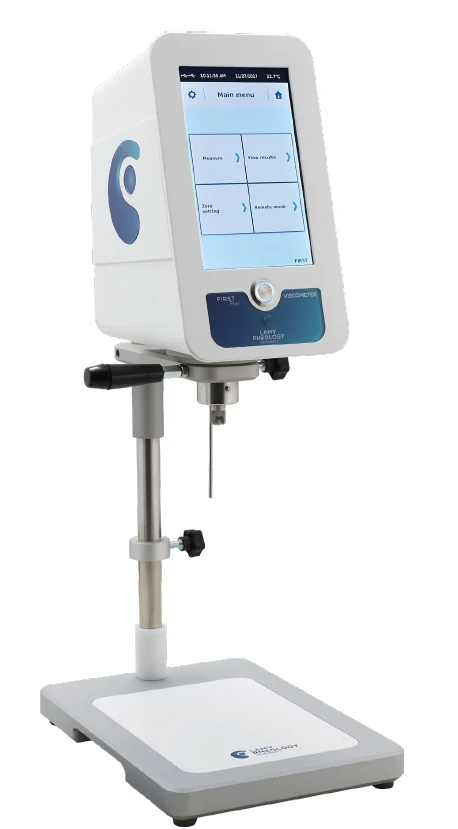
Laboratory-Class Rotational Viscometer
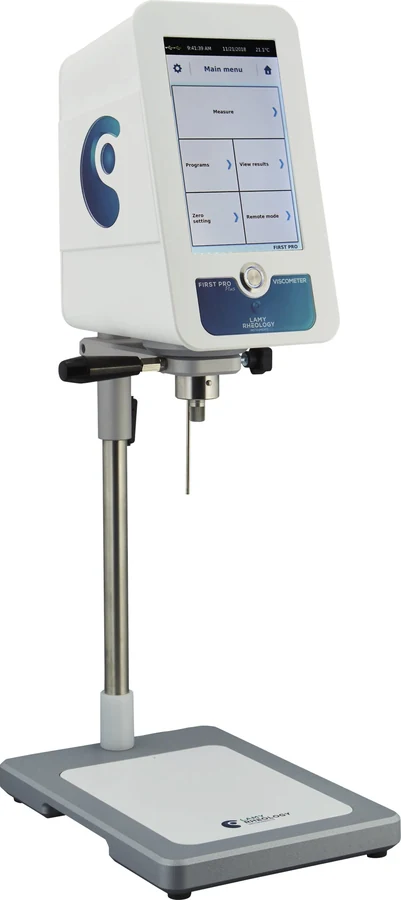
This laboratory-class LIMS-compatible viscometer adds a PT100 temperature probe, Ethernet connection, remote control via computer software and LIMS integration to the measuring performance of the entry-level class. The speed range is 0.3–250 rpm and the torque range is 0.05–13 mNm.
Request a quote| Speed | 0.3–250 rpm, unlimited selection |
|---|---|
| Torque | 0.05–13 mNm (LR: 0.005–0.8 mNm) |
| Temperature probe | PT100, standard equipment |
| Connectivity | RS232, USB, Ethernet |
| LIMS | Supported |
Product description
In terms of measuring performance, the laboratory-class viscometer is built on the same foundation as the entry-level class; the difference lies in recording and integration. A PT100 temperature probe comes as standard equipment, an Ethernet connection is provided and results can be transferred to the laboratory information management system.
Having the temperature probe as standard is an important distinction. A viscosity value is meaningless without stating the temperature at which it was measured. In regulated laboratories, the report is expected to include the temperature; on this model, the temperature is read on the same screen and stored in the same record.
The instrument can be controlled remotely via computer software. Starting measurements, changing speed and collecting data are carried out from the computer; results are processed as tables and graphs.
The display shows the valid viscosity limits for the selected spindle and speed. The operator receives a warning when the measurement goes outside the range; this is a practical safeguard against incorrect reporting.
Common technical platform
All instruments in this class operate on the springless measuring principle. In classic designs with a spiral spring, spring fatigue leads to calibration drift over time; in the springless system, torque is measured directly and this drift is eliminated.
The spindle connection is a bayonet type rather than threaded. The spindle is attached and removed in a single movement; thread wear or cross-threading over time is not an issue. In laboratories that change spindles frequently, this detail reduces the daily workload.
- Accuracy: 1% of full scale
- Repeatability: 0.2%
- Temperature sensor: PT100, -50 °C … +300 °C
- Display: 7-inch color touchscreen, Turkish-language menu
- Values shown on the display: viscosity, speed, shear rate, torque, shear stress, time, temperature
- Power supply: 90–240 VAC, 50/60 Hz
Measuring geometries
In a rotational viscometer, the main factor determining the result is the geometry in contact with the sample. The same instrument covers very different viscosity ranges with different geometries.
- Coaxial cylinder (DIN) geometry: Defined shear rate according to DIN 53019 / ISO 3219.
- Standard cylindrical spindles: Medium and high viscosity in a large container.
- Small sample adapter: Temperature-controlled measurement in a jacketed chamber with a small amount of sample.
- Vane geometry: Measurement without disrupting the structure of gel and paste-like products.
- Krebs geometry: Measurement in KU units for the paint industry.
- Ultra-low viscosity geometry: Order of 1 mPa·s for solvents and dilute solutions.
Related standards
Rotational viscosity measurement is reported according to different standards depending on the industry. The instruments can be configured to operate under the measurement conditions defined in the following families of standards.
- ASTM: D2196 (rotational viscosity), D789 (polyamides), D1084 and D2556 (adhesives), D1417 and D1439 (latex and cellulose derivatives), D4878 (polyols), D6279, D3236, D3794, D4016
- ISO: 2555, 3219, 1652, 2884-2
- DIN: 53019, 3219, 2555, 52007-1, 54453
- EN: 12092, 12802, 15425, 15564, 2555, 3219
The standard to be applied directly determines the measuring geometry and shear rate. When the standard number is specified in the quotation request, the right geometry set is recommended.
Data management in the LIMS-compatible viscometer
Three connection options are available: RS232, USB and Ethernet. Ethernet connects the instrument directly to the laboratory network; no separate computer is needed for results to flow to the central system.
- LIMS integration: The measurement result is written to the laboratory information management system together with the sample ID.
- Printer output: Reports are printed directly on PCL/5-compatible printers.
- Software control: Measurements are started from the computer and data is collected in real time.
User management is handled with an operator name and a four-digit code. In protected mode, the measurement conditions are locked; the operator cannot change speed, spindle or time settings. This maintains consistency of results in multi-shift production.
If multi-step methods and quality limits are required, the programmable viscometer is suitable; if only routine control is to be performed, the digital rotational viscometer is sufficient. Other options in the series and basic models are on the rotational and KU viscometer models page, and all instruments are in the viscosity and rheology category. Determination of apparent viscosity of resins and dispersions is defined in the ISO 2555 standard.
Technical specifications
| Speed range | 0.3–250 rpm, stepless |
|---|---|
| Torque (standard) | 0.05–13 mNm |
| Torque (low range) | 0.005–0.8 mNm |
| Viscosity | 200–240,000,000 mPa·s (depending on geometry) |
| Accuracy | 1% of full scale |
| Repeatability | 0.2% |
| Temperature | PT100, -50 °C … +300 °C, standard |
| Display | 7-inch color touchscreen |
| Data output | RS232, USB, Ethernet |
| Printer | USB host, PCL/5-compatible |
| Software | Remote control from computer, LIMS |
| Dimensions | Head Ø115 × H243 × W138 mm · stand 340 × 305 × 70 mm |
| Weight | 6.1 kg |
| Power supply | 90–240 VAC, 50/60 Hz |
Values are taken from the manufacturer's published technical documentation. They may vary by configuration and are confirmed against the current datasheet before quotation.
Frequently asked questions
How does it differ from the entry-level class?
The measuring ranges are the same. The difference is in hardware and integration: on this model, the PT100 temperature probe comes as standard, an Ethernet connection is provided, the instrument can be controlled remotely with computer software and LIMS integration is supported.
How does LIMS integration work?
The instrument transmits the measurement result together with the sample ID over the network to the laboratory information management system. Manual data entry is eliminated; this both saves time and prevents transcription errors.
Can methods be saved?
This model does not offer multi-step method programming. Measurement conditions can be locked in protected mode; however, if a programmed method sequence is required, the programmable model should be chosen.
What is needed to keep the temperature constant?
A jacketed measuring chamber and a circulating bath or a Peltier-based temperature control unit are used. Once the product type and operating temperature are specified, the appropriate unit is added to the quotation.
What is the measurement accuracy?
The accuracy of 1% of full scale and repeatability of 0.2% apply to all instruments. These values should be evaluated together with the selected measuring geometry; the geometry determines the measurable viscosity range.
How is temperature measured?
The PT100 sensor reads the sample temperature between -50 °C and +300 °C. Since viscosity depends strongly on temperature, the measurement report must also include the temperature. A jacketed chamber or circulating bath is used to keep the temperature constant.
Is a Turkish-language menu available?
Yes. The 7-inch color touchscreen offers a multilingual menu including Turkish. Users can be defined with an operator name and a four-digit code; in protected mode, the measurement conditions are locked.
From the same category
Viscometers
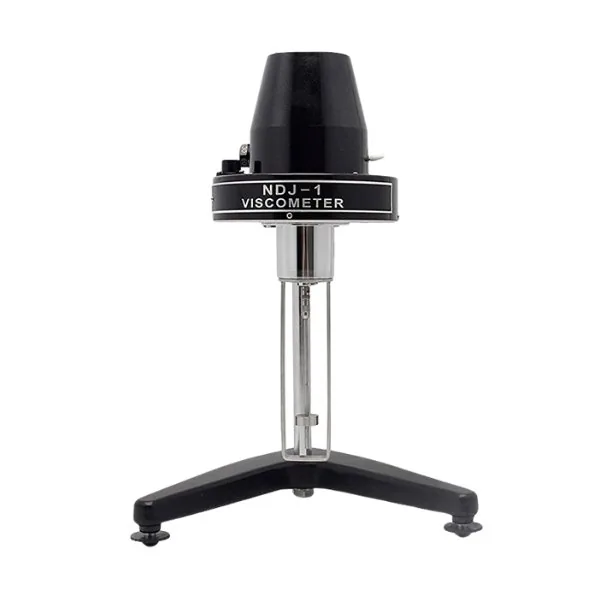
Rotational and KU viscometers; analog, digital and professional series.
Cone and Plate Viscometer
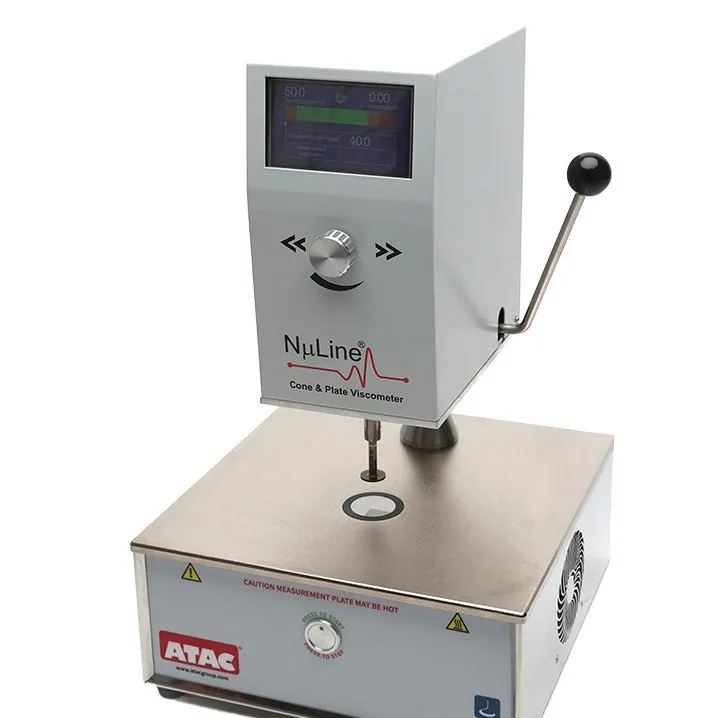
High shear rate viscosity measurement for polymers, resins, paints and adhesives; up to 250 °C.
Entry-Level Rotational Viscometer
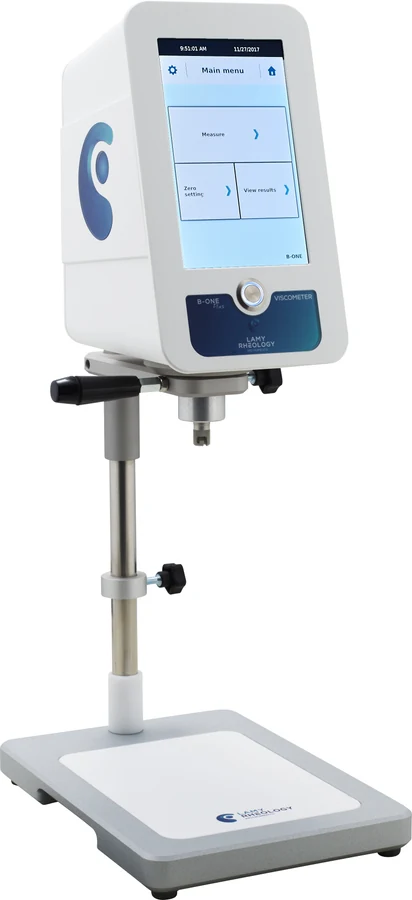
0.3–250 rpm, 0.05–13 mNm; springless measurement, 7-inch touchscreen, Turkish-language menu.
Programmable Rotational Viscometer
Multi-step method programming, quality control limits and direct control of the temperature unit.
Request a quote for this model
A suitable configuration and pricing are prepared based on sample type and workload.
Request a quote