

Konica Minolta
CR-5 Benchtop Colorimeter
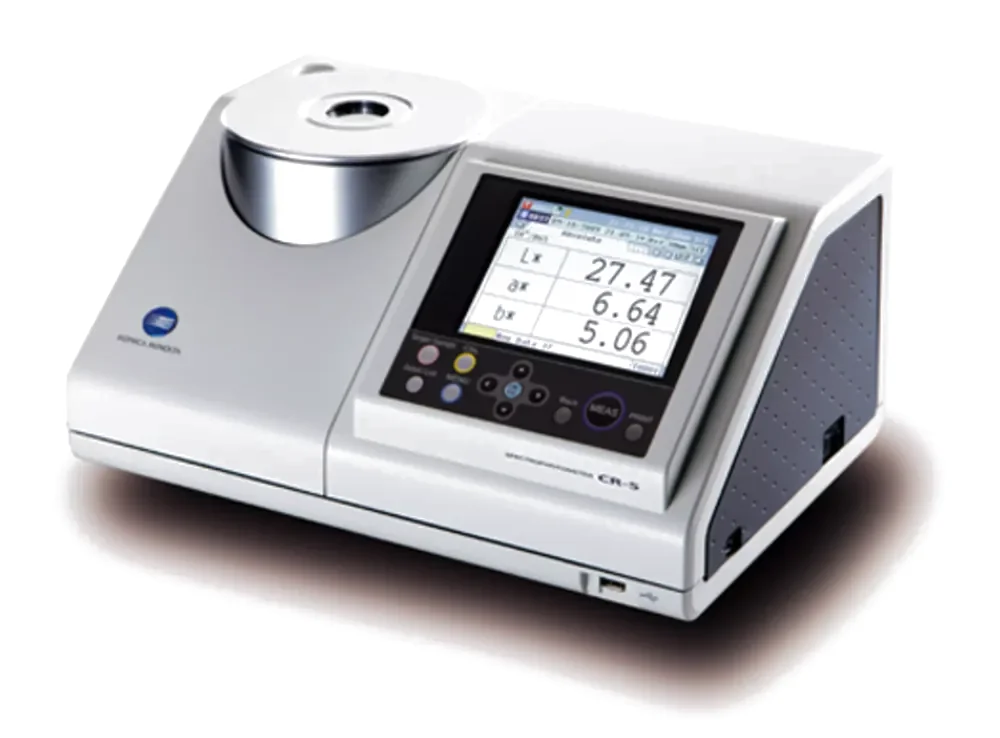
The CR-5 is a benchtop colorimeter that combines reflectance and transmittance measurement in a single body. In addition to solid, powder and paste samples, it reports Gardner, iodine, Hazen (APHA) and pharmacopoeia color indices for transparent liquids.
Request a quote| Measurement mode | Reflectance (de:8° SCE) and transmittance |
|---|---|
| Measurement aperture | Ø30 mm; optional Ø8 and Ø3 mm |
| Transmittance indices | Gardner, iodine, Hazen (APHA), European and US Pharmacopoeia |
| Repeatability | Within ΔE*ab 0.04 standard deviation |
| Display | 5.7-inch color TFT |
Product description
The CR-5 is a benchtop colorimeter that operates without a computer. Reflectance measurement uses de:8° geometry in SCE (specular component excluded) mode; the sample is placed on the measurement port on the top of the instrument. This design makes it easy to measure powders in a Petri dish and pastes and small solid parts directly.
The instrument's second measurement mode is transmittance. The open-sided transmittance chamber accepts samples and liquid cells up to 60 mm thick. For transparent liquids, the Gardner, iodine, Hazen (APHA), European Pharmacopoeia and US Pharmacopoeia color indices are calculated directly.
The 5.7-inch color display shows color values, a color difference graph and the pass/fail result. Measurement data can be transferred via USB flash drive or sent to a computer via USB.
Small parts and powder samples are measured with the aid of a glass plate or Petri dish. For transparent liquids, cuvettes with 2, 10 and 20 mm optical path lengths are used to select a measurement condition suited to samples of different density.
Applications
- Gardner and Hazen (APHA) color control of oils, resins, solvents and chemical liquids
- Pharmacopoeia color tests on pharmaceutical raw materials and solutions
- Reflectance color measurement of powder, granular and paste samples
- Whiteness (WI) and yellowness (YI) indices for plastic pellets and building material samples
- Quality laboratories checking both solid and liquid products with a single instrument
Technical evaluation
The instrument uses a Ø152 mm integrating sphere, a dual 40-element silicon photodiode array and a pulsed xenon lamp with a UV cut filter. Repeatability over 30 measurements on the white calibration plate is ΔE*ab 0.04, and typical inter-instrument agreement on 12 BCRA Series II tiles is ΔE*ab 0.15.
For reflectance measurement, the Ø30 mm (LAV), optional Ø8 mm (MAV) and Ø3 mm (SAV) apertures can be used by changing the mask; the transmittance measurement area is Ø20 mm. White calibration is performed automatically with an internal plate. The observer angle can be set to 2° or 10°, and the illuminant to C or D65.
The CR-5 operates only in SCE mode and with the C and D65 illuminants. If SCI measurement, a wider list of illuminants or spectral data is required, the CM-5 spectrophotometer, which shares the same body, should be considered.
Benchtop colorimeter selection criteria
For R&D work requiring spectral reflectance data, simultaneous SCI and SCE measurement and a wide choice of illuminants, the CM-5 should be preferred. If only color difference on solid samples is to be measured in the field, the portable CR-400 / CR-410 is a more suitable starting point.
Measurement data can be recorded, evaluated against tolerances and reported with SpectraMagic NX2.
Different geometry and aperture options can be compared in the color and gloss measuring instruments catalog. Color difference is expressed as ΔE*ab in the CIE 1976 L*a*b* color space.
Technical specifications
| Reflectance geometry | de:8° SCE (CIE No.15, ISO 7724/1, ASTM E1164, DIN 5033 Teil 7, JIS Z 8722 condition c) |
|---|---|
| Transmittance geometry | di:180° |
| Integrating sphere | Ø152 mm |
| Detector | Dual 40-element silicon photodiode array |
| Light source | Pulsed xenon lamp with UV cut filter |
| Measurement area | Reflectance: Ø30 mm; optional Ø8 and Ø3 mm · Transmittance: Ø20 mm |
| Repeatability | Within ΔE*ab 0.04 standard deviation |
| Inter-instrument agreement | ΔE*ab 0.15 (typical, 12 BCRA Series II) |
| Measurement time | Approx. 1 s; minimum measurement interval approx. 3 s |
| Observer / illuminant | 2° or 10° · C, D65 |
| Reflectance indices | WI (ASTM E313), YI (ASTM E313, ASTM D1925) |
| Transmittance indices | Gardner, iodine, Hazen (APHA), European Pharmacopoeia, US Pharmacopoeia |
| Color difference formulas | ΔE*ab, ΔE*94, ΔE00, Hunter ΔE, CMC (l:c) |
| Memory | 4,000 measurements; 1,000 target colors; USB flash drive support |
| Interface | USB 1.1 (computer, USB flash drive), RS-232C (printer) |
| Dimensions and weight | 385 × 192 × 261 mm (width 475 mm with cover open) · approx. 5.8 kg |
Values are taken from the manufacturer's published technical documentation. They may vary by configuration and are confirmed against the current datasheet before quotation.
Frequently asked questions
What is the difference between the CR-5 and the CM-5?
The two instruments share the same body and measurement port design. The CR-5 is a colorimeter; it operates in SCE mode with the C and D65 illuminants and is intended for routine color control. The CM-5 is a spectrophotometer; it offers SCI and SCE measurement, a wide list of illuminants and spectral data.
Which liquid color indices are calculated?
In transmittance mode, the Gardner, iodine, Hazen (APHA), European Pharmacopoeia and US Pharmacopoeia color indices are calculated. Liquids are measured with a suitable transmittance cell.
What is the difference between a colorimeter and a spectrophotometer?
A colorimeter measures tristimulus values directly with three filters approximating the color sensitivity of the human eye; it is a fast and economical solution for color difference control. A spectrophotometer measures reflectance wavelength by wavelength; it is required for tasks such as evaluation under different illuminants, metamerism analysis and color formulation.
From the same category
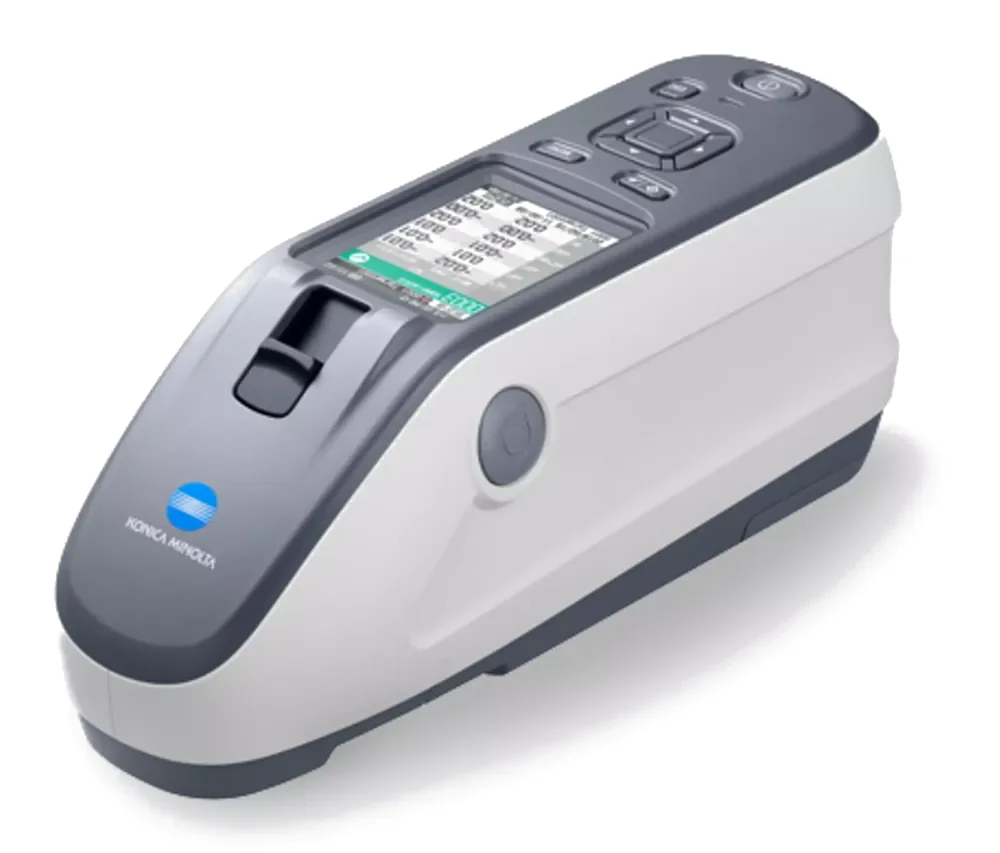
CM-26dG / CM-26d Portable Spectrophotometer
Portable spectrophotometer that captures color and 60° gloss in a single measurement and measures SCI and SCE simultaneously.
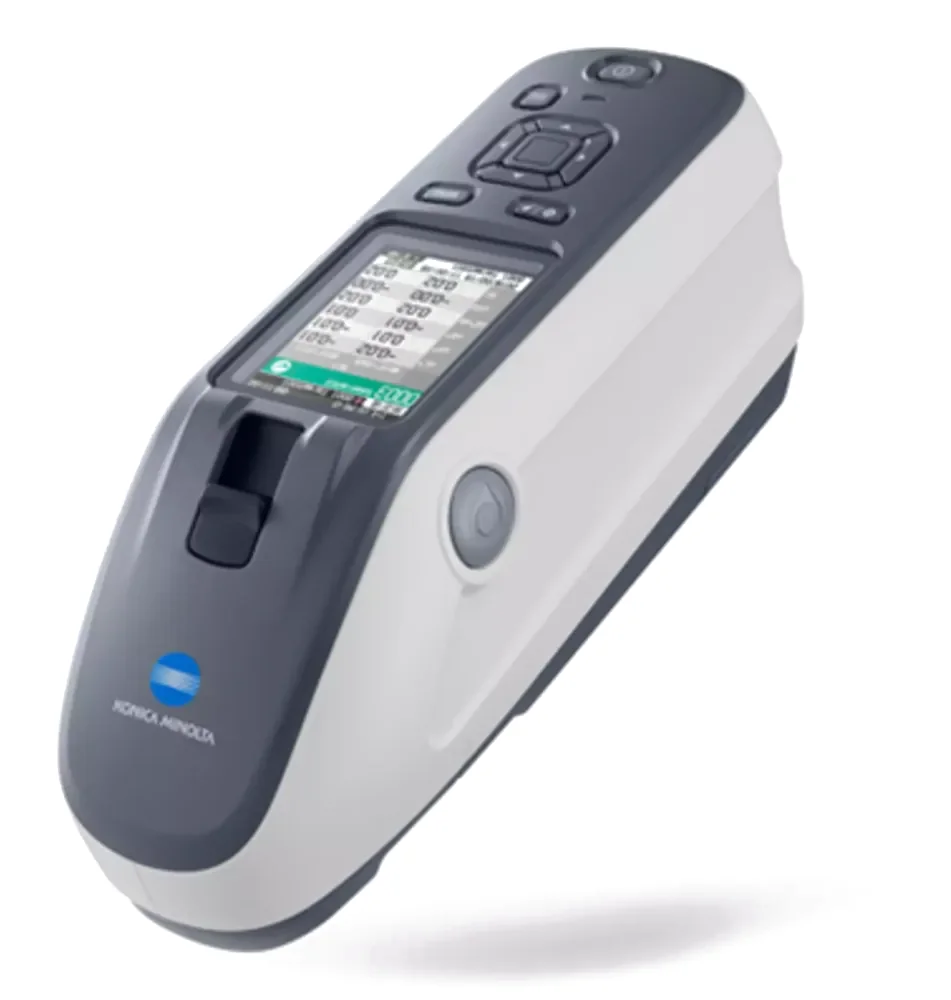
CM-25d Portable Spectrophotometer
Single-aperture portable spectrophotometer that measures SCI and SCE simultaneously and operates in the 400–700 nm range.
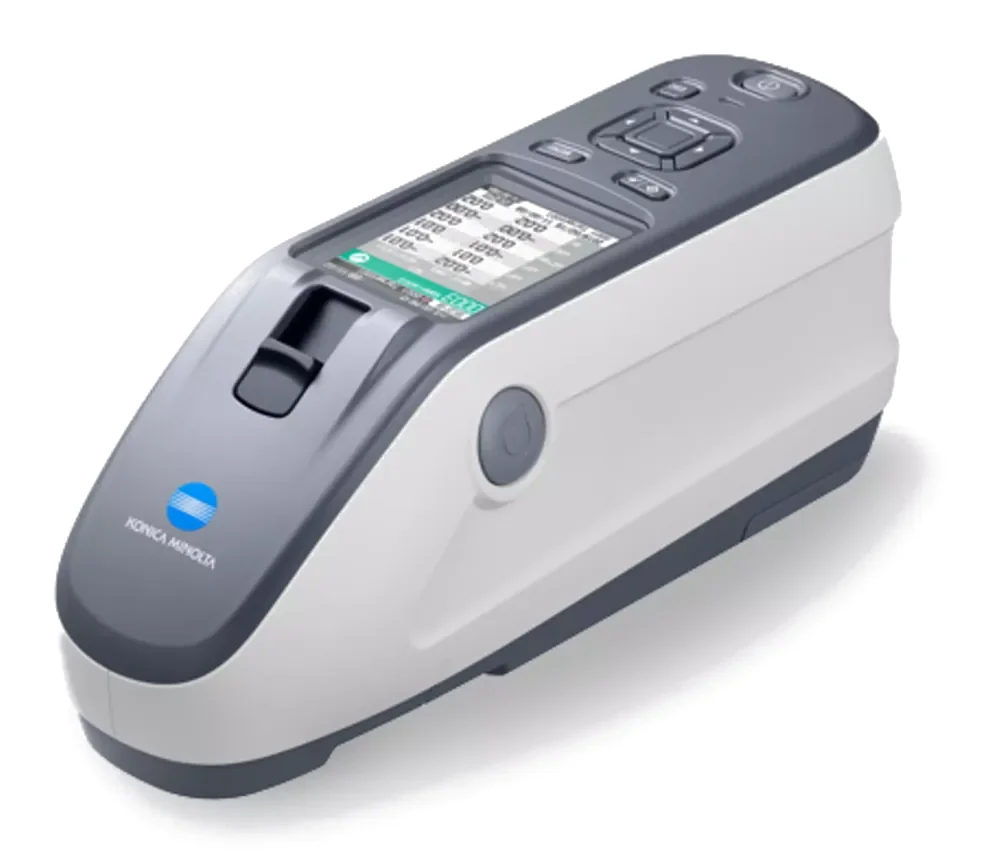
CM-23d Portable Spectrophotometer
Entry-level portable spectrophotometer that measures SCI and SCE values together for basic color quality control.
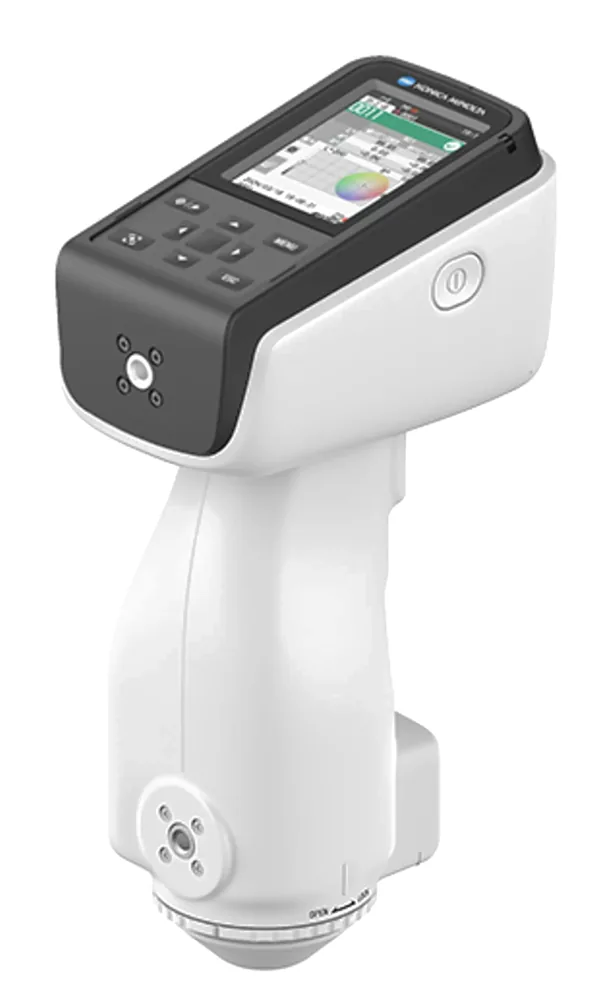
CM-17d / CM-16d Portable Spectrophotometer
Next-generation portable spectrophotometer with vertical body, camera viewfinder and interchangeable apertures.
Request a quote for this model
A suitable configuration and pricing are prepared based on sample type and workload.
Request a quote