

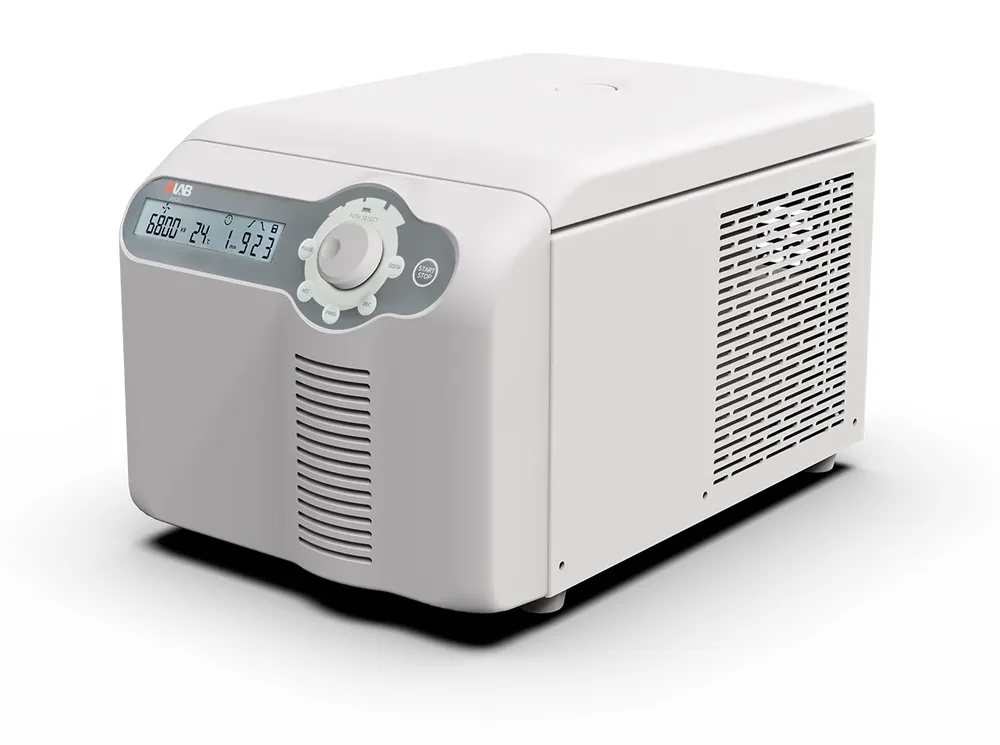
DLAB
High-Speed Microcentrifuge (D1524, D2012, D3024)
The high-speed microcentrifuge series consists of benchtop instruments that work with 0.2–5 mL tubes and reach 15,000 rpm. The D2012S and D2012 Plus deliver 15,100×g with a 12-place rotor, while the D1524 and D3024 offer five rotor options and 21,380×g.
Request a quote| Maximum speed | 15,000 rpm |
|---|---|
| Maximum RCF | 15,100×g (D2012S, D2012 Plus) · 21,380×g (D1524, D3024) |
| Capacity | 12 × 0.2–2 mL (D2012) · 24 × 1.5/2 mL, 36 × 0.5 mL, up to 18 × 5 mL (D1524, D3024) |
| Run time | 30 s to 99 min or continuous |
| Motor | Brushless DC |
Product description
The high-speed microcentrifuge is one of the core instruments of the molecular biology laboratory. For small-volume samples in 1.5 and 2 mL tubes, steps such as precipitate separation, nucleic acid purification and plasmid isolation are completed in a short time with high centrifugal force.
All four models in the series reach 15,000 rpm and run on a maintenance-free brushless DC motor. Lid lock, overspeed detection and automatic self-diagnosis are common safety features; users can switch between speed and RCF, and a short-spin (pulse) function is provided.
The D2012S and D2012 Plus are compact models reaching 15,100×g with a 12-place angle rotor; the D2012 Plus stands out with its low noise level of 54 dB. The D1524 and D3024 offer five rotor options, from 24 × 1.5/2 mL to 18 × 5 mL, and 21,380×g. The aluminum alloy rotors of the D3024 can be autoclaved at 121 °C and feature a three-layer seal.
Model comparison
| Model | Speed range | Max. RCF | Rotor capacity | Noise | Weight |
|---|---|---|---|---|---|
| D2012S | 300–15,000 rpm | 15,100×g | 12 × 0.2/0.5/1.5/2 mL | ≤65 dB | 6.2 kg |
| D2012 Plus | 500–15,000 rpm | 15,100×g | 12 × 0.2/0.5/1.5/2 mL | ≤54 dB | 6 kg |
| D1524 | 200–15,000 rpm | 21,380×g | 24 × 1.5/2 mL · 36 × 0.5 mL · 4 × PCR8 · 12 or 18 × 5 mL | ≤64 dB | 8.8 kg |
| D3024 | 200–15,000 rpm | 21,380×g | 24 × 1.5/2 mL · 36 × 0.2/0.5 mL · 4 × PCR8 · 12 or 18 × 5 mL | ≤64 dB | 12 kg |
On the D1524, acceleration and deceleration can be set in 9 levels and programs can be saved; the motorized lid lock allows one-handed closing.
Applications
- Plasmid extraction and nucleic acid purification
- Precipitate separation in DNA and RNA isolation
- Sample preparation prior to sequencing
- Micro-volume precipitation of proteins and cell components
In these workflows, the centrifuge is usually used together with a vortex mixer, a dry block heater and a PCR thermal cycler.
High-speed microcentrifuge selection criteria
- Required force: If the kit protocol calls for more than 15,000×g, the D1524 or D3024 should be selected.
- Tube variety: If 5 mL tubes or PCR strips will be used, the models with five rotor options are suitable.
- Noise: In busy shared laboratories, the low-noise D2012 Plus can be preferred.
- Temperature: Heat-sensitive samples require a refrigerated model.
For protocols that require cooling, a refrigerated centrifuge; for simply collecting droplets, a mini centrifuge; and for clinical work with 15 and 50 mL tubes, a low-speed centrifuge should be considered. All options are found in the centrifuges and vacuum category.
Technical specifications
| Maximum speed | 15,000 rpm |
|---|---|
| Speed increment | 100 rpm (D2012S, D2012 Plus) · 10 rpm (D3024) |
| Maximum RCF | 15,100×g (D2012S, D2012 Plus) · 21,380×g (D1524, D3024) |
| Speed accuracy | ±20 rpm |
| Run time | 30 s to 99 min, continuous operation |
| Acceleration / deceleration | 11 s / 15 s (D2012S) · 11 s / 9 s (D2012 Plus) · 25 s / 25 s (D1524, D3024) |
| Display | LCD |
| Motor | Brushless DC |
| Power | 70 W (D2012S) · 100 W (D2012 Plus) · 210 W (D1524) · 200 W (D3024) |
| Power supply | Single phase; 100–120 V and 200–240 V depending on model |
| Dimensions (W × D × H) | From 255 × 245 × 140 mm (D2012 Plus) to 364 × 280 × 266 mm (D3024) |
| Safety | Lid lock, overspeed detection, automatic self-diagnosis |
| Other functions | Speed/RCF switching, short spin, audible alarm |
| Certifications | CE, UKCA, FCC, ICES, CB, cTUVus |
Values are taken from the manufacturer's published technical documentation. They may vary by configuration and are confirmed against the current datasheet before quotation.
Frequently asked questions
What is the difference between rpm and ×g?
rpm is the number of revolutions of the rotor per minute; ×g is the relative centrifugal force acting on the sample and depends on the rotor radius. Protocols are usually specified in ×g; on these instruments, users can switch directly between speed and RCF.
What is the difference between the D1524 and the D3024?
Both models have the same speed, force and rotor options. The D1524 offers 9-level acceleration/deceleration and program storage, while the D3024 stands out with its heavier housing and aluminum rotors that can be autoclaved at 121 °C.
Can the rotors be sterilized?
The aluminum alloy rotors of the D3024 can be autoclaved under high pressure at 121 °C. For the other models, the rotor material and cleaning method are confirmed at the quotation stage.
From the same category
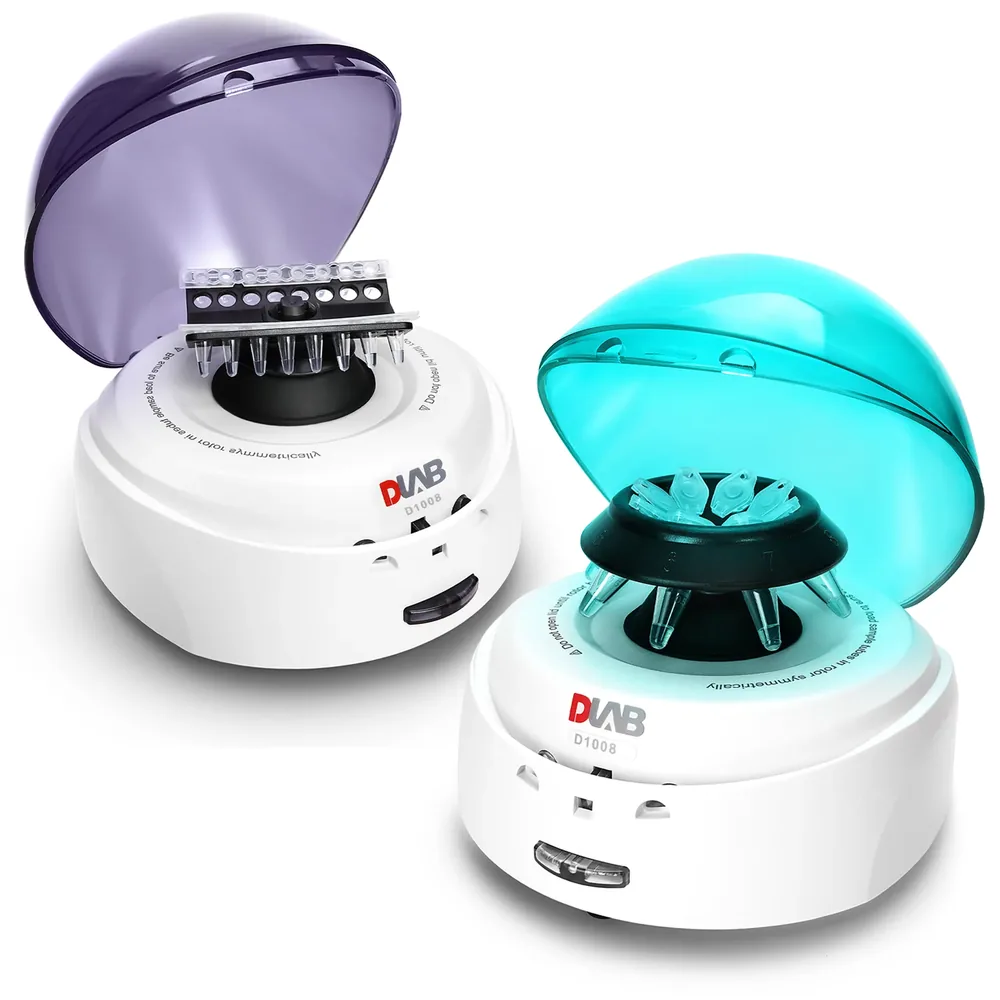
D1008 and D1012UA Mini Centrifuge
Palm-sized 7,000 and 10,000 rpm mini centrifuges for quick spin-down of PCR tubes and microtubes.
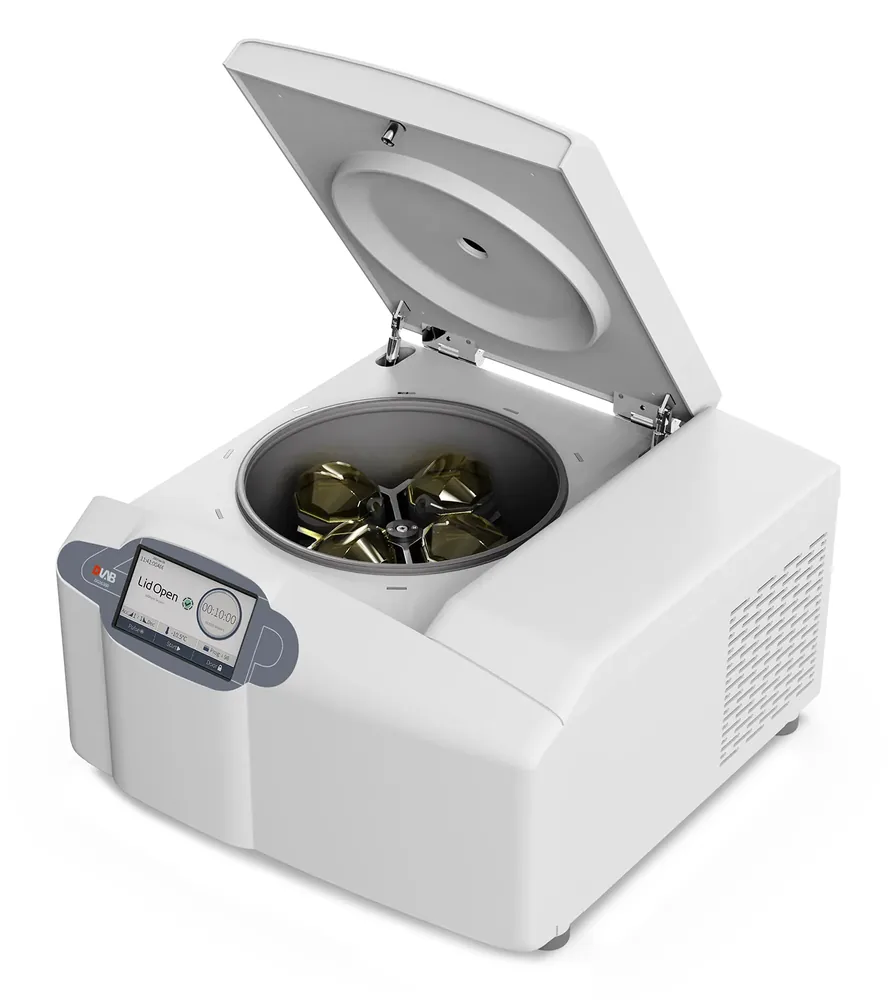
D1524R and DG1616R Refrigerated Centrifuge
15,000–16,000 rpm refrigerated centrifuges cooling down to -20 °C for heat-sensitive samples.
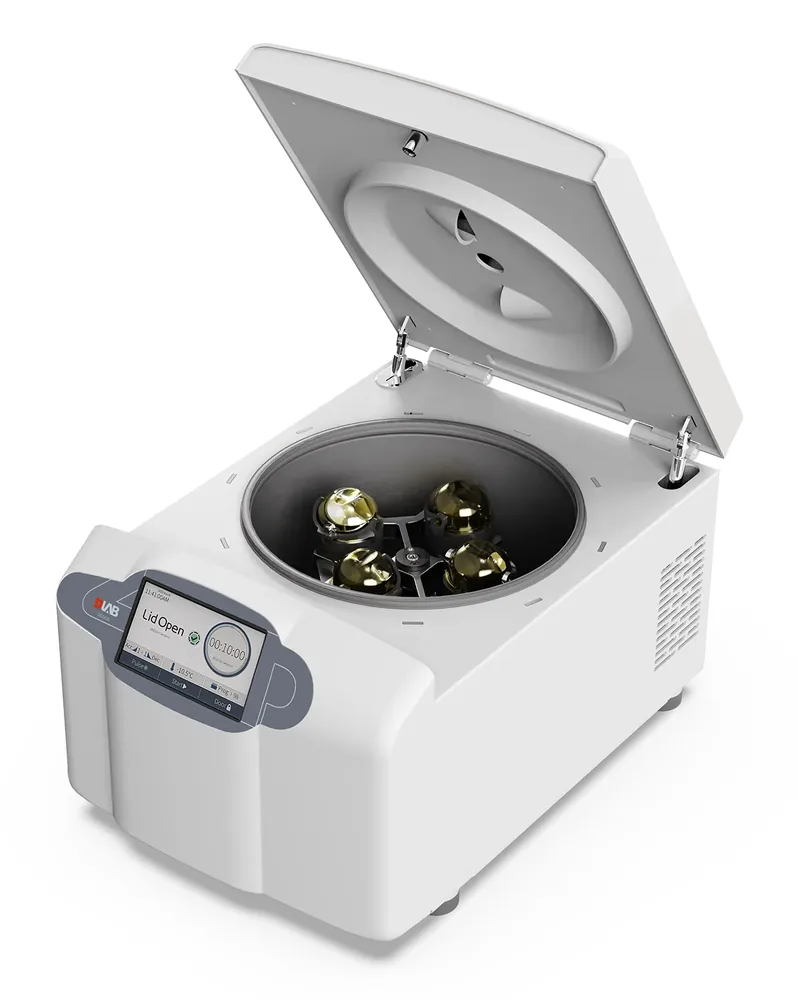
DM1224, DM1424 and DG1616 High-Speed Centrifuge
12,000 rpm DM series for capillary tube applications and 16,000 rpm DG1616 with up to 4 × 400 mL capacity.
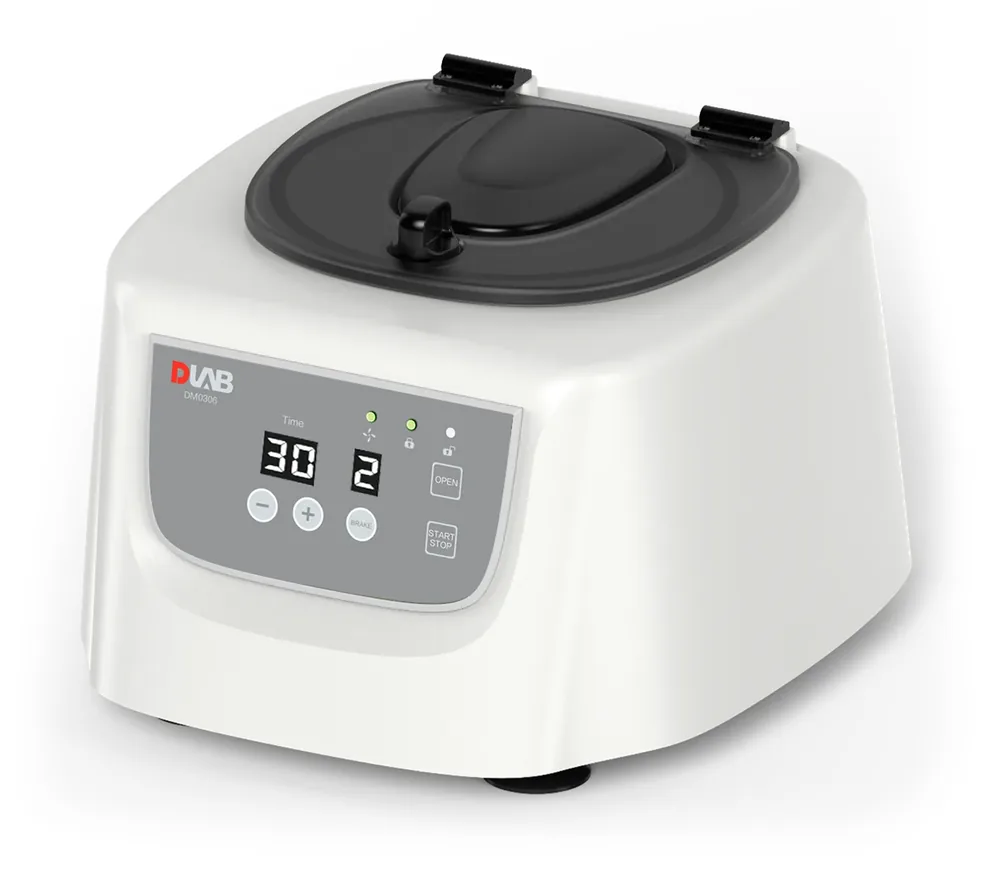
DM0 Series Low-Speed Centrifuge
3,400–6,500 rpm low-speed centrifuges with rotors for blood collection tubes and 15/50 mL tubes, for serum, plasma and urine separation.
Request a quote for this model
A suitable configuration and pricing are prepared based on sample type and workload.
Request a quote