

DLAB
Pocket pH, Conductivity and ORP Testers
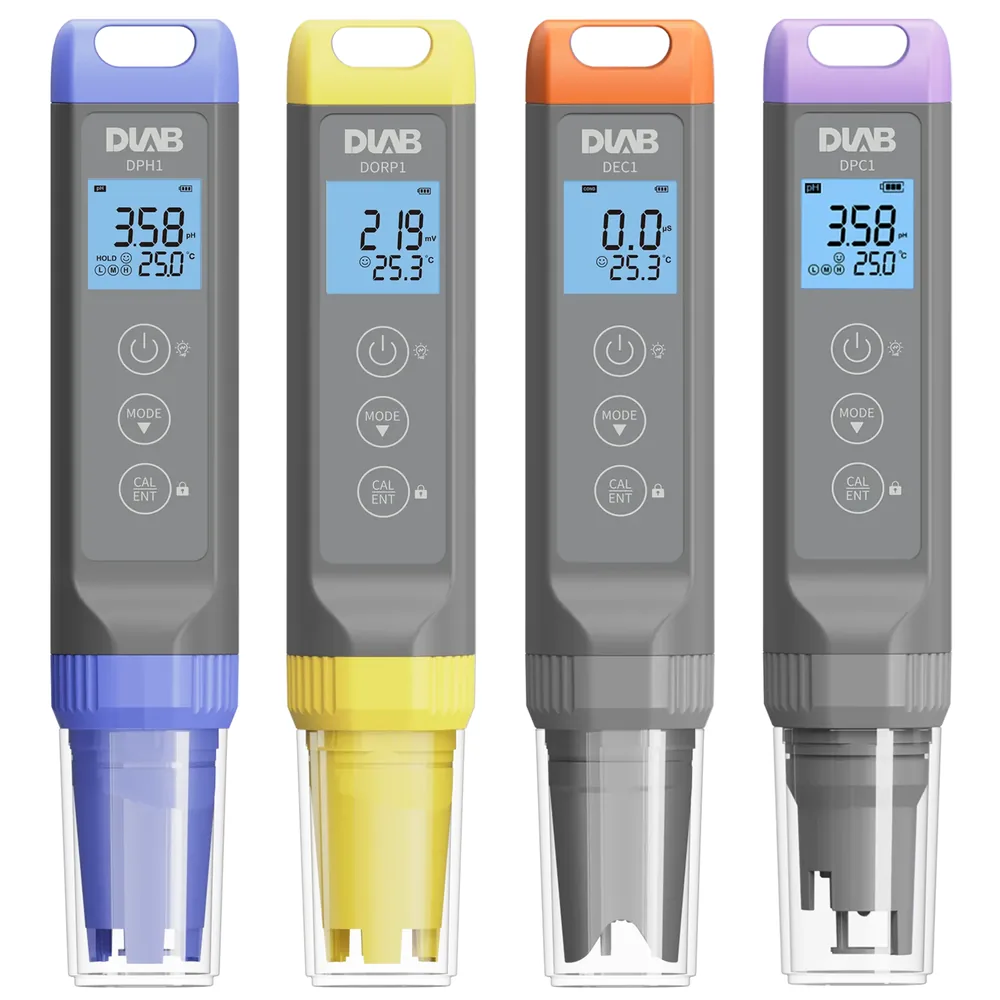
Pocket pH meters and testers are pen-sized instruments designed for fast pH, ORP, conductivity and TDS measurement in the field and on the production line. The standard series includes DPH1, DORP1, DEC1 and DPC1; the Bluetooth series includes + versions of the same models that work with a mobile app.
Request a quote| Parameters | pH, ORP, conductivity, TDS, salinity, resistivity |
|---|---|
| pH range | -2.00 to 16.00 pH |
| Conductivity range | 0–19.99 mS/cm |
| Protection rating | IP67 |
| Connectivity | Mobile app on Bluetooth versions |
Product description
Pocket testers are developed for measurements that need to be taken outside the laboratory. The instrument has a one-piece design that carries the electrode in its body; because the probes are replaceable, only the probe is renewed when the electrode reaches the end of its life, not the entire instrument.
The series includes four models: DPH1 measures pH and ORP, DORP1 ORP only, DEC1 conductivity, TDS, salinity and resistivity, and DPC1 measures all of these parameters. The Bluetooth versions (DPH1+, DORP1+, DEC1+, DPC1+) offer graph, table and dial views via the mobile app, and add calibration reminders, sample IDs and timed data logging.
The kits come with calibration buffers or standard solutions, sample bottles, batteries and a hard carrying case. The housing is rated IP67.
Model comparison
| Model | Measured parameters | pH accuracy | Conductivity accuracy | Bluetooth |
|---|---|---|---|---|
| DPH1 / DPH1+ | pH, mV (ORP), temperature | ±0.01 pH | - | DPH1+ only |
| DORP1 / DORP1+ | ORP, temperature | - | - | DORP1+ only |
| DEC1 / DEC1+ | Conductivity, TDS, salinity, resistivity, temperature | - | ±1.0% full scale | DEC1+ only |
| DPC1 / DPC1+ | pH, ORP, conductivity, TDS, salinity, resistivity | ±0.01 pH | ±1.0% full scale | DPC1+ only |
The ORP measuring range is -1000.0 to +1000.0 mV, with an accuracy of ±0.1% of full scale. Temperature is measured over 0–60 °C with ±0.2 °C accuracy, and automatic temperature compensation for pH operates within this range.
Applications
- Field checks at water treatment plants and on wastewater lines
- Acidity monitoring in food and beverage production
- Conductivity checks at the outlet of pure water systems
- ORP monitoring in disinfection processes
The outlet quality of pure water systems should be monitored with a closed flow cell; the pocket tester is suitable for quick checks at pretreatment and intermediate points. Pure water grades are explained in the guide Difference between Type 1 and Type 2 pure water.
Maintenance and use recommendations
The glass membrane of the pH probe must not dry out; after use, the protective cap is filled with KCl storage solution and fitted. The conductivity probe, by contrast, can be rinsed with pure water and stored dry.
Calibration is performed with buffers covering the range to be measured. The instrument automatically holds the value once the reading is stable; this feature reduces reading errors in the field.
Pocket pH meter selection criteria
If a single parameter is sufficient, DPH1 or DEC1 is the simplest solution. If pH and conductivity need to be monitored together at the same point, DPC1 eliminates the need to carry two instruments. For audited processes in which measurements must be recorded, the Bluetooth + versions should be preferred.
If higher accuracy, dissolved oxygen measurement or a rechargeable battery is required, portable pH and multiparameter meters are the next option up. For fixed measurement on the laboratory bench, see benchtop pH meters, and for electrode options, the pH electrodes page. All products are listed in the pH and electrochemistry category.
Technical specifications
| pH measuring range | -2.00 to 16.00 pH |
|---|---|
| pH resolution | 0.1 / 0.01 |
| pH accuracy | ±0.01 pH ± 1 digit |
| pH calibration | 1, 2 or 3 points, automatic |
| ORP range | -1000.0 to +1000.0 mV |
| ORP accuracy | ±0.1% of full scale ± 1 digit |
| Conductivity range | 0–19.99 mS/cm, autoranging |
| TDS / resistivity / salinity | 0.0 mg/L–10.0 g/L / 50 Ω·cm–20 MΩ·cm / 0–10 ppt |
| Conductivity accuracy | ±1.0% of full scale ± 1 digit |
| Temperature | 0–60 °C, ±0.2 °C |
| Buffer standards | CH, USA and NIST selectable |
| Protection rating | IP67 |
| Power | 4 × 1.5 V AAA alkaline batteries |
| Connectivity | Bluetooth and mobile app (+ versions) |
Values are taken from the manufacturer's published technical documentation. They may vary by configuration and are confirmed against the current datasheet before quotation.
Frequently asked questions
Can the probe be replaced on a pocket tester?
Yes. The series uses a replaceable combination probe design; when the electrode reaches the end of its life, the instrument body is retained and only the probe is renewed.
What does the Bluetooth version add?
The mobile app displays measurements in graph, table and dial views, and adds sample IDs, calibration reminders and timed data logging. This allows field measurements to be reported afterwards.
Can a pocket tester replace a laboratory pH meter?
It is sufficient for routine and field checks. However, for laboratory measurements requiring high accuracy such as ±0.002 pH, multipoint calibration and a long data history, benchtop instruments should be preferred.
From the same category
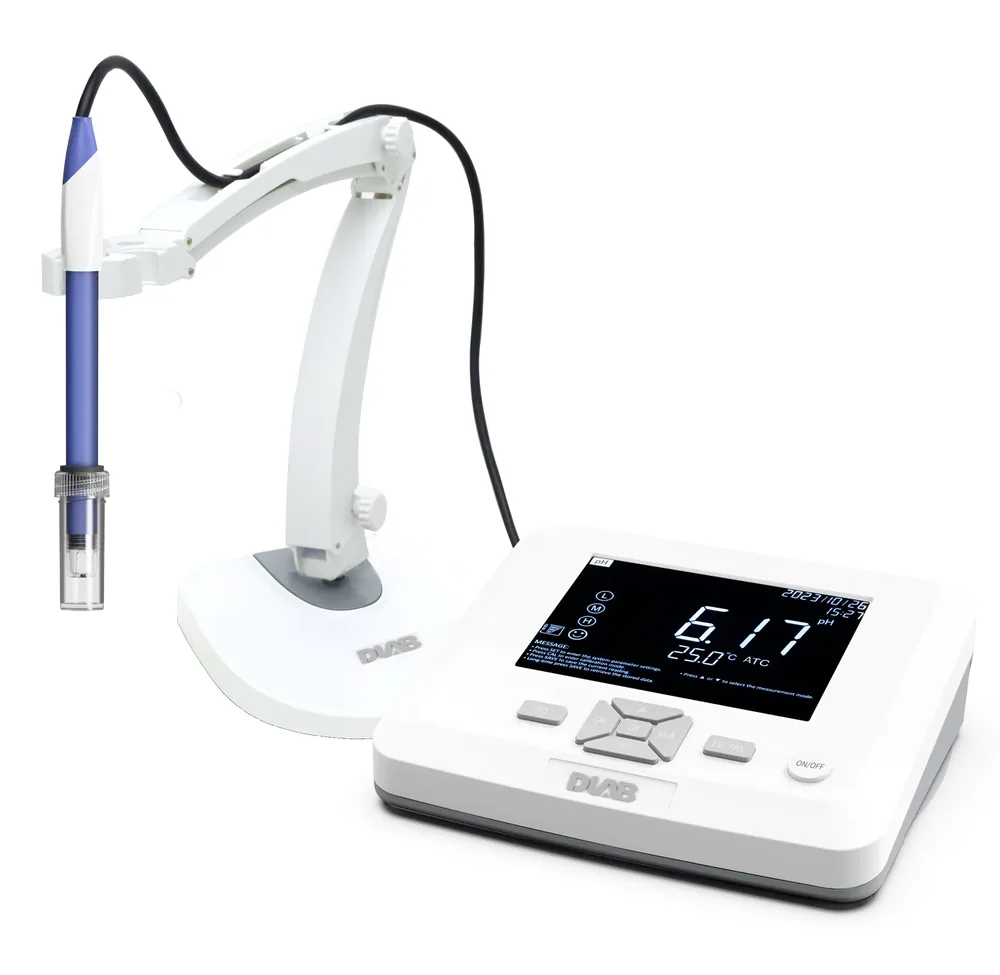
BENCHTOP Single-Parameter Benchtop pH Meter
Classic and touchscreen BENCHTOP meters; single-parameter models for pH, conductivity or dissolved oxygen.
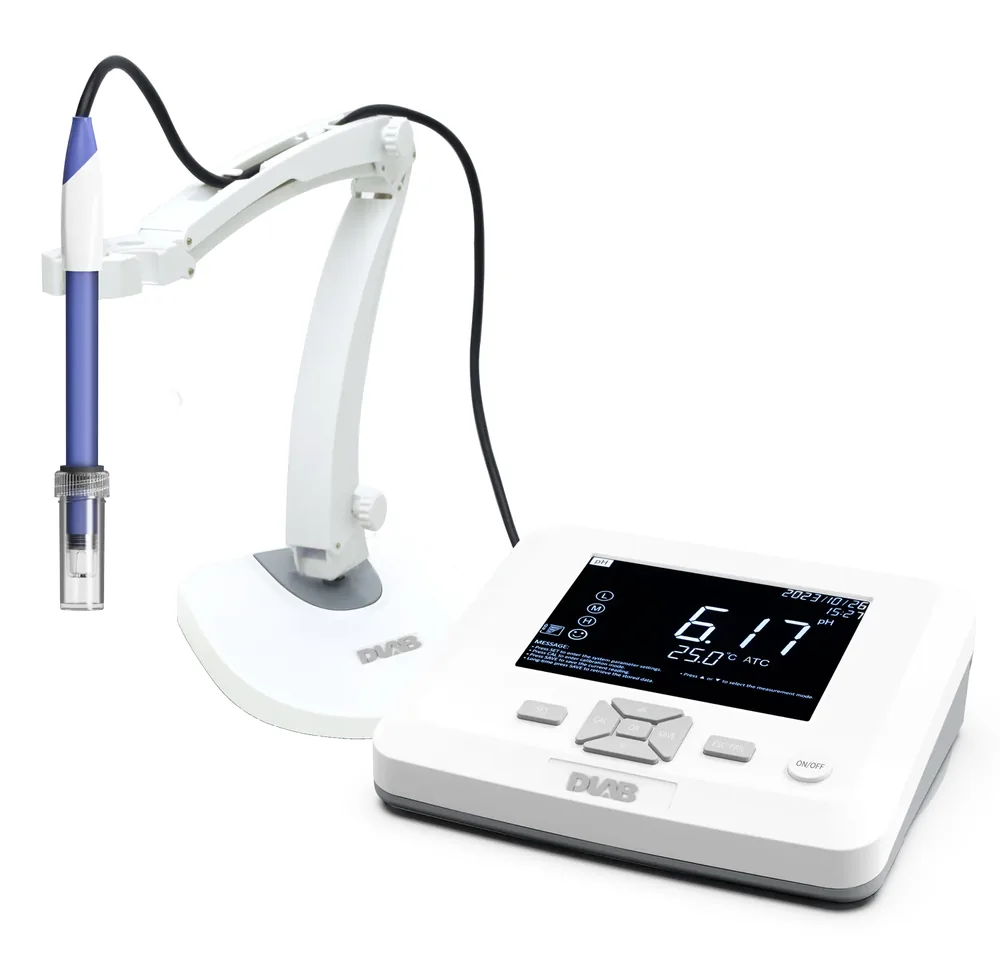
BENCHTOP Multi-Parameter Benchtop Meter
Classic and touchscreen BENCHTOP meters that measure pH, conductivity and dissolved oxygen in a single instrument.
Benchtop Conductivity Meters
Benchtop instruments that measure conductivity, TDS, salinity and resistivity in the laboratory, with cell options suitable for everything from ultrapure water to concentrated solutions.
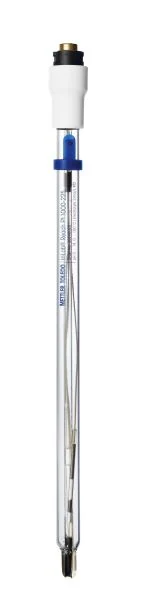
Reference and ORP Electrodes
Reference electrodes for half-cell measurements; ORP electrodes with platinum, gold and silver rings.
Request a quote for this model
A suitable configuration and pricing are prepared based on sample type and workload.
Request a quote