

Rhopoint Instruments
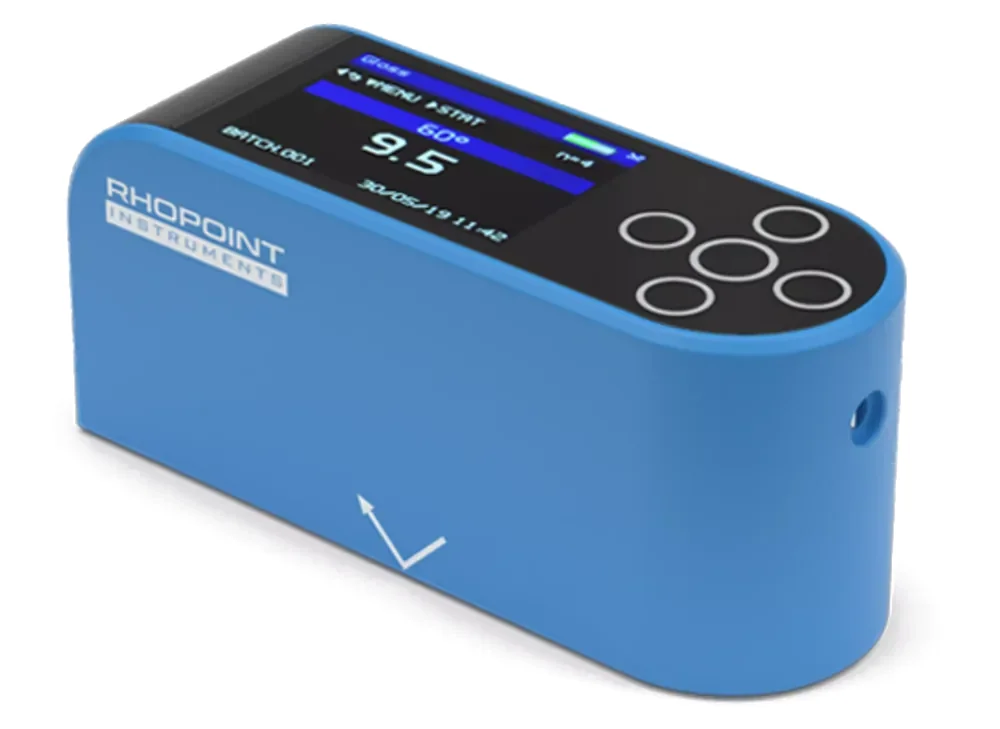
Novo-Gloss 60 KM Gloss Meter
The Novo-Gloss 60 KM is a compact 60 degree gloss meter with a color display and Bluetooth connectivity, intended for checking medium-gloss paint and plastic surfaces. Measurements are saved to the instrument memory or transferred directly to a computer via Bluetooth and USB.
Request a quote| Measurement angle | 60° |
|---|---|
| Measurement range | 0–1000 GU |
| Memory | More than 2,000 measurements |
| Connectivity | Bluetooth and USB |
| Weight | 390 g |
Product description
The Novo-Gloss 60 KM is a single-angle gloss meter designed for medium-gloss surfaces. The 60° measurement angle is the basic geometry for gloss control in the paint and plastics industries and is defined in ISO 2813, ASTM D523 and ASTM D2457.
The backlit color display and simple key layout allow the instrument to be used on the production line, in the field and in the laboratory without training. The built-in statistics menu shows the spread within a batch instantly.
Built-in statistics and trend graph, user-defined batch names and a pass/fail function are provided. Measurement data can be transferred without additional software.
Applications
- Batch-based gloss control in paint and coating production
- Incoming and outgoing quality control of plastic parts and sheets
- Comparison of surface gloss of building materials with suppliers
- Post-coating gloss verification in field applications
Key features
Measurements are made over 0–1000 GU. The internal memory stores more than 2,000 measurements; measurements can be transferred directly to Microsoft Excel via Bluetooth or USB.
The Li-ion battery provides more than 17 hours of operation and more than 10,000 measurements. The instrument can be powered by battery, USB or a mains charger. The interface languages include Turkish.
The most common source of error in gloss meter measurement is a dirty calibration standard. The standard surface is protected from dust and fingerprints and wiped only with a soft, clean cloth; a scratched standard will not give correct results. The measured surface must also be clean, dry and flat. When comparing batches, each sample is measured in the same direction and at more than one point, so that directional effects such as brush marks or mold texture are balanced out in the average.
The trend graph shows whether gloss drifts over the course of a batch. For example, when the curing oven or mold temperature changes, values drifting in the same direction are visible directly on the display, so the deviation is noticed before it goes out of tolerance.
60 degree gloss meter selection criteria
In applications where very glossy and matte surfaces are also to be measured, the three-angle Multi Gloss 268A or Rhopoint IQ-S should be preferred. Where only basic 60° control is needed and battery operation is desired, the Uni Gloss 60A is an alternative. On low-gloss surfaces, the Novo-Gloss FLEX 60 with remote head offers higher resolution.
Different geometry and aperture options can be compared in the color and gloss measuring instruments catalog. The method for specular gloss measurement is defined in ASTM D523.
Technical specifications
| Measurement angle | 60° |
|---|---|
| Measurement range | 0–1000 GU |
| Standards | ISO 2813, ASTM D523, ASTM D2457 |
| Memory | More than 2,000 measurements (8 MB) |
| Data transfer | Bluetooth and USB; direct transfer to Microsoft Excel |
| Display | Backlit color display |
| Power | Internal Li-ion battery; more than 17 hours of operation, more than 10,000 measurements; USB or mains charging |
| Interface languages | English, French, German, Italian, Portuguese, Turkish, Japanese, Chinese |
| Dimensions | 65 × 140 × 50 mm |
| Weight | 390 g |
Values are taken from the manufacturer's published technical documentation. They may vary by configuration and are confirmed against the current datasheet before quotation.
Frequently asked questions
What is the difference between the 20°, 60° and 85° measurement angles?
The 60° angle is the reference geometry for medium-gloss surfaces and is used as the starting point for most measurements. On high-gloss surfaces reading above 70 GU at 60°, 20° is preferred to increase differentiation, and on matte surfaces below 10 GU, 85° is preferred. This classification is consistent with the approach in ISO 2813 and ASTM D523.
For which surfaces is a single-angle 60° instrument sufficient?
For medium-gloss paints and plastics where measured values mostly fall between 10 and 70 GU, 60° alone provides sufficient differentiation. If very glossy or very matte product groups are also checked, a three-angle instrument should be considered.
How are measurements transferred to a computer?
Measurements can be sent directly to Microsoft Excel via Bluetooth or USB, or saved to the instrument memory and transferred later.
From the same category
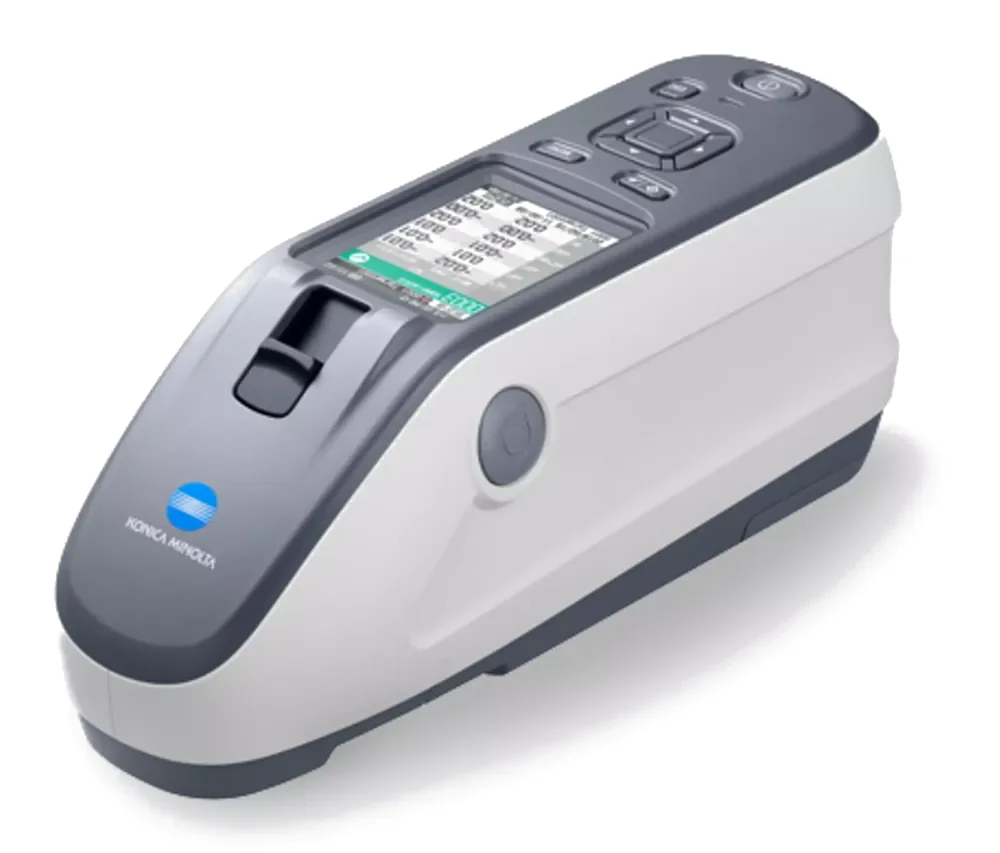
CM-26dG / CM-26d Portable Spectrophotometer
Portable spectrophotometer that captures color and 60° gloss in a single measurement and measures SCI and SCE simultaneously.
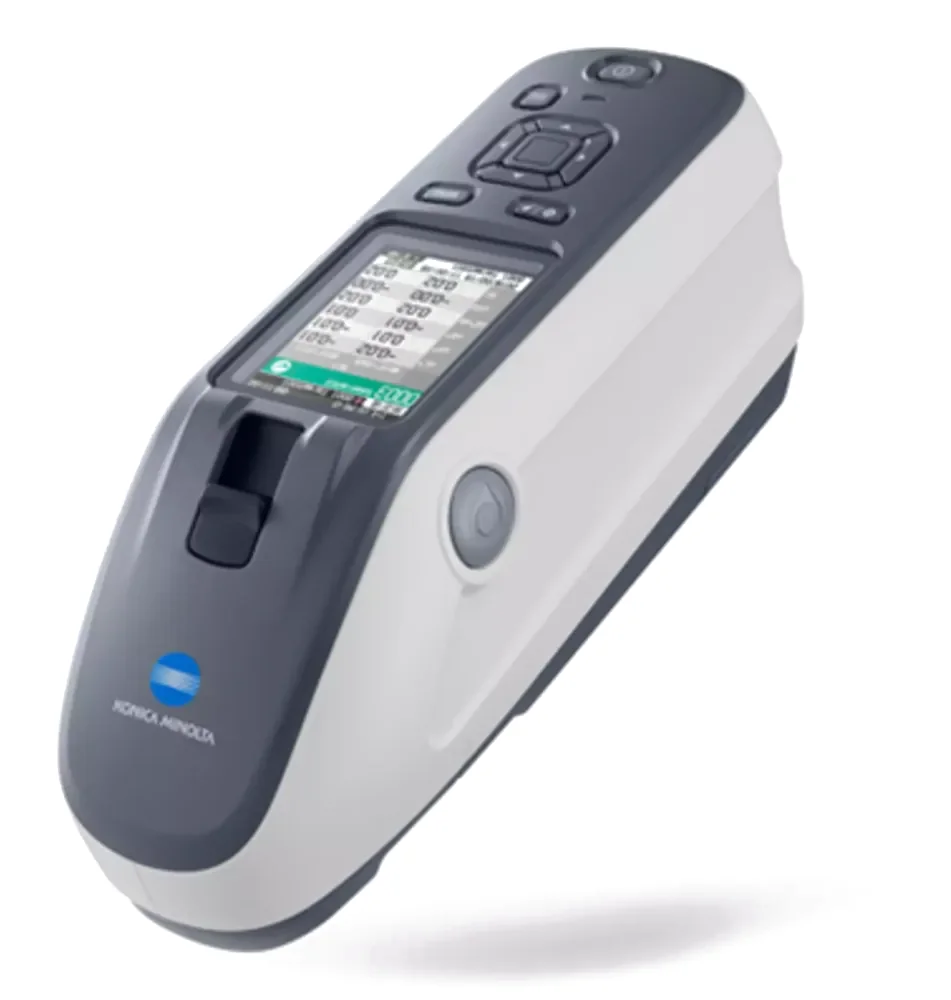
CM-25d Portable Spectrophotometer
Single-aperture portable spectrophotometer that measures SCI and SCE simultaneously and operates in the 400–700 nm range.
CM-23d Portable Spectrophotometer
Entry-level portable spectrophotometer that measures SCI and SCE values together for basic color quality control.
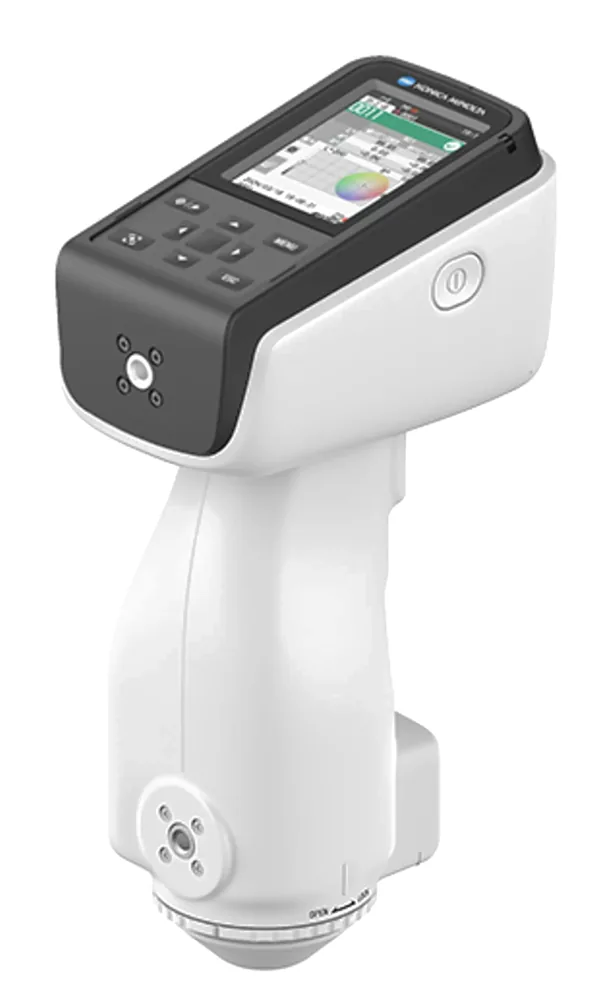
CM-17d / CM-16d Portable Spectrophotometer
Next-generation portable spectrophotometer with vertical body, camera viewfinder and interchangeable apertures.
Request a quote for this model
A suitable configuration and pricing are prepared based on sample type and workload.
Request a quote